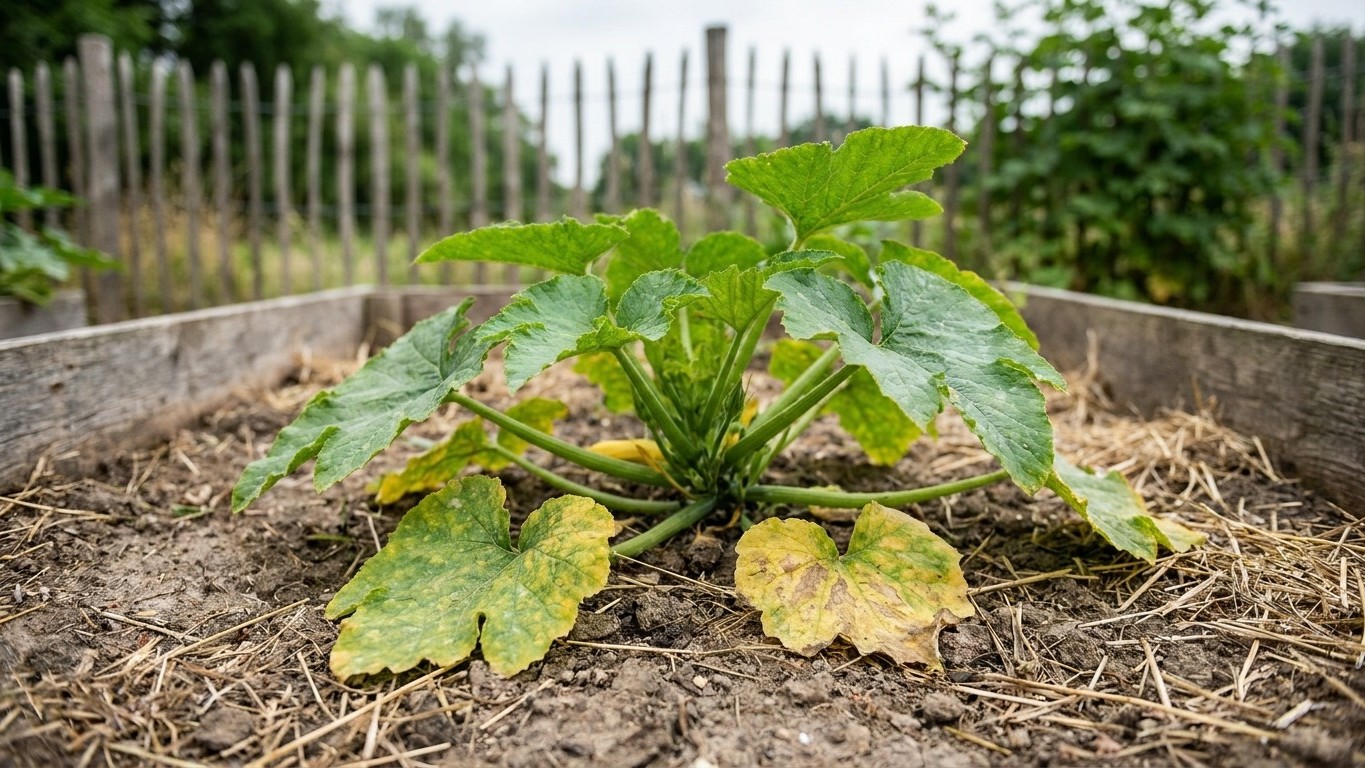

Short-season bush and semi-bush winter squash, the kinds bred to finish in 100 days or fewer, are the safest bet across Wyoming. Think acorn, buttercup, delicata and smaller kabocha types started as transplants rather than the long-season hubbard or big banana squash that need a longer, warmer stretch than most of the state offers.
The short answer for Wyoming
Wyoming’s growing season is short by any national standard, and that single fact should drive every variety choice you make. The last spring frost typically falls between May 7 and May 18, and the first fall frost arrives between September 24 and October 5 at the reference station used for these normals. That leaves a frost-free window of roughly 130 days at 6,000 feet, and even that number comes with a warning worth repeating: frost is possible in any month at higher elevations across the state. Season extension isn’t a nice-to-have here. It’s baked into the math.
Winter squash, as a category, run anywhere from about 80 days to maturity on the fast end (delicata, acorn) up past 100 or even 110 days for the bigger hubbard and banana types. Subtract two to three weeks for germination and early growth that happens slowly in cool spring soil, and a Wyoming garden working from direct-seeded long-season squash is cutting it close, or missing the window outright in a cooler year.
That’s why the decision by type matters more than the decision by brand name. Acorn, buttercup, delicata and smaller kabocha squash cluster in the 80-to-95-day range and can be direct-seeded after the frost date passes in most of the state, or started indoors three to four weeks earlier for extra margin. Butternut sits in a middle zone, usually 90 to 100 days, and does better here as a transplant than as a direct seed. Hubbard, banana squash and the larger storage pumpkins used as winter squash substitutes push past 100 days and routinely run into trouble finishing before the fall frost window closes in late September.
Heat load backs this up. The reference station shows a mean of just 10.4 days a year at 90°F or above. That’s a modest heat budget, nowhere near what a long-season squash vine needs to push through flowering and fruit-sizing quickly. A short, cool season plus a light heat load together point toward compact varieties with fewer days to maturity as the default choice, not the exception, for gardeners anywhere in Wyoming.
What will not work here

The clearest failure mode is timing. Any winter squash variety rated past 100 days to maturity, direct-seeded rather than transplanted, is fighting the calendar from the start. With roughly 130 frost-free days at 6,000 feet and frost risk climbing at higher elevations, a hubbard or big storage squash direct-seeded in late May is often still sizing fruit when the first fall frost hits between September 24 and October 5. The vine doesn’t die instantly at 32°F, but the fruit stops maturing and the skin never hardens enough for long storage.
Watering habits fail just as often as variety choice. Summer rainfall across June, July and August totals about 5.8 inches, with August the driest month at just 1.52 inches. That’s a light rainfall load spread over three months, not a steady drip a squash vine can rely on. Gardeners used to wetter states sometimes carry over a once-a-week watering habit, and in Wyoming’s dry August stretch that routine leaves shallow-rooted transplants and newly set fruit short on moisture right when fruit is sizing up. Plan on watering winter squash twice a week through August rather than once, adjusting up on sandy soil that drains fast and down slightly on clay that holds moisture longer.
Close spacing is another quiet failure. Many seed packets assume a longer, more humid growing region and recommend spacing that crowds plants in a state where airflow matters for keeping powdery mildew in check during the cooler, drier evenings common at altitude. Squash varieties bred for humid southern gardens, with dense foliage and tight recommended spacing, tend to struggle here even when the days-to-maturity number looks fine on paper, simply because the growing conditions assumed by the breeder don’t match Wyoming’s dry air and cool nights.
Finally, anything relying on a long, warm tail end of the season to finish ripening off the vine is a gamble. Some gardeners in milder states let butternut or hubbard sit past the first light frost to sweeten before harvest. In Wyoming, waiting past the first fall frost date risks a hard freeze arriving on its heels, especially at higher elevations, and that turns a near-finished squash into a loss.
What changes across Wyoming
Wyoming isn’t one growing zone, and treating it like one is the fastest way to plant the wrong thing. The USDA Plant Hardiness Zone Map places the state across a wide spread, from zone 3a to zone 6a. That’s a real difference on the ground: zone 3a areas see far colder average annual extreme minimum temperatures than zone 6a pockets, and that gap shows up in both how early you can plant and how reliable a full season is going to be.
The hardiness zone map is built on one variable only, the average annual extreme minimum temperature, so it doesn’t directly measure frost dates or frost-free days. But it’s a useful proxy for how much elevation and latitude reshape the growing season within Wyoming’s own borders. A garden in a low-elevation valley toward the southeast, closer to the reference station behind the frost-date figures cited above, is working with a meaningfully longer and warmer season than a garden at higher elevation or farther north or west, where colder air pools and the frost-free window shrinks further than the state-level 130-day figure suggests.
What that means in practice: gardeners in colder, higher pockets of the state should lean harder toward the shortest-season varieties available, acorn and delicata over butternut, and should treat transplants and season-extension tools like row cover or cold frames as standard practice rather than backup plans. Gardeners in the warmer end of the zone spread have more room to try a mid-season butternut or even attempt a hubbard in a good year, though the state-level fall frost window still applies as a rough guide.
The USDA Plant Hardiness Zone Map, searchable by ZIP code, is the tool for that. Use it to place your own garden on the 3a-to-6a spread before picking a variety off this list.
Where to check this for your own county
Everything above is a state-level picture, built from one reference station’s climate normals. A county recommendation beats a state one every time, because soil, elevation and local microclimate shift the real numbers in ways a single station can’t capture. That is the state-level starting point, not the local answer.
The University of Wyoming Extension is the place to close that gap. Its main portal connects to county-level offices and horticulture resources across the state. Look specifically for two things once you’re there: a local planting calendar tied to your county’s actual frost dates rather than state normals, and any list of winter squash varieties that have been trialled or recommended by extension staff or master gardener programs in your specific area.
County extension offices often run their own variety trials or collect feedback from local gardeners over multiple seasons, which is a different kind of evidence than a seed catalog’s days-to-maturity number. If a variety has consistently finished before frost in your county for several years running, that’s a stronger signal than anything a statewide climate normal can offer. The reverse is true too: if local extension notes flag a variety as unreliable in your county’s conditions, that note should outweigh a general recommendation made at the state level.
Extension staff can also speak to soil-specific watering guidance, which matters given how differently the same summer rainfall behaves on sandy versus clay soil across Wyoming’s varied terrain. A phone call or visit to your county office, armed with your address or ZIP code, will get you a more precise answer than any state-wide page, including this one, can responsibly give.
Checking this against your own garden
Every date and figure here is a normal, an average built from three decades of weather data at one station. Your own garden will tell you more than any normal can, and it does so through a few simple, direct observations that don’t require a thermometer or any special equipment.
Soil warmth by feel is the first check. Winter squash seed germinates poorly in cold soil, and a hand pressed into the top few inches of your bed will tell you more about planting readiness than a calendar date. If the soil still feels cold and damp rather than just cool, wait, even if the calendar says the frost-free window has technically opened.
The first flush of male flowers is the second signal. Squash plants produce male flowers before female ones, and a garden that’s running warm and healthy will show that first flush noticeably earlier than a stressed or cold-set planting. Watch for the first male flowers opening, then expect female flowers, the ones with a small swollen base that becomes the fruit, roughly one to two weeks later. A long gap between the two, or male flowers with no female flowers following, often points to heat or moisture stress worth addressing before fruit set fails.
The third check is the shift from cotyledons to true leaves. The first two leaves a squash seedling produces are rounded cotyledons; the leaves that follow, with the recognizable lobed squash shape, are true leaves. Quick, sturdy true-leaf growth signals a happy root system and warm enough soil. Slow or pale true-leaf growth is an early warning that your particular spot, whether shaded, cold, or compacted, is running behind the state and county averages, and that your own planting or watering schedule should shift accordingly rather than sticking rigidly to any date printed on a page like this one.