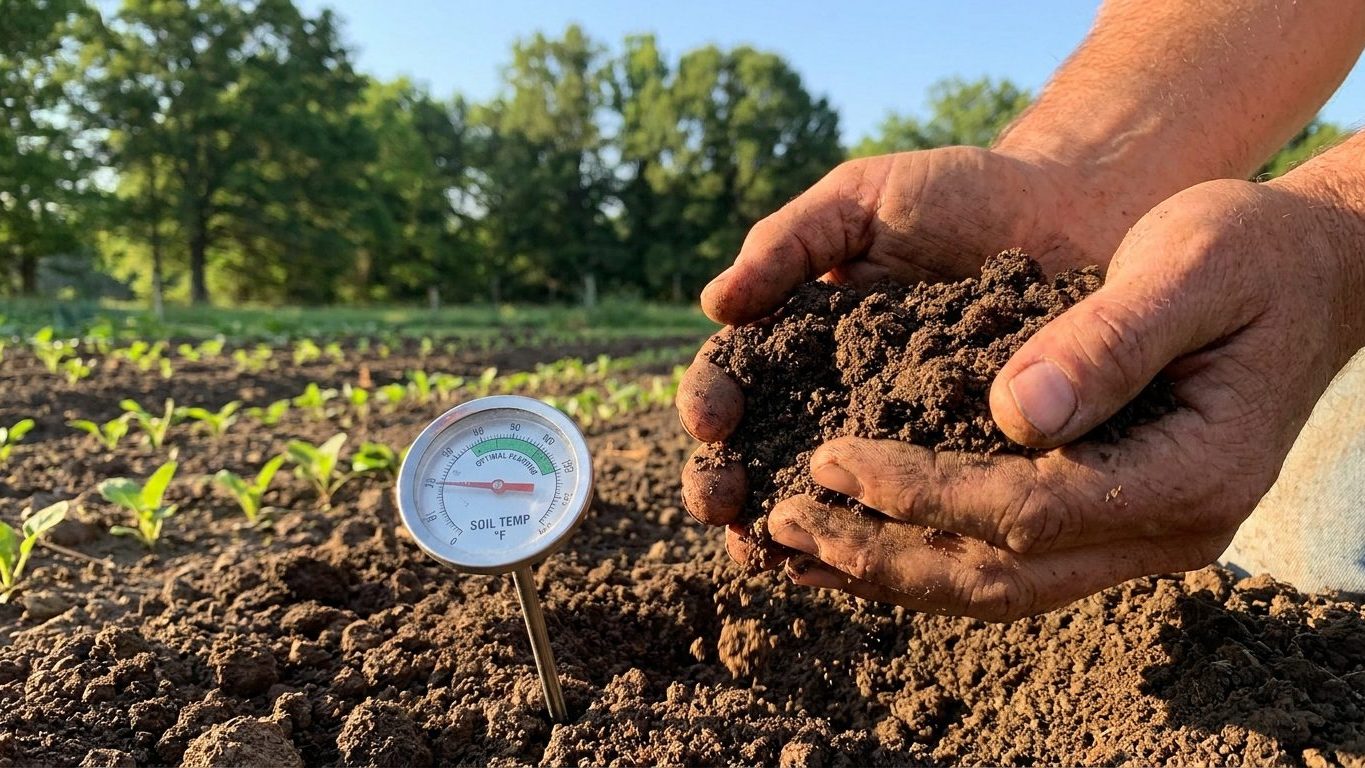

Winter squash needs warm soil, not just a frost-free date, and Wyoming’s high-elevation climate means that warmth arrives late and leaves early. With roughly 129 to 151 frost-free days depending on where you garden, growers here succeed by matching the type of squash to a short, cool, dry season rather than fighting it.
When the soil is warm enough in Wyoming

The question every Wyoming gardener asks first is when to put seed or transplant in the ground. The honest answer starts with the last spring frost, which at the state’s primary reference station (USW00024018) falls between May 7 and May 18, according to NOAA NCEI’s 1991-2020 Climate Normals, based on the 30-70% probability band for a 32F freeze. That’s a two-week window, not a single date, and it reflects a real spread in how often frost lingers into mid-May versus clearing out by the first week.
Here’s the part that trips people up: frost date is a proxy, not the actual trigger for planting winter squash. What the plant cares about is soil temperature, and soil warms up after the frost risk has passed, not the moment it does. A patch of ground can be technically frost-free and still be too cold for squash seed, which tends to sit and rot rather than germinate in chilly, wet soil. Waiting a week or two past the last frost date, until the soil itself has warmed, is time well spent rather than time wasted.
Wyoming adds a complication that flatter, lower states don’t have to think about as much. At 6,000 feet, the growing season runs to only about 130 frost-free days on average, and frost is possible in any month at the higher elevations scattered across the state. That single fact should shape every planting decision here. Season extension, meaning cold frames, row covers, or starting plants indoors under lights before transplanting, isn’t a nice-to-have in Wyoming. It’s close to mandatory if you want squash to mature before the vines get hit.
Wyoming also spans hardiness zones 3a to 6a on the USDA Plant Hardiness Zone Map (built from 1991-2020 extreme minimum temperature normals), which is one of the widest ranges of any state in the union. That range matters because a planting calendar built for the Cheyenne area, sitting closer to zone 5, doesn’t necessarily hold for a garden at higher elevation sitting closer to zone 3a. Rather than naming a specific squash variety here, the more useful move is to talk in types (bush versus vining, quick-maturing versus long-season storage types) and to check with the University of Wyoming Extension for the varieties actually trialled at an elevation close to yours. What performs near Cheyenne and what performs near Jackson are not the same list.
How long the season lasts here
Subtracting the two frost windows gives a real range rather than a single tidy number, and that range matters more than an average would. Using the earliest possible last frost (May 7) against the latest possible first fall frost (October 5) gives about 151 frost-free days in a favorable year. Using the latest last frost (May 18) against the earliest fall frost (September 24) gives closer to 129 days in a tighter year. Both figures line up with the roughly 130 frost-free days already noted for elevations around 6,000 feet, which is a useful cross-check on the math.
That 129-to-151-day window is short enough that it changes how a Wyoming gardener should think about planting strategy. In a state with a long season, a gardener can sow a fast crop, harvest it, and sow a second round of something else in the same bed before frost returns. Winter squash doesn’t usually get that second-sowing treatment anywhere, because the fruit needs the full run of the season to mature and cure on the vine. In Wyoming, the math makes that even clearer: there simply isn’t spare time at either end for a do-over. The first sowing, timed correctly, is the only sowing that matters.
This is also where the decision between direct-seeding and transplanting gets real weight. Squash seedlings resent having their roots disturbed, which is the usual argument for direct-seeding them straight into the garden. But when the season itself is only around 130 days and every week counts, starting seedlings indoors and transplanting them out, carefully and with minimal root disturbance, buys back two to three weeks that a short Wyoming season doesn’t otherwise give. It’s a trade-off between a slightly higher risk of transplant shock and a real gain in the days available for the fruit to size up and cure before fall frost arrives on schedule.
For gardeners weighing whether a second planting of anything makes sense once the squash bed is in, or how to stagger other crops around that one non-negotiable squash window, the site’s succession sowing guide walks through how to sequence plantings when the season itself sets the limits.
Heat and water in Wyoming

Winter squash is unforgiving about timing in a specific way: the fruit has to fully mature on the vine before frost, because an immature squash won’t cure properly and won’t store through winter the way a fully ripened one does. That single fact is why season length, covered above, matters more for this crop than almost any other vegetable in the garden. But heat and water decide something else: whether the vine has what it needs to actually fill out that fruit during the days it does have.
Wyoming’s numbers here are modest on both counts. The reference station at Cheyenne logs an average of just 10.4 days a year at or above 90F, according to NOAA NCEI’s 1991-2020 Climate Normals. That’s a low heat load compared to most of the country, and it means Wyoming squash growers generally aren’t fighting the kind of scorching, evaporation-heavy stretches that push southern gardeners toward heavy afternoon shading. This isn’t the hot, dry-climate story where irrigation exists mainly to counter blistering heat.
What Wyoming does deal with is low summer rainfall. Across June, July, and August combined, the reference station logs about 5.8 inches of rain, out of roughly 15.4 inches for the entire year. August is the driest of the three summer months at 1.52 inches, with June at 2.16 inches and July at 2.11 inches. Spread across an entire growing summer, that’s not much water for a vine crop that’s actively filling fruit and drinking heavily to do it.
The practical read is that Wyoming’s squash challenge isn’t heat stress and it isn’t the fungal, humid-summer disease pressure that plagues squash in wetter, warmer states. With low rainfall and a low heat load, mildew and rot pressure tend to be lower here than in humid regions. The real limiting factor is simply supplying enough water through irrigation to make up for what the sky isn’t providing, especially through a dry August when fruit is sizing up. It’s worth remembering that these are long-term averages at one reference station, not a guarantee for any specific garden; a rain gauge on your own plot, tracked against your own soil type, tells you more than any regional average can.
Which winter squash suit Wyoming
Given a 129-to-151-day season, a low heat load, and dry summers, the type of winter squash that suits Wyoming best is the earlier-maturing kind. Among winter squash broadly, there’s a real split between quicker bush-type or smaller vining types and the long-season, large-fruited storage types that need more time on the vine to size up and cure fully. In a state where frost can arrive by late September in a tighter year, giving up a few extra weeks to a slow-maturing type is a real gamble.
Because Wyoming’s summers run dry rather than humid, disease resistance isn’t the first thing to select for here the way it would be in a damp southern or coastal garden. That said, the intense sun and thinner air at elevation mean good airflow around the vine and a bit of afternoon shade at the root zone still help fruit set and reduce stress, even without the heat that drives that need in hotter states.
What this page won’t do is name a specific variety, and that’s a deliberate choice rather than an omission. Wyoming spans hardiness zones 3a through 6a, a wider range than most states carry, and a variety trialled and recommended for a garden near Cheyenne has no guarantee of performing the same way at higher elevation near Jackson or in a shorter-season mountain valley. The University of Wyoming Extension runs the actual local trials that answer that question properly, testing which types set fruit reliably and mature in time across the state’s different elevation bands. That local, elevation-specific trial data is the one recommendation that means something for a Wyoming garden, and it’s the resource worth checking before buying seed.