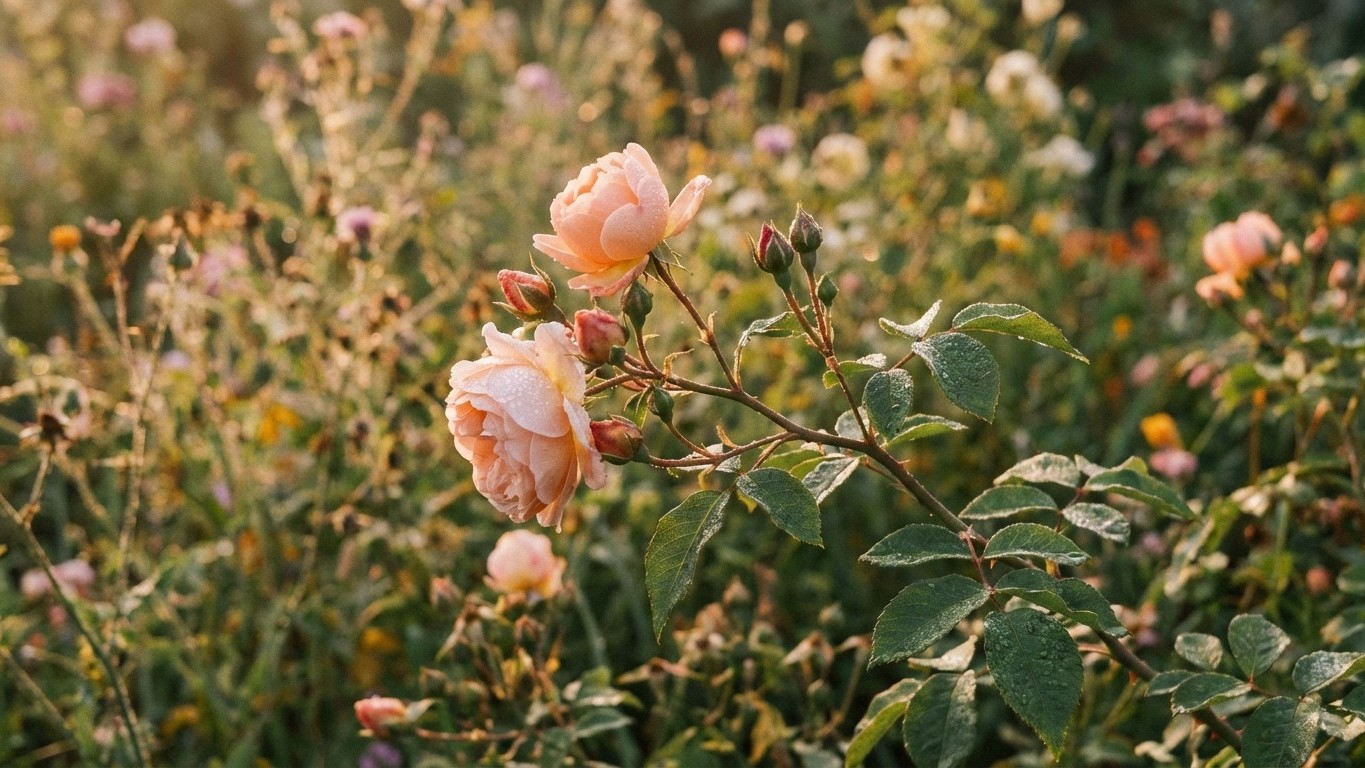

Most roses in Yukon get their main pruning in the weeks around the mean last spring frost, which falls in early June at Whitehorse. That is when the buds on the canes swell and show which wood survived winter. Ramblers and once-blooming old garden roses follow a different calendar, because they flower on last year’s canes and get cut right after their flowers fade. Cutting roses in March or April, as southern guides advise, can cost you shoots or flowers here.
The reference point is the Whitehorse A weather station. Climate normals for that station put the mean last spring frost at about June 5, and some frost-date datasets give a date a few days later. A mean date is the midpoint of a window. In one year out of two, the last frost falls later than that. Treat the weeks on either side of it as your pruning window. Northern and upland districts run weeks behind the Whitehorse station, so the window slides later the higher or farther north you garden.
For a rose, that window is the point when the plant leaves dormancy. Through winter the canes sit under snow with their buds shut. Once the ground thaws and the days lengthen, buds along live canes swell and turn green or red. Dead canes stay brown, shriveled and brittle. This is the best moment to read the plant honestly. In a climate this cold, winter kills an unpredictable length of cane, and no calendar date tells you where the live wood ends.
Natural Resources Canada publishes the Canadian hardiness zone map, and Whitehorse falls in a very cold zone, so check the map for your own site. A Canadian zone does not convert to a USDA zone, because the Canadian system is built on seven climate variables and the USDA system uses one. Use the zone to judge how hard winter will be on your roses, and use bud swell to time the cut.
The growing season is short. The reference station has about 81 frost-free days between the mean last spring frost and the mean first fall frost of August 25. Pruning in early June leaves that whole stretch for new canes to grow and harden. Wood that is still soft when fall frost arrives often dies back again over winter.
Dead wood you can see on a snow-free day can come out whenever you like. Save the shaping cuts for when the buds show you what lived. If you are still sorting out the basics of growing roses in Yukon, that guide covers siting and care, and this one stays with the knife and the calendar.
The date is not the same for every type of rose
The timing depends on where the flowers form. Some roses bloom on wood that grew last year, and others bloom on shoots that grow this spring. A spring cut on the first group takes the flowers off with it.
| Type of rose | Flowers on | When to prune |
|---|---|---|
| Ramblers | Old wood | Right after the flowers fade |
| Once-blooming old garden roses | Old wood | Right after the flowers fade |
| Climbers | New side shoots | Spring bud swell, dead wood only on main canes |
| Hybrid teas | New wood | Spring bud swell |
| Floribundas | New wood | Spring bud swell |
| Knock Out and other repeat-blooming shrubs | New wood | Spring bud swell |
Ramblers and once-blooming old garden roses set their flower buds on canes that grew the previous year. They bloom once, and the flush is the whole show. If you prune them in spring with the rest of the garden, **you remove this year’s flowers**, and you only find out when nothing opens. Wait until the petals drop, then cut out the canes that bloomed and any dead wood. New canes grow through the rest of the summer and carry next year’s flowers. Do this promptly, because those canes need time to harden before the mean first fall frost on August 25, which comes earlier than that date in half of years.
Hybrid teas, floribundas and repeat-blooming shrub roses flower on shoots that grow this season. Spring pruning does not cost them flowers. It removes winter damage and pushes vigorous new growth. Climbers sit in between. Their main canes form the frame, and the flowering shoots come off the sides each year. Leave the main canes alone except for dead wood, and trim the side shoots at bud swell like any other new-wood rose.
How far back to cut here
The height of the cut depends on winter, because dieback comes off first. Cut each cane down until the center is white and healthy. Dead wood looks brown inside, and a cut through it shows a brown or gray core. In a cold climate where canes often die back toward the snow line, the cut lands lower than the heights printed in guides written for milder places. Some years a hybrid tea ends up as a few short stems. Other years, with deep snow cover or good protection, much more of the plant survives. The winter protection for roses in Yukon you gave the plant decides which kind of year you get.
A common rule of thumb for Knock Out roses is a cut to about 12 inches. Here the dieback usually sets the height, and in a hard winter the live wood may already be at or below that height once the dead wood is removed. Other repeat-blooming shrub roses and floribundas follow the same logic, with the cut made below the dieback and not at a set height.
Make each cut just above an outward-facing bud, on a slant, so water runs off the bud and new growth heads away from the center. Remove canes thinner than a pencil, along with any that cross or rub. Open the middle so air moves through, which also helps the canes dry after rain.
Field check before the first cut: scratch a thumbnail across the bark of a cane near the middle. Green underneath means the cane is alive, and brown means it is not. Then make a trial cut a few inches above the soil line and look at the pith, the soft core at the center of the cane. White pith is healthy. If it is brown, keep cutting lower, a little at a time, until it turns white.
What pruning too early costs in Yukon
A pruning cut tells the plant to push new buds. If you prune during a mild spell in April or May and a hard freeze follows, the soft new shoots take the hit. Within a day or two they go limp, darken to brown or black and shrivel from the tip. The damaged tissue looks water-soaked at first and then dries out. The plant is rarely killed, because it has buds lower on the canes and reserves in the roots, but it has spent energy on growth it must now replace.
Wait a week or so after the freeze, until the line between live and dead tissue shows plainly. Then **cut back to the first healthy bud** below the blackened growth, using the same white-pith rule as in spring. Hold off feeding until new growth resumes, because pushing the plant with fertilizer into a second round of tender shoots only sets up the next frost.
Frost can come after the mean date in about half of years, so there is always some risk. A bad early cut costs you a few weeks of growth, which hurts in a season with about 81 frost-free days. You can cut that risk by waiting for buds to swell and checking the forecast before you prune. If you are seeing dark patches on canes that also have cankers or spots, rather than limp tips after a freeze, read Rose Diseases in Yukon: What the Climate Here Actually Brings to tell frost damage from disease.
Checking this against your own county
Yukon has no counties, so the useful comparison is your own valley, slope and elevation. Elevation and distance from water move the date by weeks inside the territory. A garden on a south-facing slope near a big lake can break buds earlier than one on a valley floor where cold air pools. For regional agriculture contacts, start with Agriculture and Agri-Food Canada, and ask a local nursery or garden club when their roses broke bud. Then **start the pruning from the swelling buds on your own canes** and use the early June window only as a rough guide.
Common questions
- Can I prune roses in fall in Yukon?
- Only to remove dead or diseased wood and spent flower heads. A structural cut in fall can trigger growth that frost kills. Save shaping for spring.
- What if my rose has no green buds by mid-June?
- Scratch the bark and check the pith. A cane with green bark and white pith is alive and may be slow. If every cane is brown inside, cut to the soil line and look for shoots from the base. Roses grown on their own roots can regrow from there.
- Should I deadhead roses in Yukon?
- Repeat-blooming roses benefit from removing spent flowers through summer. Once-blooming roses should be left alone after bloom except for the post-flower pruning described above.
- Is there a last date to prune in summer?
- Stop shaping cuts well ahead of the mean first fall frost on August 25. New growth needs to harden before winter, so late-summer pruning is a gamble you do not need to take.