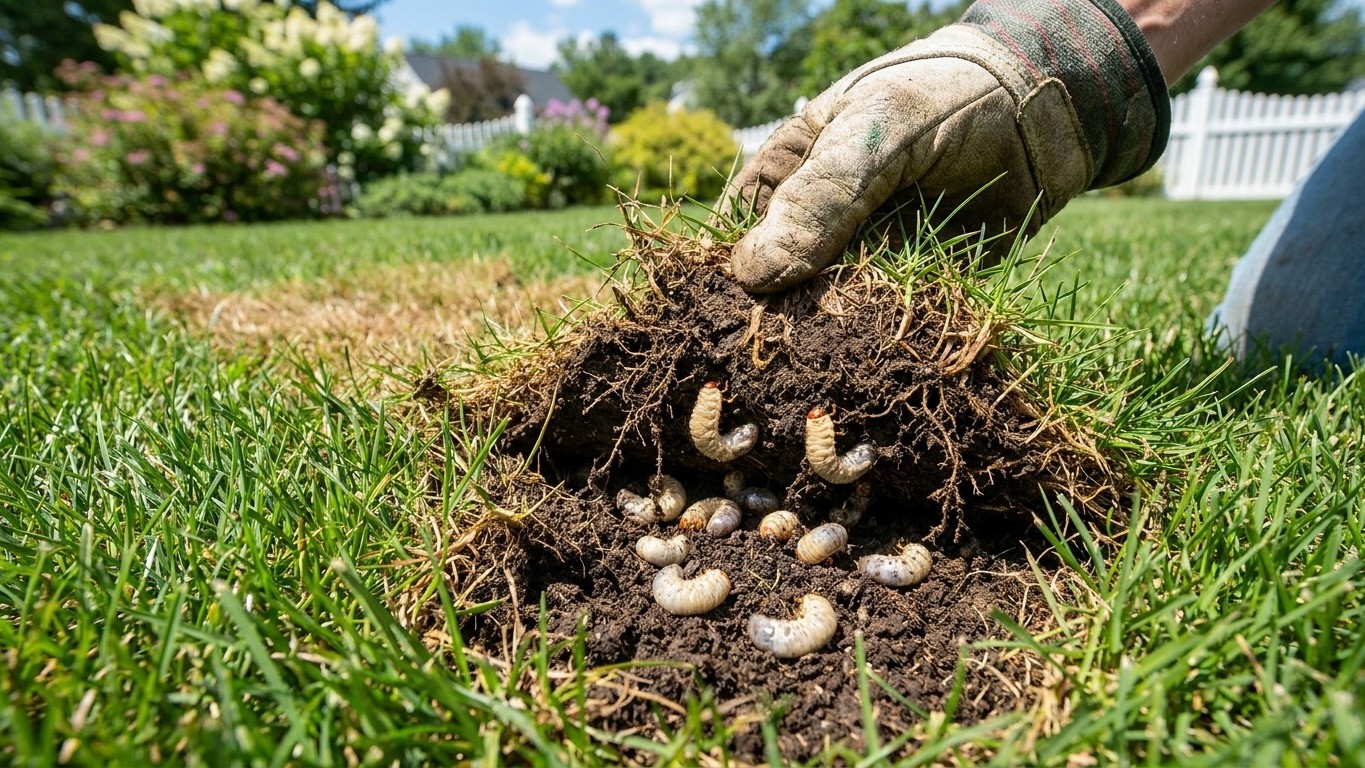

European chafer beetles show up in Vermont in early summer, when their grub stage begins chewing through lawn and garden roots. The timing tracks soil warmth more than the calendar, and the damage is often mistaken for drought stress or vole activity until someone actually pulls back the turf. Here’s what to watch for and what to do about it.
Reading the calendar from your last frost

Vermont gardeners plan around one date more than any other: the last spring frost. For the Burlington area, NOAA’s 1991-2020 Climate Normals put that window between April 30 and May 10, based on 32°F freeze probabilities at station USW00014742. That’s a normal, not a promise, some years slip earlier, some later, and the Green Mountains and the Northeast Kingdom run substantially shorter seasons than the Champlain Valley, where this station sits.
The European chafer doesn’t consult a calendar either. Adult beetles emerge and fly at dusk once soil and air temperatures cross a threshold, which in a mild, early spring can mean activity creeping earlier than the frost-date average would suggest, and in a cold, late one, pushing well past it. That’s why counting backward or forward from a single “expected” date is a mistake: a range built on a range only produces another range, never a fixed day you can circle on the wall calendar.
For anyone transplanting vegetable starts or laying new sod in that same spring window, first visible feeding damage from young grubs often doesn’t show up until well after the beetles themselves have come and gone, once root systems are established enough to reveal thinning or wilting. That gap matters for timing protective covers. A row cover or barrier put down too early gets pulled before the egg-laying flight even happens; one put down too late does nothing, because eggs are already in the soil. The practical move is watching soil warmth and beetle flights directly, rather than trusting a single date on the wall calendar.
What it attacks, and what the damage looks like
Most Vermont gardeners meet this pest through their lawn, not their vegetable bed. The classic symptom is a patch of turf that goes off-color and spongy, then peels back like a loose carpet because the root mass underneath has been chewed away. Raccoons and skunks digging up sections of yard overnight, hunting for grubs, is often the first sign a homeowner notices, sometimes before they’ve spotted any dead grass at all.
Vegetable gardens and ornamental beds can show damage too, especially where lawn borders a planting area. Strawberry beds and the root zones of young perennials near turf edges sometimes wilt or pull up easily, roots shortened or missing, even though the leaves above ground look otherwise normal for weeks. That mismatch, healthy-looking top growth over a plant that lifts out of the soil with almost no resistance, is a strong clue that grubs are underneath.
Which life stage causes the damage
It’s the larval stage, the white, C-shaped grub living in the top few inches of soil, that does the actual damage, feeding on grass and plant roots through summer and again after a fall growth spurt before overwintering deeper in the soil. Adult beetles, the tan-brown flying stage seen swarming at dusk in early summer, don’t feed much on plants at all. They exist mainly to mate and lay eggs. That distinction matters for anyone deciding when to act: treatments aimed at adult beetles address the next generation, not the grubs already established underground.
How Vermont sits in this pest’s range

Within this site’s coverage, the European chafer is documented in two territories. A count that small doesn’t support ranking one state as worse off than the other, but it does say something useful: where a pest is confirmed present in a limited number of places, that state is often sitting near an edge of the insect’s broader range rather than deep in its established core. Vermont’s shorter growing season and colder winter soils, particularly outside the Champlain Valley, likely slow the pest’s generational buildup compared to warmer regions further south and west where it’s been established longer.
The local reference point for identification and management guidance is University of Vermont Extension, and that’s the source worth checking directly for anything specific to conditions in this state, rather than assuming a technique proven effective elsewhere transfers without adjustment. Where a pest is documented in only a couple of places on a given list, the difference between those places tends to be how early or late the seasonal activity lands, not whether the insect shows up at all. That’s the practical takeaway for Vermont: presence is confirmed, and the open question for any given yard is less “will it arrive” and more “on what week.”
What actually works against it
Cheap, low-effort measures come first, and they matter most before the grubs ever get established.
- Overseed the lawn to keep turf dense, which reduces bare soil, exactly what egg-laying females prefer for landing and digging in during their dusk flights.
- Mow at a taller height and water deeply but less frequently, which keeps roots growing down rather than staying shallow, making a lawn less attractive and less vulnerable at the same time.
- Hand-pick adult beetles during their brief evening flight period, when they’re clustered and slow-moving on grass blades or low shrubs; it’s tedious but genuinely effective at cutting down the next generation’s egg-laying pressure, especially on a small property where the population isn’t overwhelming.
- Clear garden debris and thick thatch layers, which removes shelter and moisture that both adults and young grubs rely on, so a fall cleanup does double duty against several turf and garden pests at once, not just this one.
- Rotate crops in vegetable beds bordering lawn, since moving susceptible plantings away from turf edges each season disrupts the easy root access grubs get when a garden bed sits right next to an infested lawn strip.
- Use row covers, though they work only during the narrow window before eggs are laid and hatched; once larvae are already established in the soil and feeding on roots, a cover overhead does nothing, because the damage is happening below ground, out of reach.
At that point, the practical options shrink to accepting a damaged patch, reseeding it once feeding activity slows, or improving soil and root health so the lawn recovers faster the following season.
Common questions
Does European chafer damage show up in the same year the eggs are laid?
Yes, largely. Eggs laid by early-summer adults hatch into grubs that begin feeding within the same growing season, with damage typically becoming visible later in summer and sometimes continuing into early fall before the grubs move deeper to overwinter.
Can a homeowner tell European chafer grubs apart from other lawn grubs by sight alone?
Not reliably without close examination or expert help. Several white grub species look similar to the naked eye, which is exactly why University of Vermont Extension is the right resource to consult for local identification rather than guessing from a general description.
Is reseeding a damaged lawn patch worth doing right away, or should a homeowner wait?
Waiting until grub feeding activity has clearly slowed, usually as the season cools, gives new grass a better chance to establish roots without immediately facing the same feeding pressure that caused the damage in the first place.