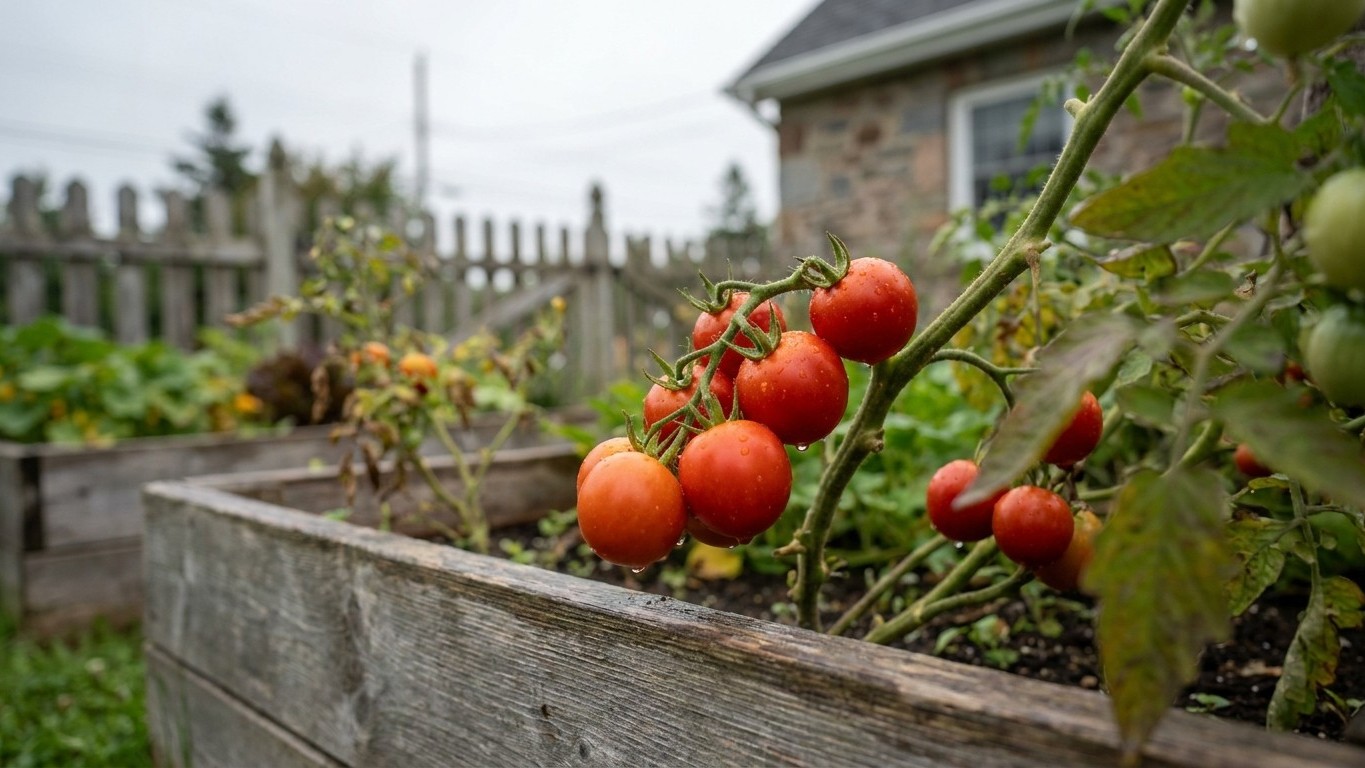

Nova Scotia’s tomato transplant date isn’t fixed to a single day on the calendar. Environment and Climate Change Canada’s 1981-2010 climate normals put the average last spring frost at Halifax Stanfield International Airport at May 7, but frost falls later than that in about half of all years. The safer move is to hold seedlings indoors until late May, hardening them off in the final week, and to keep a cover on hand in case a cold night shows up even after that.
What this comes down to in Nova Scotia

For most of the province, the tomato transplant date lands in late May, worked back from Halifax Stanfield’s average last frost of May 7 and padded because that figure is a mean, not a promise. Waiting for settled, warmed soil matters more than watching the calendar, since a mild stretch in early May can tempt a gardener into planting two or three weeks before the actual risk has passed.
The spring side of the window
Environment and Climate Change Canada’s May 7 figure comes from the Halifax Stanfield station, which sits on the coast near the airport. Inland valleys and upland districts often lag behind that reading by a couple of weeks, so a transplant date that works near Halifax can still be too early further from the coast. Start seed indoors the number of weeks your seed packet calls for to reach transplant size, since that figure varies by cultivar rather than by region, and count forward to your target set-out date rather than backward from a fixed day. Harden seedlings off gradually over the final week before they go in the ground. A plant moved straight from a warm windowsill into a cool, breezy garden bed often stalls for days even without frost touching it.
The fall side of the window
The other end of the season matters just as much for tomatoes, which need a long stretch of warmth after transplanting to actually ripen fruit. Environment and Climate Change Canada’s normals put the average first fall frost at Halifax Stanfield at October 18, and the same caution applies here in reverse: frost sometimes arrives before that date, not just after it. That October 18 figure is what the catalogue margins for named cultivars are measured against once you’ve settled on a variety, and the fuller breakdown of which ones ripen comfortably within that stretch lives on Tomato Varieties That Ripen in Time in Nova Scotia.
Working it out for your own garden
The method is the same one you’d use for any part of growing tomatoes in Nova Scotia: take a late-May set-out date, add the cultivar’s days-to-maturity figure from the seed packet to get an expected first-harvest window, then check how many days sit between that harvest window and the October 18 mean fall frost. Catalogue days-to-maturity are counted from transplant, not from seed, and they shift by a week or so with the weather any given season, so treat the result as a range rather than a single date.
| Cultivar | Days from transplant | Set-out date | First ripe fruit | Margin before Oct 18 frost |
|---|---|---|---|---|
| Sakura | 55 | Late May | Mid July | 95 days |
| Sun Gold | 57 | Late May | Mid July | 93 days |
| Juliet | 60 | Late May | Mid July | 90 days |
| Amalfi | 68 | Late May | Late July | 82 days |
| Cherokee Purple | 72 | Late May | Early August | 78 days |
| San Marzano II | 78 | Late May | Early August | 72 days |
A worked example, both ways
Take Sun Gold, listed at 57 days from transplant. Set out in late May and count forward: first ripe fruit lands around mid July, which leaves roughly 93 days of margin before the October 18 mean frost. That’s a wide cushion, and it’s why short cherry types are forgiving choices here even in a cool, cloudy summer.
Now push the arithmetic further. A big heirloom slicer running 90 to 100 days from transplant instead of 57 would put first ripe fruit somewhere in early to mid September, still likely ahead of the mean frost date but with far less room for error. A cool, overcast stretch in July or August, which Nova Scotia gets most seasons, slows ripening beyond the catalogue figure, and that’s exactly the kind of variety where the margin runs out first in a year when frost arrives on schedule or early.
The mistakes this state punishes

The most common error is treating May 7 as a safe date instead of a midpoint. Since Environment and Climate Change Canada’s figure is a mean, frost lands after it in roughly half of all years, and a transplant set out right on that date has genuine odds of getting nipped. The fix is simple: build in a buffer of at least a couple of weeks and watch the actual forecast rather than the calendar.
A close second is planting into cold soil after a run of warm air temperatures. A stretch of sunny days in early May can push the mercury up without doing much to soil that’s still cold from snowmelt and spring rain, and tomato roots sitting in cold, wet soil stall out even when no frost ever touches the leaves.
The third mistake is picking a long-season slicer for a coastal or cool-summer garden without checking its margin against the fall side of the window. A cultivar with 72 days of catalogue margin sounds safe on paper, but Nova Scotia’s cloudy, cool summer stretches routinely add a week or more to real-world ripening time, and that’s the difference between a full harvest and a windowsill of green tomatoes come October.
Checking this against your county
Every figure above is measured at Halifax Stanfield International Airport, and the rest of Nova Scotia does not share one climate. The Annapolis Valley, the South Shore and the Cape Breton highlands each run on their own frost schedule, sometimes weeks apart from the coast near Halifax. Before locking in a date, check with your county’s agricultural resources and Nova Scotia’s own Department of Agriculture for guidance closer to your own ground, and use the Halifax figures here as the starting point rather than the final word.
Some gardeners also time this by the Moon: when to plant tomatoes by the moon, as almanac tradition rather than fact.
Common questions
Can I plant tomatoes before May 7 if the weather has been warm?
You can, but you’re taking on real risk. Environment and Climate Change Canada’s May 7 figure is a long-term average, not a cutoff, and frost has occurred after it in roughly half of the years on record at Halifax Stanfield. A run of warm days in early May doesn’t change that odds picture.
How many weeks before transplanting should I start tomato seed indoors?
Check your seed packet rather than a general rule, since the number of weeks needed to reach transplant size varies by cultivar. Count forward from your late-May target set-out date using that packet figure to find your indoor sowing window.
What do I do if frost is forecast after I’ve already transplanted?
Cover the plants overnight with a sheet, row cover or overturned bucket, and remove the cover as soon as temperatures rise the next morning. Watering the soil around the plants before a cold night can also help, since damp soil holds heat better than dry soil.
Does this frost window apply to the whole province?
No. The May 7 and October 18 figures come from the Halifax Stanfield station on the coast, and inland or upland areas of Nova Scotia commonly see later spring frosts and earlier fall frosts than that. Treat these dates as a coastal reference point and confirm locally before committing your transplants.