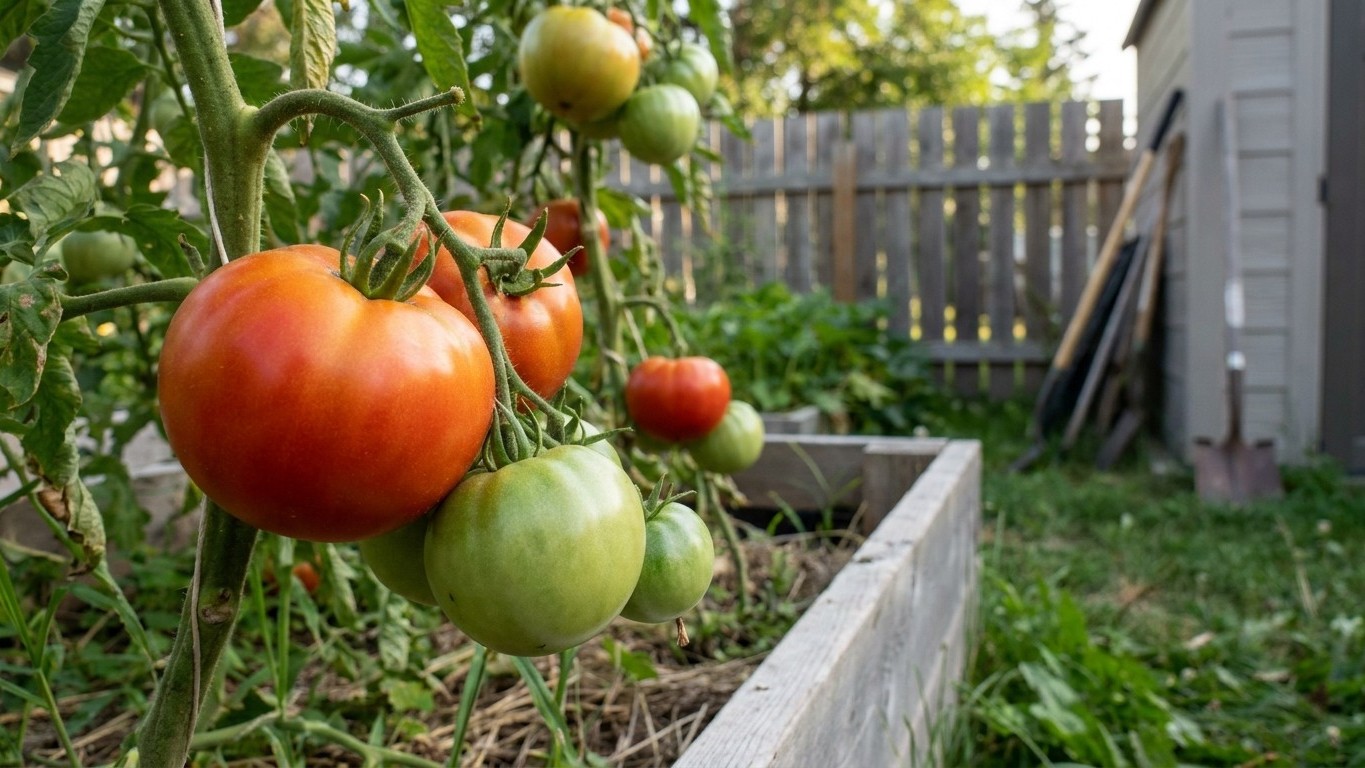

Manitoba’s tomato transplant date is built backward from the province’s frost window, not forward from the calendar. Environment and Climate Change Canada’s 1981-2010 climate normals put the mean last spring frost at Winnipeg Richardson International Airport at May 23, and the mean first fall frost at that same station at September 22. Because the spring figure is an average, not a guaranteed cutoff, most Manitoba gardeners hold transplants until early June and watch nightly lows instead of trusting the calendar alone.
What this comes down to in Manitoba

The tomato transplant date for most of Manitoba is set by the gap between two mean frost dates recorded at Winnipeg Richardson International Airport: a last spring frost on May 23 and a first fall frost on September 22, both from Environment and Climate Change Canada’s 1981-2010 climate normals. That gives a mean frost-free window of roughly four months, but the word mean is doing a lot of work in that sentence.
A climate normal is the midpoint of thirty years of frost records, not a promise. In roughly half of those thirty years, the last spring frost at that Winnipeg station fell after May 23, sometimes by a week or more. Treat May 23 as the middle of the risk, not the end of it. That is why growers here rarely transplant tomatoes the moment the calendar clears the mean date. Most wait into early June, when the odds of a damaging frost have dropped further, and many still keep a frost cloth or row cover on hand through the first two weeks outdoors.
Why the window matters more than either date alone
The same caution applies at the other end of the season. September 22 is also a mean, so a killing frost can arrive earlier in a cool year. The real planning number is not either date by itself but the season length between them, and how much of it a given tomato actually needs to ripen fruit rather than just to set it. That is the arithmetic the next section works through, and it is also why picking a fast-maturing cultivar matters more here than in a longer-season state.
The window also decides which growth habit pays off. Indeterminate varieties like Sakura, Edox, Big Beef Plus and San Marzano II keep flowering and setting new fruit until frost stops them, so every extra day of margin becomes more ripe fruit rather than just insurance. Determinate varieties such as Glacier, Celebrity Plus and Amalfi set most of their crop in a shorter, more concentrated window, which suits a gardener aiming for one heavy harvest for canning rather than a slow trickle all summer. For the fuller rundown of which cultivars fit this window, see our guide to Tomato Varieties That Ripen in Time in Manitoba.
None of this replaces the groundwork covered in the general guide to growing tomatoes in Manitoba, things like hardening off seedlings and warming the soil before they go in. This page is only about timing: when to start seed, when to harden off, and when to actually set plants outside.
Working it out for your own garden
The math starts with the frost window itself, not with a variety name. Take the mean last spring frost at Winnipeg Richardson International Airport, May 23, per Environment and Climate Change Canada’s 1981-2010 normals, and add a week or two of buffer because that date is only the midpoint of the risk. That buffer is why most seed catalogs and Manitoba gardeners alike land on early June as the practical transplant window rather than the mean date itself.
Running the arithmetic on two real cultivars
From there, count forward using the days-to-maturity figure printed on the seed packet, which is measured from transplant, not from seed. A 55-day tomato transplanted in early June ripens its first fruit in late July, roughly eight weeks later. Compare that to the mean first fall frost of September 22, also from the Winnipeg station, and Sakura is carrying roughly 53 days of margin, meaning it finishes its main harvest with almost two months to spare before frost risk climbs again.
Push the same arithmetic out to a longer-season cultivar and the cushion narrows fast. San Marzano II lists 78 days to maturity. Transplanted in early June, it ripens its first fruit in late August, leaving about 30 days before the September 22 mean frost. Thirty days sounds like plenty, but that frost date is a mean, and in a cooler year the first fall frost can land well before it. A transplant delayed even a week or two by a cold, wet spring eats directly into that same cushion. That is the line between a variety that comfortably finishes here and one that is gambling on a warm autumn.
The table below runs the same calculation across several cultivars, all counted from an early June transplant against the two Winnipeg mean frost dates.
| Cultivar | Days to maturity | First ripe fruit | Margin before mean fall frost |
|---|---|---|---|
| Sakura | 55 | Late July | 53 days |
| Sun Gold | 57 | Early August | 51 days |
| Juliet | 60 | Early August | 48 days |
| Amalfi | 68 | Mid August | 40 days |
| Cherokee Purple | 72 | Mid August | 36 days |
| Granadero | 75 | Mid August | 33 days |
| San Marzano II | 78 | Late August | 30 days |
Days-to-maturity figures come from the seed catalog and can shift by a week or so with the season’s heat, so treat the margin column as a way to rank varieties against each other, not a guarantee of the exact week fruit will color up. The same counting-back method works for the seed-starting date too: start seed indoors early enough that seedlings are stocky and the right size by the early-June transplant window, rather than picking a fixed week off a generic chart.
The mistakes this state punishes

The first mistake is treating May 23 as a safe date instead of a midpoint. Environment and Climate Change Canada’s own normals mean that in roughly half of the thirty years behind that figure, the last frost at the Winnipeg station fell after it, sometimes into the first days of June. Transplanting the week the calendar clears May 23, rather than building in the extra week or two most Manitoba gardeners use, is the single most common way tomatoes get cut down here. Keep a floating row cover on hand for the first two weeks after transplant regardless of the forecast.
The second is choosing a long-season cultivar for its description or its photo without running the days-to-maturity number against the frost window first. A tomato like San Marzano II or Granadero, both in the mid-70s to high-70s for days to maturity, still finishes in most years when set out in early June. But stack a slow, cool spring that pushes transplanting past that early-June window onto a variety already carrying only 30 to 33 days of margin, and there is no cushion left. Save the longest-season paste and heirloom varieties for a garden with a warm microclimate, a south-facing wall or a raised bed that runs a few days ahead of the open yard, and lean on the 55-to-60-day cultivars everywhere else.
The third is skipping the hardening-off period because the transplant date finally arrived and the plants look ready. Manitoba’s early June days can swing from warm and still to sharp, drying wind within an afternoon, and a tomato moved straight from a warm windowsill or greenhouse into that will stall or scorch its leaves. Give it the same week of graduated outdoor exposure you would use in any other climate before it goes into the ground for good.
Checking this against your county
Every figure above comes from one station, Winnipeg Richardson International Airport, and Manitoba is a big province. Areas north of Winnipeg, and higher or more exposed districts anywhere in the province, typically see their last spring frost later and their first fall frost earlier than the Winnipeg normal, which shortens the whole growing window. Before locking in a transplant date, check your own municipality’s frost history against the Winnipeg figures rather than assuming they transfer directly.
Manitoba Agriculture keeps provincial crop and gardening guidance at gov.mb.ca/agriculture, and your local rural municipality or county extension office is the fastest way to find frost records specific to your own area.
If you follow the almanac, here is when to plant tomatoes by the moon. It is a tradition, not a proven method.
Common questions
Can I just direct sow tomato seed outside instead of raising transplants?
Not in Manitoba’s window. The days-to-maturity figures on every seed packet are counted from transplant, not from seed, so a direct-sown tomato would need several extra weeks added on top of the numbers used above. Given the gap between the May 23 mean last frost and the September 22 mean first fall frost at Winnipeg, that extra time usually is not there.
What do I do if my seedlings got leggy before the transplant window arrived?
Pot them up into a larger container and bury the stem deeper, since tomatoes root readily along a buried stem. Resist the urge to set them outside early to solve the problem. A stretched, weak transplant set out ahead of the frost window is more likely to be lost than one that spends another week or two indoors.
Does using a wall of water or a cloche let me ignore the frost window?
It lets you push the transplant date earlier than the open window allows, but it does not remove the risk once the cover comes off. A plant hardened under season-extension gear still meets the same frost odds the day it is uncovered, so the May 23 mean and its half-and-half odds still apply, just shifted to whenever you take the cover away.
Do cherry tomatoes need a different frost date than slicers or paste types?
No, frost affects the plant regardless of fruit type, so the transplant and frost dates are the same across the board. What differs is the margin: a short-season cherry type like Sakura or Sun Gold reaches its first ripe fruit weeks earlier than a paste tomato like San Marzano II, which simply gives it more room to spare against the same September frost mean.