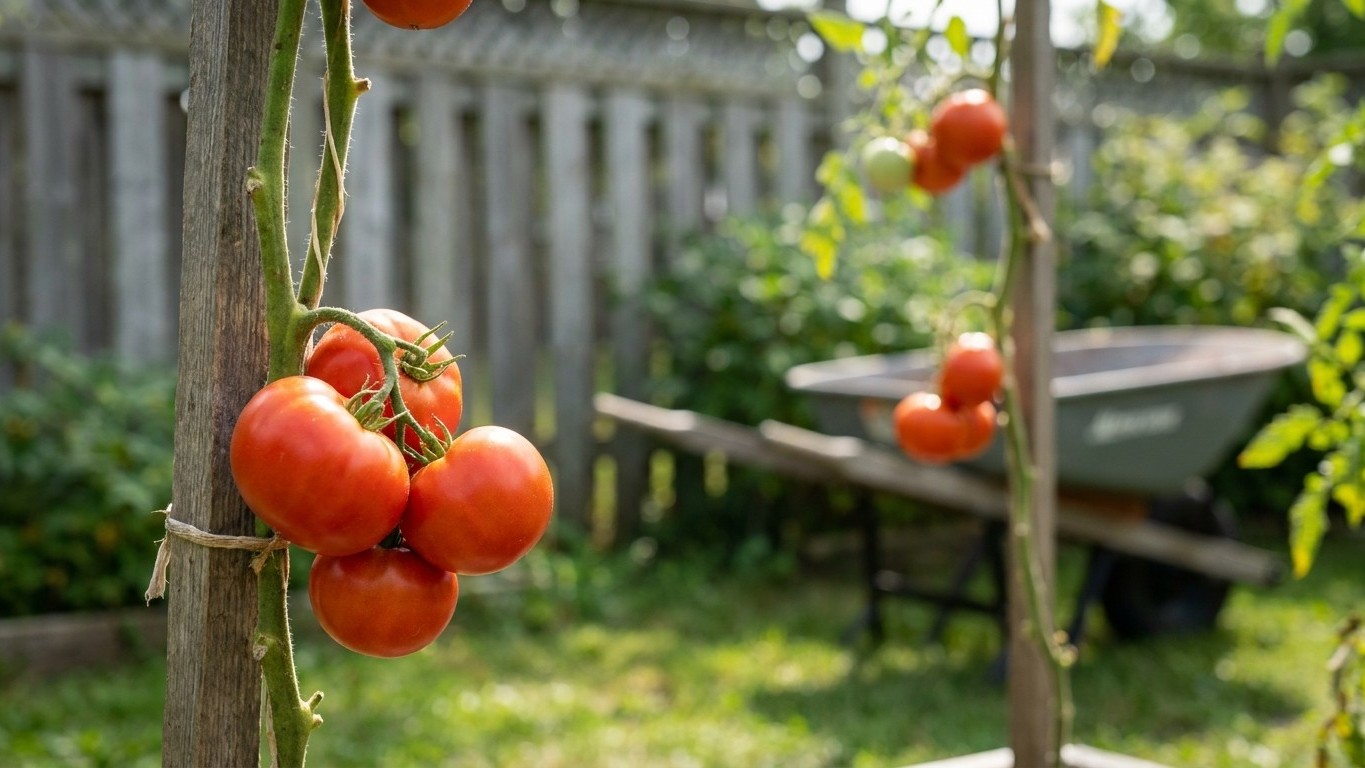

Ontario’s tomato transplant date follows from a single figure: the average last spring frost of April 30, recorded at Toronto’s Pearson airport station by Environment and Climate Change Canada. That date is a mean pulled from the 1981-2010 climate normals, which means frost arrives later than April 30 in roughly half of all years on record. Set tomato transplants out no earlier than mid-May, and keep row cover or a frost blanket ready for the two weeks after.
What this comes down to in Ontario

The whole planting-date question for tomatoes in Ontario is really two numbers pulling against each other: the mean last spring frost of April 30 and the mean first fall frost of October 16, both from Environment and Climate Change Canada’s 1981-2010 climate normals at the Toronto Pearson station. Counted out, that gap runs to roughly 169 days between the two means, which is the frost-free season a Toronto-area gardener can expect in an average year. That is not the number to plan around, though. Both dates are means, not boundaries, so in about half of the years on record the spring frost lands after April 30 and the fall frost can land before October 16, squeezing the season from both ends at once.
Toronto Pearson is one station, and Ontario is not one climate. Gardens along the Niagara shoreline or in the Windsor area typically see frost dates run earlier in spring and later in fall than Pearson’s normals, thanks to the moderating effect of the Great Lakes. Inland and northern districts, and low-lying frost pockets anywhere in the province, run the other way and can lag the Pearson dates by weeks. Treat April 30 as a reference point to adjust from, not a date to copy onto your own calendar. If you haven’t already settled the basics of site, soil and spacing, growing tomatoes in Ontario covers that ground.
Working it out for your own garden
The method is the same every year, even if the exact dates shift: take the frost window, not a single day, and count backward or forward from it using a cultivar’s days-to-maturity figure, which is always counted from transplant, not from seed. Because April 30 is a mean with real spread on either side, the safe move is to add a buffer rather than transplant on the mean date itself. That buffer is why the transplant window works out to mid-May rather than late April, once the risk of a later-than-average frost is factored in.
The arithmetic, shown with real cultivars
Take Sakura, a small-fruited cherry tomato listed at 55 days from transplant. Setting it out in mid-May and counting 55 days forward lands the first ripe fruit in early July. From early July to the October 16 mean fall frost at Pearson is close to 100 days of margin, more than enough room even if frost arrives two or three weeks ahead of schedule. Now take San Marzano II, a paste tomato listed at 78 days from transplant. The same mid-May transplant date pushes first ripe fruit to late July, leaving around 77 days of margin before the mean fall frost. That is still a finish, but it is the tightest margin among the cultivars in this range, and it is the point where a late transplant, a cool summer, or an early frost year could start to matter. A margin under about 80 days is where the calendar stops being forgiving. For a side-by-side on which cultivars fit which season length, Tomato Varieties That Ripen in Time in Ontario lays out the full list.
| Cultivar | Days from transplant | Transplant window | First ripe fruit | Margin before mean fall frost |
|---|---|---|---|---|
| Sakura | 55 | Mid-May | Early July | About 100 days |
| Sun Gold | 57 | Mid-May | Early July | About 98 days |
| Cherokee Purple | 72 | Mid-May | Late July | About 83 days |
| San Marzano II | 78 | Mid-May | Late July | About 77 days |
Every figure in that table is calculated from the catalogue’s own days-to-maturity number crossed against the Pearson frost window, never asserted on its own. Catalogue days-to-maturity numbers also shift by a week or two depending on the season’s heat, so treat the “first ripe” column as a rough landing zone, not a fixed appointment.
The mistakes this state punishes

The most common error is trusting a warm stretch in late April as proof the frost risk has passed. It hasn’t. Because April 30 is a mean date from Environment and Climate Change Canada, not a cutoff, a run of mild days in mid-April tells you nothing about whether the last frost will land on time this particular year. Transplants set out on the strength of a warm week are exactly the plants lost to a cold snap two weeks later.
The second mistake is picking a long-season cultivar without checking it against the local margin. A tomato listed at 78 days from transplant, like San Marzano II, still finishes at Toronto Pearson’s mean dates, but it leaves far less room for error than a 55-day cultivar like Sakura or Edox. Stacking a long-season variety with a late transplant is how a paste tomato crop gets caught green when an early fall frost lands ahead of the October 16 mean.
- Transplanting on a mild late-April day instead of waiting for the mid-May window
- Skipping the hardening-off period after weeks indoors under lights
- Choosing a 75-to-78-day cultivar without checking its margin against the fall frost mean
- Assuming one warm week means the soil itself has warmed up too
Skipping hardening off compounds both problems. A transplant moved straight from an indoor windowsill or grow light into open garden air, even after the frost risk has genuinely passed, checks its growth for a week or more while it adjusts. That lost week eats directly into the margin the arithmetic above was counting on.
Checking this against your county
Everything above is anchored to one station, Toronto Pearson, and Environment and Climate Change Canada’s own normals note that a single station does not describe a whole province. Before locking in a transplant date, check the frost data for a station closer to your own county, since gardens even an hour’s drive from Pearson can run a week or more ahead or behind it. Ontario’s provincial agriculture resource, ontario.ca/page/agriculture-and-food, is the starting point for finding local extension contacts and more localized planting guidance than a single-station average can offer.
If you follow the almanac, here is when to plant tomatoes by the moon. It is a tradition, not a proven method.
Common questions
Can I plant tomatoes outside in Ontario before the May long weekend?
You can, but Toronto Pearson’s mean last frost of April 30 means frost still lands after that date in roughly half of all years, so earlier transplants carry real risk without a frost cover on hand.
Do I need to adjust these dates for northern Ontario?
Yes. The frost figures here come from the Toronto Pearson station, and northern and inland districts typically see a later last spring frost and an earlier first fall frost than Pearson’s normals, which shortens the safe transplant window.
What happens if I transplant a 78-day tomato too late?
The margin narrows fast. San Marzano II already runs about 77 days of margin from a mid-May transplant to Pearson’s mean fall frost, so pushing the transplant date back by even a couple of weeks starts eating directly into that buffer.
Is the April 30 frost date the same everywhere in the GTA?
No. It is specific to the Pearson station’s recording site, and low-lying yards or areas farther from the lake’s moderating effect can see frost later in spring and earlier in fall than that figure suggests.