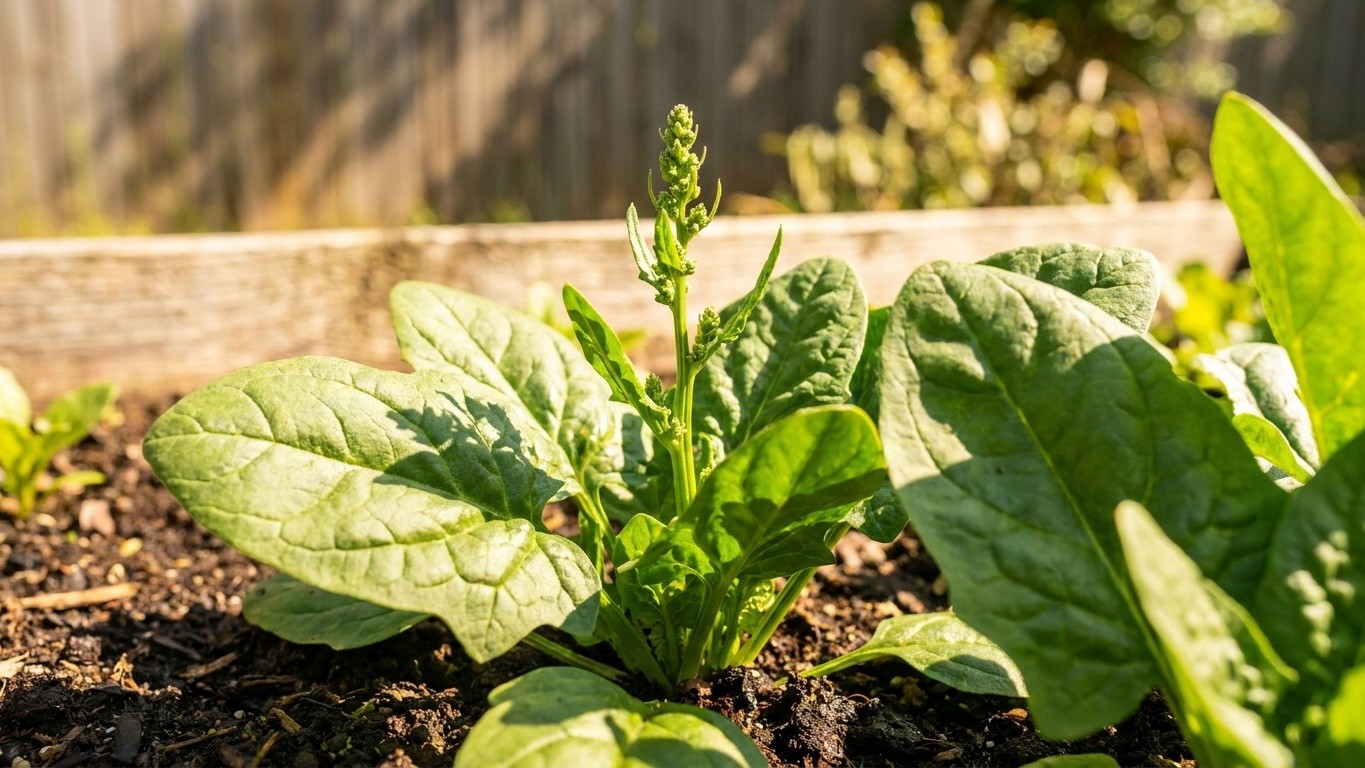

Four kinds of feeders go after spinach in Michigan: chewers that leave holes, sap feeders that curl and stick the leaves, larvae that tunnel inside the leaf, and larger animals that clip whole plants. Each shows up at a different point in the frost-free season. Spring seedlings take the first hits, warm spells bring the sap feeders, and a fall crop faces a second round before the ground freezes.
Which pests attack spinach in Michigan
MSU Extension is the service that documents garden pests for Michigan, and its county offices identify what is active locally. For a leaf crop like spinach, the pests that matter sort into feeding groups rather than into one long roster.
Which feeding groups matter on spinach?
Chewing insects take bites out of the leaf blade and leave ragged edges or round holes. Sap-feeding insects sit on the underside of leaves and in the crown, and the leaves curl, pucker or turn sticky. Leaf-tunneling larvae live between the two leaf surfaces and leave pale, winding trails or blotches you can see by holding a leaf to the light. Larger animals clip seedlings off at the base or browse a row down to stubs overnight.
Spinach is a cool-weather plant that grows best where temperatures do not exceed 75 F. That puts the crop in the ground during the spring and fall windows, so the pressure comes from whatever is active in those cooler stretches.
Which pests can be ignored in a spinach bed?
Skip the long lists of tree and orchard pests that extension publishes for the state. Those insects feed on bark, wood, fruit and tree foliage, and a low annual crop gives them nothing to eat. The same goes for pests tied to seed potatoes or corn ears, organs spinach never grows. On spinach, follow the leaf damage.
Heat damage also gets mistaken for pest damage. Detroit reaches 90 F or more on 10.3 days in a typical year, and spinach struggling through those days can look as ragged as a planting that was eaten.
When each one shows up, and what it does first
The frost-free stretch runs from around April 30 in the Detroit area (early to mid May across most of the Lower Peninsula) to a first fall frost between October 6 and October 21. Spinach is sown on both sides of that stretch, and the pests follow the crop. Timing the sowing against the window does more than any reaction after the damage shows up.
What happens in spring, right after sowing?
The first thing a gardener sees is a gap in the row. Seedlings that were up one day are cut off at the soil line the next, or the row thins without any leaf debris. Clipping animals and cutters that feed near the ground do this while the plants are still small. Once true leaves form, the next sign is small round holes, then ragged edges, as chewing insects arrive. The earlier in the cool window the sowing goes in, the fewer insects are active.
What happens when the weather warms?
As spring warms and days lengthen toward 15 h 05 of daylight on the longest day, spinach starts to bolt, and the plants send up a seed stalk. Long days trigger flowering along with warmth, so a cool summer does not buy extra time. Stressed, bolting plants are poor competitors against sap feeders. The first sign is curled, sticky or distorted new leaves in the center of the plant, often before anyone sees an insect. Leaf tunnelers show up on mature leaves as pale trails that spread over a week or two. For the bolting side of the story, see Will Spinach Bolt Early in Michigan?
What happens in the fall crop?
Fall sowing is blocked by warm soil rather than by cold, since germination drops once soil passes 80 F. Seed sown early in a hot stretch fails to sprout and can be mistaken for something eating it. Plant when the soil has cooled, counting back from the date you want to harvest. Young fall seedlings face the same clipping and chewing as spring ones, and by the time the first frost arrives, insect activity drops off. Details are in When to Sow Autumn Spinach in Michigan.
Telling the damage apart from everything else
Most spinach problems that look like pests are not. Yellow leaves, holes, wilting and bitter taste each have more than one cause, and treating the wrong one wastes a planting. Start with the pattern across the bed. Damage that follows individual plants, with a leaf eaten here and a clean one beside it, points to a feeder. Damage that hits every plant the same way points to water, soil or weather.
| What you see | Possible causes | What settles it |
|---|---|---|
| Round holes or ragged edges | Chewing insects, or hail and wind tearing | Insect damage is uneven from plant to plant. Weather tears show across the whole bed after a storm. |
| Pale winding trails inside the leaf | Leaf-tunneling larvae | Hold the leaf up to the light. A larva or its trail sits between the two leaf surfaces. |
| Curled, sticky or puckered new leaves | Sap-feeding insects, or a virus or heat stress | Check the leaf undersides and crown for insects. Plants showing no insects need an extension diagnosis. |
| Yellowing of older leaves across many plants | Low nitrogen, soggy soil or disease | Pests rarely yellow a whole row evenly. A soil test and a look at the roots help narrow it. |
| Wilting at midday that recovers by evening | Water shortage or heat | If the plants stand up again after watering, no pest is involved. |
| Seedlings missing or cut at the base | Animals, cutworm-type feeders, or failed germination in warm soil | Cut stems at the soil line point to a feeder. No sprouts at all in warm soil points to germination failure. |
| Tall center stalk, small bitter leaves | Bolting from long days and warmth | No insect is involved. Spinach grows best below 75 F, and bitterness rises past that mark. |
One rule helps most: look at the leaf underside and the soil line before reaching for any treatment. The cause is usually sitting within a few inches of the damage, and a feeder you cannot find is a reason to suspect something else.
What actually works here, and what is a waste of time
Physical barriers and timing beat treatments in a crop with a short cool window. A lightweight row cover laid over the bed right after sowing keeps chewers, tunnelers and sap feeders off the leaves, and it also keeps clipping animals from reaching seedlings. Anchor the edges with soil or boards so nothing can crawl under, and lift the cover when plants bolt or the weather warms past 75 F, because heat under the cover works against the crop.
Sow into the cool window and no later. Spring sowings made as soon as the ground can be worked get leaves up before warm weather draws sap feeders and starts the bolting clock. Fall sowings count back from the harvest date you want.
What does not work?
Spraying at the first sign of a hole usually fails, because the cause may be weather, water or an insect that has already moved on. Planting a second round without checking soil temperature wastes seed, since germination drops once soil passes 80 F. Repeated harvesting from bolting plants does not restore flavor, because bitterness follows the temperature ceiling, not the picking.
Pesticide choices belong to Michigan’s extension service, which alone knows which products are registered in the state and which ones suit a leaf crop eaten fresh. Talk to your county office before buying anything for a bed you plan to eat from within days.
Where to check this for your own county
Pest presence varies within Michigan. A county in the southeast and one in the northern Lower Peninsula do not share the same insect pressure, and a pest documented statewide does not tell you what is in a particular garden.
MSU Extension runs county offices that field exactly these questions. Staff there can identify an insect from a photograph or a bagged leaf, and they know what has been active locally in recent seasons. Start with the office for the county where you garden, and bring the notes from your dusk check: where the damage starts, which plants, how many days it has been going.
For the broader growing picture, including sowing windows and varieties, read Growing Spinach in Michigan. Then pull one damaged leaf, bag it, photograph the plant and call your county MSU Extension office before the next row goes in.
Common questions
Why are my spinach leaves full of holes?
Round holes and ragged edges point to chewing insects, but hail, wind and handling tears look similar. Check whether the damage varies plant to plant and look under the leaves and at the soil line. If you cannot find a feeder, bring a leaf to your county MSU Extension office.
Can I harvest spinach that has been chewed?
Leaves with small holes are fine to eat after a thorough wash, though a heavily damaged plant gives little to pick. Trim away any leaf with trails, sticky residue or decay. Washed spinach holds best at 32 F, and it will not keep good quality for more than 2 weeks even then. At the 41 to 50 F of a fridge door it yellows in days, so store it at the back of the bottom shelf.
Does a row cover really keep pests off?
It blocks the groups that reach leaves from outside, as long as the edges are sealed at sowing. It does nothing for an insect already in the soil, so put it on right after sowing rather than after damage appears.
Is the damage from pests or from bolting?
Bolting shows as a rising center stalk and smaller, bitter leaves, and it is triggered by long days and warmth, not by an insect. Pest damage shows as holes, trails, curling or missing seedlings. Both can occur together on a stressed planting, so check for each separately.