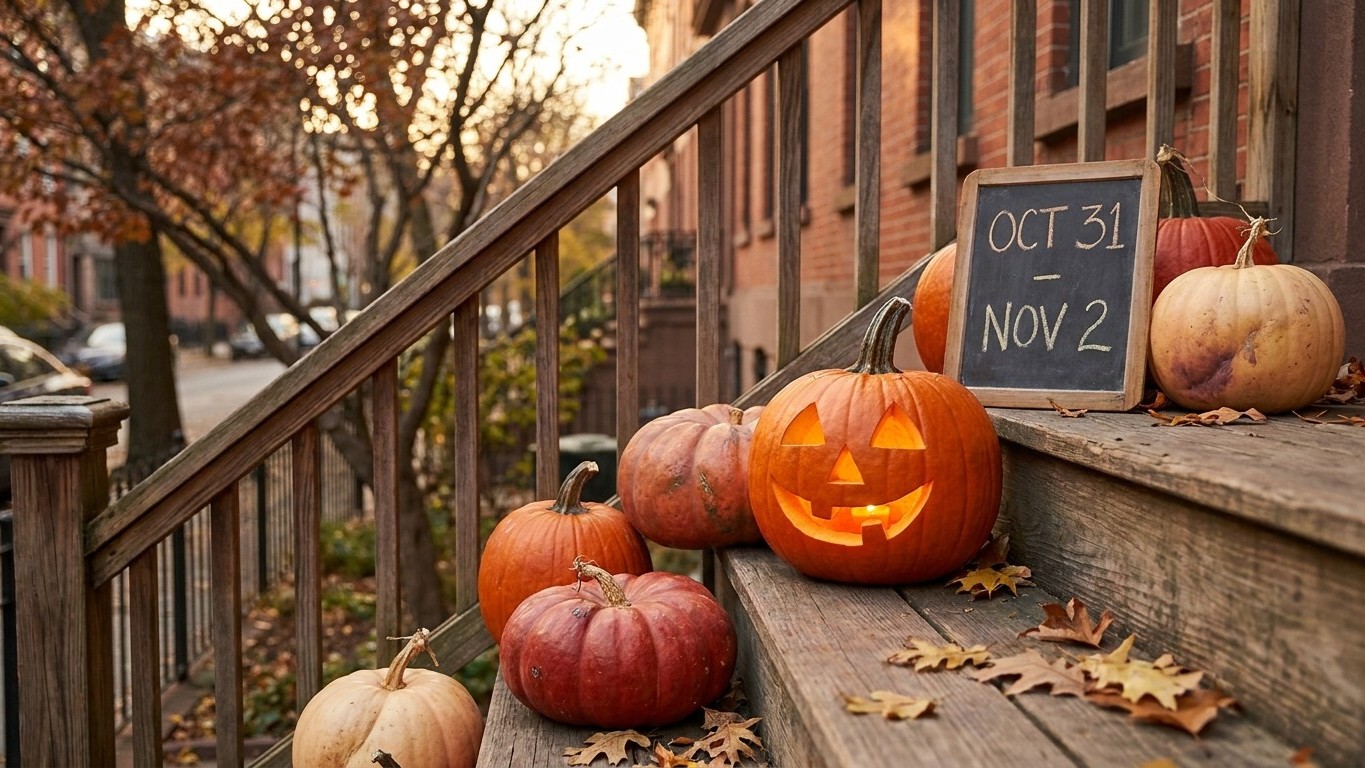

In New York City, the average first fall frost doesn’t arrive until well after Halloween, somewhere around November 14 to November 27. That means freezing weather isn’t what should set your carving schedule here. The real pressure comes from a milder, murkier problem: how to keep a whole pumpkin in good shape once it’s home, and how long to wait before you cut into it.
The short answer

Start with the number that matters most for anyone in the five boroughs or the surrounding suburbs: the mean first fall frost lands around November 14 to November 27. Halloween falls on October 31, which puts the average frost date somewhere between two and four weeks after the holiday, not before it. That’s a meaningful gap, and it changes the whole conversation around pumpkin timing in this part of the state.
In much of the country, frost is the deadline. Growers and buyers watch the forecast because a hard freeze can turn a healthy pumpkin to mush almost overnight, forcing an earlier carve than anyone wants. New York City doesn’t really have that problem in late October. The mean frost date here is a full-on autumn event, not a Halloween-week one, and treating it as a Halloween deadline would be a mistake, since it’s an average built from years of data, not a guarantee for any single season.
So what actually controls the window here? Not the weather turning cold, but the pumpkin itself aging in conditions that are milder than ideal. A whole pumpkin holds up for three to six months when it’s kept cool and dark, in a band between 45 and 50 degrees Fahrenheit. Late October in New York City often runs warmer than that band, especially during the day, which means a porch pumpkin can be softening slowly from heat exposure even while frost is nowhere close. That’s the quiet risk nobody talks about: not ice, but warmth doing its slow work on the rind.
The practical takeaway is that the city gives you flexibility on the front end. You can buy a pumpkin weeks ahead of Halloween without frost forcing your hand, as long as you store it the right way in the meantime. Where you lose flexibility is on the back end, once it’s carved. No extension service publishes a shelf life for a cut pumpkin, and for good reason: there’s no controlled research behind the “three to five days” claims that circulate every October. The honest answer is to choose a good pumpkin, keep it whole as long as possible, and carve it close to the day you plan to display it.
Frost or heat: which one gets it here
The cold end
New York City’s coldest stretch of the year doesn’t show up until well into winter. The mean daily minimum during the coldest month sits at 27.9 F, and that coldest month is January, not October. That’s more than two months removed from Halloween, which tells you something useful: the deep freeze that would actually threaten a pumpkin outright happens on a completely different part of the calendar than carving season. Late October in the city rarely comes anywhere close to that kind of cold. The mean first frost of November 14 to November 27 confirms it. Freezing air simply isn’t the force at work during pumpkin season here, the way it might be further north in the state or upstate near the Adirondacks, where frost arrives far earlier in the fall.
The warm end
The real friction is on the other side of the thermometer. A whole pumpkin is meant to be stored between 45 and 50 F, and late October in New York City is a transitional season rather than a genuinely cold one. Afternoons often still run warmer than that window, and nights don’t reliably settle into it either until later in the season. That gap, warmth outside the storage band rather than frost inside it, is what actually pressures a pumpkin sitting on a porch or stoop during the weeks leading into Halloween. It won’t freeze. It may soften faster than it should, simply because the air around it isn’t as cool as the ideal.
Where to keep it until you carve
Given that heat, not cold, is the concern in New York City, the goal is finding a spot that gets closer to that 45-50 F range than a typical stoop or windowsill does. Here’s how to think through the options in a city or suburban home.
- Basement or cellar. This is usually the closest a New York City home gets to the ideal band naturally, staying cooler and darker than the rest of the house through October.
- Unheated garage or enclosed porch. If it stays out of direct sun and away from any heating vents, this works well for anyone without basement access, though check it on unusually warm afternoons.
- A closet or pantry away from the kitchen. Interior rooms that don’t get heat from cooking or sunlight through windows tend to stay several degrees cooler than the rest of the living space.
- Never near a heating vent, radiator, or sunny window. These push the surrounding air well past that upper 50 F mark and accelerate softening fast.
- Never next to ripening fruit like apples or tomatoes, or vegetables like potatoes. Ripening produce gives off a gas that ages a pumpkin faster, so the kitchen counter next to the fruit bowl is one of the worst spots in the house for it.
One more detail matters as much as location: how the pumpkin looked the day you bought it. Look for one to two inches of stem still attached. The stem isn’t a handle and it isn’t decoration, it’s a seal, and once it snaps off, that exposed spot becomes the first place rot sets in. Skip anything with soft spots or blemishes, and don’t worry about shape, weight is the better indicator of quality.
Checking this against your own county
Everything above reflects conditions around New York City itself, based on the Central Park reference station. That figure runs earlier upstate and in the Adirondacks, where frost can show up weeks sooner in the fall. If you’re outside the five boroughs, or even in a different part of the metro area with more open, low-lying land, it’s worth checking locally rather than assuming the city’s numbers apply.
The most reliable source for that is Cornell Cooperative Extension, which has offices covering counties across the state and can speak to frost timing and growing conditions specific to your area. That’s a more useful check than any general rule, since New York’s climate varies enormously between the coast, the interior valleys, and the higher elevations upstate.
Common questions
Does a carved pumpkin last longer if I refrigerate it?
There’s no published research from university extension sources on carved pumpkin shelf life, refrigerated or otherwise. What’s documented is storage guidance for whole pumpkins, kept cool, dark, and between 45-50 F. Once carved, the safest approach is simply not waiting long before display.
Can I carve early and expect it to hold until Halloween?
Since no extension source publishes a carved-pumpkin timeline, the more reliable strategy is buying early if you want, storing it whole and cool, and carving close to the day you actually plan to display it.
Is frost actually a concern for pumpkins still on the vine in New York?
For pumpkins already harvested and sitting at home, frost isn’t the issue in New York City, since the mean first frost of November 14 to November 27 arrives well after Halloween. Growers with pumpkins still in the field closer to frost season face a different situation than someone storing a purchased pumpkin at home.
What matters most when picking a pumpkin at the patch or stand?
Look for one to two inches of stem left intact, since that stem seals the pumpkin and losing it early opens the door to spoilage. Choose one that’s heavy for its size, skip anything with soft spots or blemishes, and don’t worry about the shape.