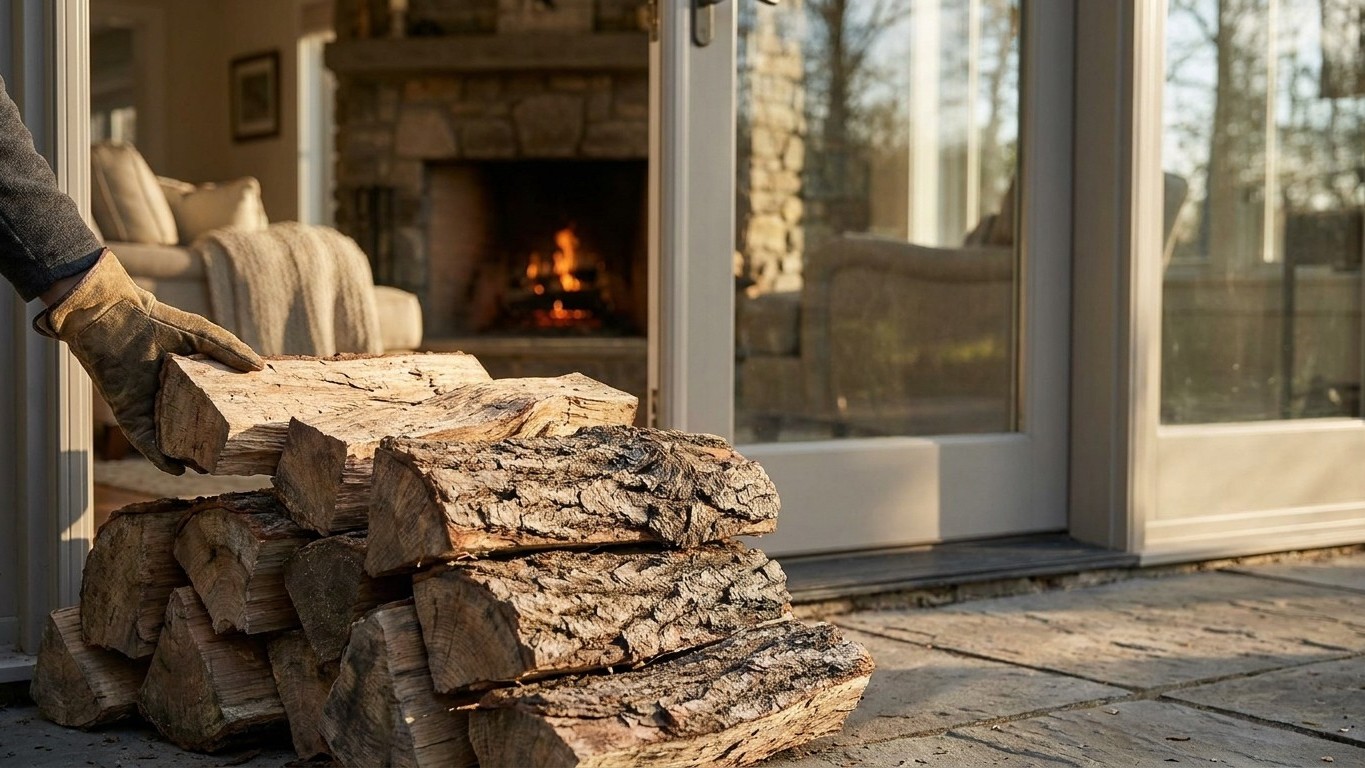

No spray, no fumigation, no special bag needed. The fix is mechanical: knock the wood together outside, carry in only what you’ll burn within a day or two, and never let it sit stacked against an interior wall. That’s the whole method, and it works because of how firewood pests actually behave once they’re indoors.
Bringing Firewood Indoors Without Bringing Its Insects

Firewood pulled from an outdoor pile is rarely “clean.” Bark beetles, powderpost beetles, carpenter ants, and various borers overwinter in split logs the same way they’d overwinter in a fallen tree, tucked into bark crevices or bored a half-inch into the sapwood. University extension services and state forestry agencies across the northern half of the country field the same question every fall: will this stuff infest my house? The honest answer, backed by what these agencies actually publish, is no. Wood-boring insects target wood. They don’t jump ship to attack drywall, upholstery, or your kitchen cabinets. What they will do is wake up.
Here’s the mechanism. Firewood stacked outside sits at outdoor temperature, and anything living inside it stays dormant, the same way a chipmunk stays denned up. Bring that log into a heated living room and the temperature swing does what a false spring would do in the woods: it triggers activity. Beetles that would have stayed asleep until April suddenly start moving, chewing, sometimes emerging from the bark right there on your hearth. It’s startling. It’s also, per the guidance extension entomologists give homeowners every year, not dangerous to the structure of your house. These insects need living or recently cut wood to feed and reproduce in. A framed wall or a hardwood floor doesn’t offer them what they need.
That distinction matters because it changes how you should react. This is a nuisance problem, not a pest-control emergency. You don’t need to call an exterminator because a beetle crawled out of a log near the woodstove. You do need to manage how much wood is sitting indoors warming up at any given time, because the more logs you stockpile inside, the more insects you’re inviting to wake up in your living room instead of in the woodpile where they belong.
The other detail extension sources are consistent about: don’t treat the wood chemically to solve this. Spraying firewood with insecticide to kill overwintering insects sounds logical, but that wood is about to go into an open flame in your living space. Burning treated wood indoors means burning off whatever chemical you applied, into the air you’re breathing. The mechanical approach, keeping the indoor supply small and short-lived, does the job without adding anything to the smoke.
How to do it
None of this requires special tools or a trip to the hardware store. It’s a sequence you can build into your normal wood-hauling routine this weekend and keep using all winter.
- Knock the split ends together outside, before you carry anything in. Two firm knocks, log against log, right at the woodpile. This jars loose bark flakes, loose insects, and debris that would otherwise ride inside with the log.
- Inspect what’s left stuck to the bark. A quick visual check while you’re still outside catches the obvious stuff, egg masses, active beetles, loose bark harboring something. If a piece looks heavily infested, leave it on the outdoor stack and burn it later rather than bringing it in that day.
- Carry in only what you’ll burn within a day or two. Not a week’s supply. Not enough to fill a rack in the corner of the living room. A day or two of fuel means anything that wakes up from the warmth has a short window before it’s burned, not weeks to multiply or wander.
- Stack it away from interior walls, and never under a bed or in a closet. An interior wall traps a pocket of still, slightly damp air behind the stack, exactly the microclimate insects prefer. Open floor space near the stove, where air moves and nothing is hidden behind the pile, is the better spot.
- Restock from the outdoor woodpile every couple of days rather than hauling in bulk. This turns the whole system into a rotation instead of a stockpile. It also means you’re handling firewood at a pace where you’d notice a real problem, like widespread borer damage, before it becomes routine to ignore.
- Sweep the area where indoor wood sat once it’s gone. Bark bits, frass (the sawdust-like material borers leave behind), and the occasional insect that didn’t make it into the stove will collect on the floor. A quick sweep after each restock keeps debris from building up in a corner.
What goes wrong
-
Beetles are crawling out of the logs by the fireplace
This is the single most common complaint, and it’s almost always the temperature-wake-up mechanism, not a new infestation. The fix at this point isn’t prevention, it’s cleanup: vacuum up the insects, dispose of the bag or canister contents outside, and burn the log sooner rather than letting it sit. Reduce how much wood you’re bringing in at once so future wake-ups are smaller and less startling.
-
There’s sawdust-like material collecting under the woodpile
That’s frass, the byproduct of a borer actively tunneling through the wood. Finding it doesn’t mean your house is at risk, since the insect is feeding on the log itself, but it does mean that particular piece should be burned promptly rather than left sitting in a warm room for days. Sweep up the frass each time you restock so it doesn’t accumulate into a pile that looks (and smells, if damp) worse than it is.
-
The indoor wood stack feels damp or smells musty
Damp wood held against an interior wall is exactly the condition that invites pests to linger instead of retreating back outside. Once you notice the smell, move the remaining logs away from the wall immediately, into a spot with airflow, and use up that batch faster than usual. Going forward, keep the indoor stack smaller so nothing sits long enough to reabsorb moisture from the room.
-
Ants, not beetles, are showing up near the woodpile
Carpenter ants nest in wood that’s already soft or decaying, often logs that sat on the ground outside rather than on a rack. If you spot them indoors, the log they came from should go straight into the stove rather than back into a pile, and it’s worth checking the rest of that day’s batch for similar soft, decayed pieces before bringing any more in.
-
You already stacked a week’s worth of wood inside before reading this
Don’t panic and don’t spray anything. Start burning down the stack at a normal pace, moving it away from any interior wall if it’s currently pushed against one, and simply don’t replenish it until it’s gone. From there, switch to the day-or-two rotation described above.