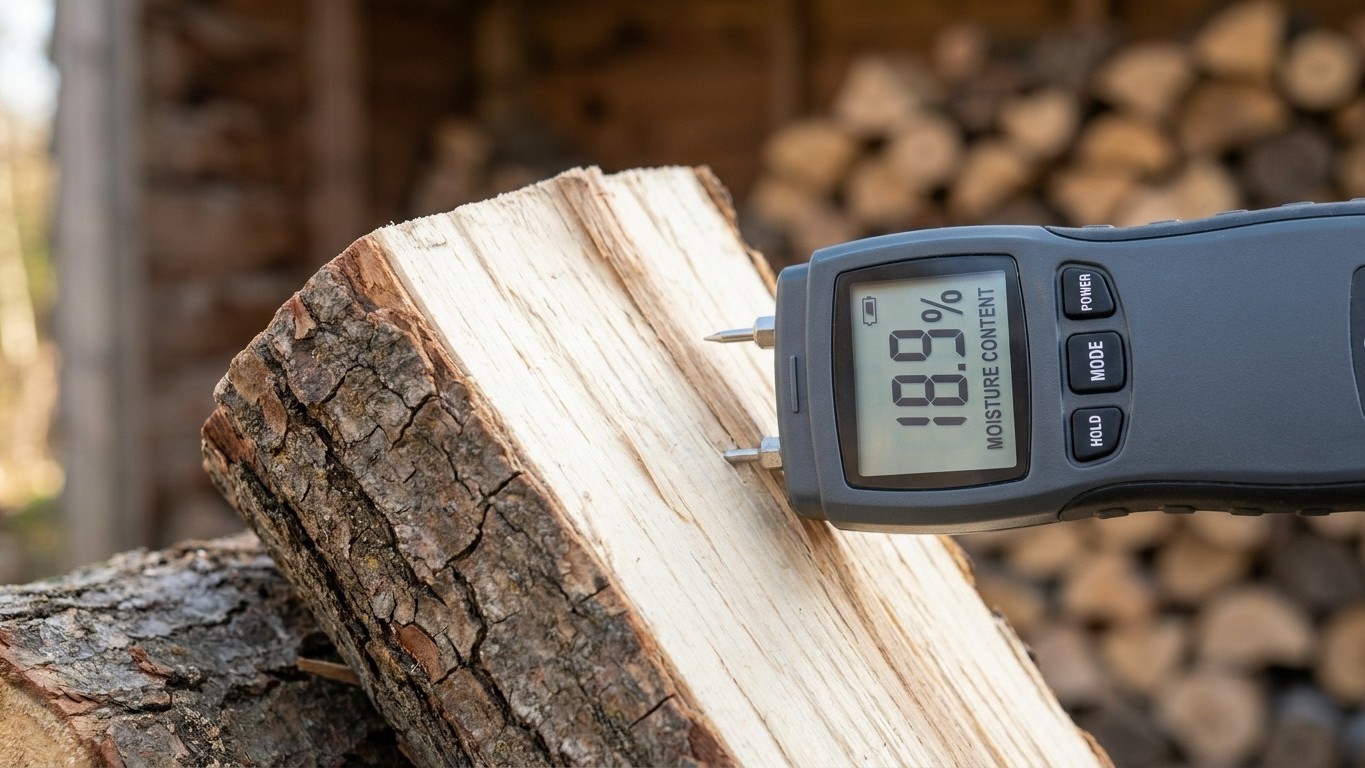

A moisture meter answers the question directly: firewood is ready to burn when it reads 20 percent or less. Anything higher means the fire spends its heat boiling water out of the log before it warms your house. Getting an accurate reading takes about ten seconds, but it depends on splitting the piece first and testing the fresh inside face, not the weathered bark.
Firewood moisture

State extension services and forestry agencies that publish firewood guidance agree on the same number: 20 percent moisture content or less is the target for wood that burns clean and hot. Cross that line into 25 percent and above, and a measurable share of every fire’s energy output gets diverted into evaporating water trapped inside the wood cells, instead of heating your living room or feeding a clean burn in a wood stove.
Why the reading depends on which face you test
A moisture meter only reads the surface it touches. Bark, weathered ends, and the outer rind of a log have been exposed to rain, dew, and sun for months, so they read drier than the wood actually is deep inside. The reverse is also true in early stages of drying: a round that looks dry on the outside can still be soaked in the middle. The reliable read comes from splitting a piece fresh and pressing the meter’s pins into that brand-new interior face, the one that’s never seen outside air. That face tells you what the log’s core moisture actually is, which is the number that matters when it’s loaded into a firebox.
Temperature skews the number too
Wood pulled straight from a stack in freezing weather will give a falsely low reading. Cold wood conducts electricity differently than wood at room temperature, and most meters rely on that electrical conductivity to estimate moisture. A log fresh off a January stack needs time indoors, sitting at room temperature, before the meter tells the truth about it. Skip that step and you might load up what you believe is seasoned wood that’s actually still too wet to burn efficiently.
None of this requires guesswork. The mechanism is straightforward: water inside wood cells conducts electricity better than dry wood fiber, and a pin-style meter measures that conductivity between two points pushed into the surface. Follow the split-face, room-temperature rule, and the number on the screen becomes something you can trust rather than a rough guess.
How to do it
Testing a stack accurately is a five-minute job once you know the order of operations. Here’s the sequence, and every step fits into a Saturday afternoon check of your woodpile.
- Pull several pieces from different spots in the stack. Don’t rely on one log near the top of the pile, since sun and wind exposure vary across a woodpile and a single piece won’t represent the whole load.
- Bring cold wood inside and let it warm up. If the pieces came from an outdoor stack in cold weather, give them time to reach room temperature before testing. A cold log will read artificially low and mislead you into thinking it’s ready before it is.
- Split each test piece in half. The bark and the weathered outer surface are always the driest part of a log and will never give you an honest reading. The fresh face exposed by splitting is what you need to test.
- Push two pins firmly across the grain into the new face. Meters read moisture between two metal pins, and pressing them in across the grain, rather than along it, gives the most consistent contact and the most reliable number.
- Record the reading and repeat on two or three more pieces. One log from one spot in the stack tells you about that log, not about the load. Testing several pieces from different parts of the pile gives you a real picture of whether the batch is ready to burn.
- Compare every reading to the 20 percent line. If most pieces read at or below 20 percent, the load is ready. If several read above 25 percent, the wood needs more seasoning time before it goes anywhere near a firebox.
Do this check on a rotating basis through the season rather than once. Wood dries at different rates depending on species, split size, and how it’s stacked, so the same pile can shift from “not ready” to “ready” over a matter of weeks, especially in windy, sunny conditions.
What goes wrong
The meter reads dry, but the wood still hisses and smokes in the stove
This almost always means the reading came from bark or a weathered outer surface instead of a freshly split face. Split the piece again, right there, and test the new interior surface. If that inside reading comes back above 25 percent, the load isn’t ready no matter what the outer surface told you. Set that batch aside and burn from stock that’s tested clean on a split face, not just on the outside.
Every reading in the stack comes back suspiciously low
Check whether the wood was cold when you tested it. Wood tested straight from a stack in freezing temperatures reads artificially low because cold wood conducts electricity differently than wood at room temperature. Bring a handful of pieces inside, let them sit for a while until they’ve warmed to room temperature, and test again. If the readings jump up once the wood has warmed, that’s the real number, and it means your seasoning timeline is longer than you thought.
Readings vary wildly between pieces from the same stack
Some variation is normal since drying speed depends on split size and position in the pile, but wide swings usually mean you’re only testing one or two pieces instead of sampling across the load. Go back through the stack and test several logs from different heights and different sides, always on a freshly split face with the pins pressed firmly across the grain. Average what you find rather than trusting a single piece, and treat the highest readings, not the lowest, as the ones that decide whether the batch is ready.
The wood tested dry weeks ago but burns poorly now
Wood that’s been re-exposed to rain, snow, or high humidity after drying can reabsorb moisture, especially if it’s stacked uncovered or sitting low to wet ground. Split a few pieces again and retest the fresh face rather than assuming last month’s reading still holds. If the wood has picked moisture back up, move it to a drier, covered spot and give it time before burning it again.