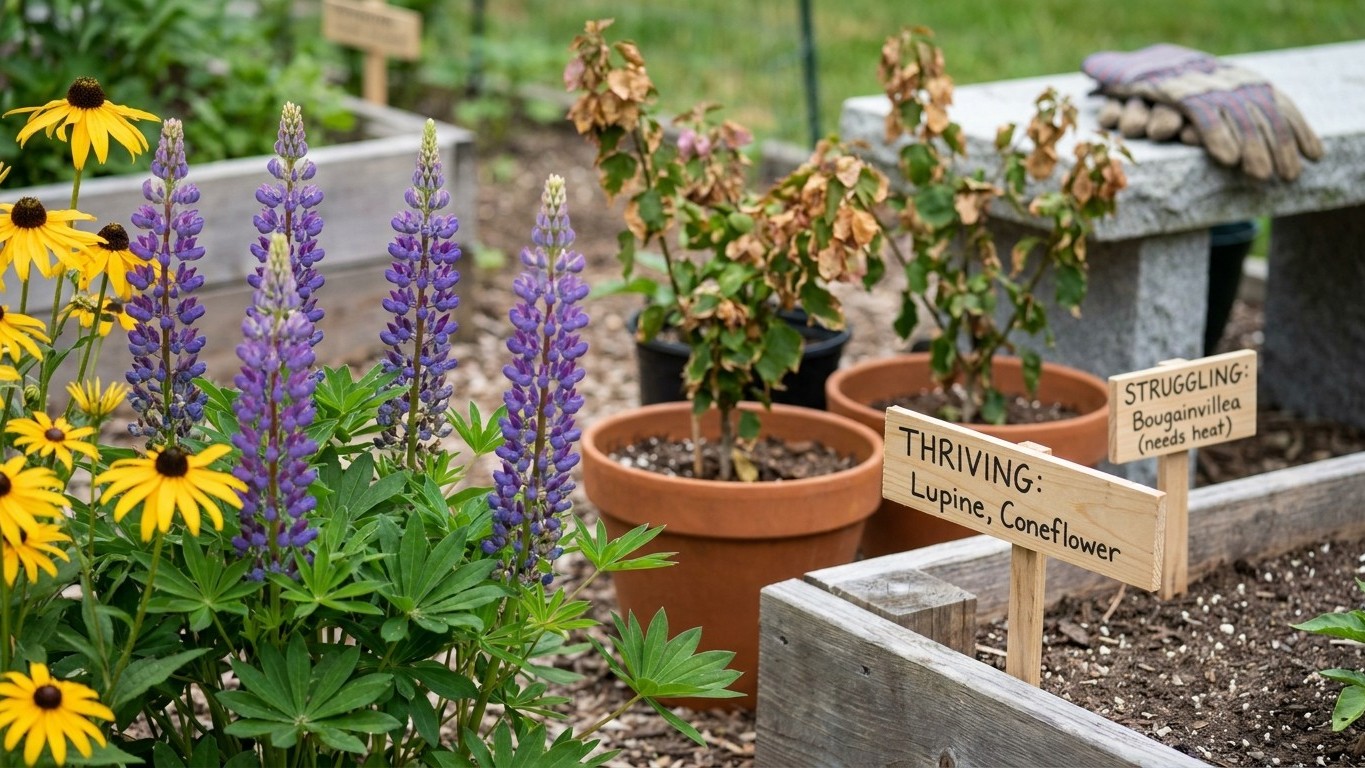

What actually holds up here comes down to one number: the winter low your yard sees, not the mild afternoon in July. New Hampshire runs cold enough, down into the teens most winters, that anything bred for long, humid heat is fighting a losing battle before it even blooms. So the flowers that thrive here are the ones built for a short summer and a hard freeze, not the ones that need months of warmth to perform. Before you plant anything, check the hardiness zone on the tag against your own town, not the state’s average, since your hillside or valley may run colder than you’d guess.
What thrives in New Hampshire

Flowers that do well here share a few traits regardless of species. They need to survive a winter minimum that regularly drops into the teens, they don’t require months of sustained heat to flower, and most tolerate wet spring soil better than drought, though established root systems still matter once summer dry spells hit. Manchester’s climate normals show only 10.9 days a year reaching 90F or higher, so this is not a state where heat-loving Mediterranean or tropical-adjacent plants get much of a growing window. Lavender, rosemary and many salvias that thrive in warmer states struggle here unless given a sheltered, south-facing spot with sharp drainage.
The families that carry the right traits are the ones you already see in old New England dooryard gardens. Asteraceae (coneflowers, asters, black-eyed Susans), Ranunculaceae (columbine, clematis) and hardy bulb families like Iridaceae and Amaryllidaceae (iris, daffodil) all include species bred or naturally suited to short summers and long, cold winters. Peonies, a Paeonia genus staple of the region, actually need a real winter chill to set buds well, so New Hampshire’s cold is an asset there rather than a liability.
Humidity is a smaller factor here than in mid-Atlantic states. A gardener comparing notes with someone growing the same border plants in New Jersey, where summer humidity drives more fungal disease pressure, as covered in our flowers that actually thrive in New Jersey guide, will find New Hampshire’s drier summer air is kinder to plants prone to powdery mildew, even if the growing season itself is shorter. The tradeoff is a narrower window: plan around the last and first frost dates for your area rather than assuming a long shoulder season on either end.
Native plants worth the space
Native and regionally native plants earn their space because they arrived at these winter minimums and this soil chemistry without help. Once established, typically after their first full year in the ground, they need far less supplemental water and fertilizer than imported ornamentals, because their root systems and bloom timing are already matched to the local frost pattern. That means fewer inputs and less replacement cost over time, which matters in a state where a hard winter can still take out a marginal plant no matter how well you fed it.
Species to look for
Several species native to New England and the broader Northeast are widely available at local nurseries and perform reliably across the state’s zone range:
- New England aster (Symphyotrichum novae-angliae) – late-season purple and pink bloom that feeds migrating monarchs
- Black-eyed Susan (Rudbeckia hirta) – reseeds freely and blooms through the hottest stretch of summer
- Butterfly weed (Asclepias tuberosa) – the only host plant for monarch caterpillars, drought-tolerant once rooted
- Wild columbine (Aquilegia canadensis) – early spring nectar source before most perennials wake up
- Foamflower (Tiarella cordifolia) – shade-tolerant groundcover that fills in under trees where turf struggles
Native plants also carry pollinators through gaps that imported ornamentals leave open. Many double-flowered cultivars bred for showy petals have sacrificed the nectar and pollen structures native bees and butterflies rely on, so a border built entirely from hybridized imports can look full while offering almost nothing to feed on. Mixing in even a handful of native species, especially ones blooming at different points in the season, keeps a food source available from the first columbine in spring to the last aster before frost.
None of this means avoiding non-native flowers altogether. A daylily or a peony bed does no ecological harm on its own. The point is balance: treat native plants as the backbone of a border’s pollinator value, and use everything else for color, form and personal preference.
Perennials that come back

At zone 3b to 6a, a “hardy perennial” claim on a plant tag only means something if the zone number printed on it actually covers your winter minimum. A tag rated to zone 5 will survive most of southern and central New Hampshire but is a gamble at higher elevations or in the North Country, where winter minimums run colder than the Manchester reference figure of 17.1F suggests for the state as a whole. Always check the low end of the tag’s range against your own county, not the state’s overall span.
Reliable returners versus tender perennials grown as annuals
Plenty of perennials that behave as short-lived or tender plants in warmer states come back reliably here because they’re rated hardy well into the state’s coldest zones. Others sold as perennials, especially those bred for zone 7 and up, are grown as annuals in New Hampshire even though a grower in a warmer climate, such as the varieties covered in our South Carolina flowers guide, would keep the same plant for years.
| Plant | Typical hardiness | Behavior in New Hampshire |
|---|---|---|
| Peony (Paeonia hybrids) | Zone 3-8 | Reliable perennial, needs winter chill to bloom well |
| Daylily (Hemerocallis hybrids) | Zone 3-9 | Reliable perennial, spreads over a few seasons |
| Garden phlox (Phlox paniculata) | Zone 4-8 | Reliable perennial, prone to mildew in damp years |
| Lavender (Lavandula angustifolia) | Zone 5-9 | Marginal, needs sheltered spot and sharp drainage |
| Dahlia (Dahlia hybrids) | Zone 8-11 | Grown as annual, tubers must be dug and stored |
Dahlias and cannas are the clearest case: both are true perennials where winters stay mild, but in New Hampshire the tubers have to come out of the ground before the ground freezes and get stored indoors, or they’re simply treated as one-season plants and replaced. Hostas and sedums, by contrast, are about as forgiving as perennials get here, tolerating the cold minimum with no protection and still filling out a border by midsummer.
Putting a border together
A border that looks good all season is built in layers, not planted all at once and left alone. Put the tallest plants, delphiniums, phlox and tall sedums among them, at the back or center of an island bed, mid-height perennials like coneflower and black-eyed Susan in the middle band, and low edging plants like creeping thyme or dwarf asters along the front. This keeps taller plants from shading out the shorter ones as everything fills in over the summer.
Sequencing bloom and leaving room
Because New Hampshire’s frost-free window is short, relative to the last spring frost running April 16 to April 27 and the first fall frost arriving October 13 to October 26 at the Manchester reference station according to NOAA’s 1991-2020 normals, a border that only blooms in July wastes most of the season. Stagger bloom times deliberately: wild columbine and early tulips for April and May, peonies and irises for June, coneflower and phlox through the heat of summer, and New England aster and sedum carrying the border into October right up to that first fall frost. Check those frost dates against your own town, since rural and elevated gardens in the state often see frost a week or two earlier or later than the airport station’s figures.
Repeat a color or two through the whole bed rather than scattering a different shade in every clump. Three or four patches of the same purple aster spaced along a thirty-foot border reads as intentional; one of each of a dozen different flowers reads as clutter. Finally, when you plant in spring, leave the mature spread on the tag between plants even though the bed looks sparse for the first year. Perennials in this climate often take two full seasons to reach full size, and crowding them at planting just means digging up and dividing earlier than you’d otherwise need to.
Local help
The UNH Extension runs New Hampshire’s Master Gardener program and publishes county-specific plant lists that account for the elevation and soil differences the statewide zone range doesn’t capture. Their county offices are the most reliable source for a hardiness recommendation specific to your town rather than the airport reference station used for statewide figures. For more on adapting garden projects to the state’s conditions generally, our New Hampshire guides hub covers related topics beyond flower borders.
Common questions
What zone is New Hampshire for planting?
USDA’s Plant Hardiness Zone Map puts the state at 3b to 6a, which is a wide range. Coastal and southern areas run warmer, near 6a, while the North Country and higher elevations sit closer to 3b, so check your specific town rather than assuming the state average applies.
Can I grow roses in New Hampshire?
Many roses survive fine if you choose ones rated hardy to at least zone 4 or 5 depending on your local minimum, and hardy shrub types bred for northern climates do better than hybrid teas, which often need winter protection like mounding soil or mulch over the graft union.
Why did my perennial come back smaller or not bloom the second year?
This usually means the plant was marginal for your zone and took winter damage, or it was planted too late in the season to establish good roots before the ground froze. Planting in spring rather than fall gives a full growing season to root in before the first winter test.
Do I need to deadhead everything to keep flowers blooming?
No. Many reseeding natives like black-eyed Susan and some asters benefit from being left alone in fall so seed heads feed birds and self-sow for next year. Deadheading matters most for repeat bloomers like coreopsis and some daylilies, where removing spent flowers pushes out a second flush.
Related guides
- Flowers That Actually Thrive in Maine, and the Ones That Struggle
- Flowers That Actually Thrive in Vermont, and the Ones That Struggle
- Flowers That Actually Thrive in New Jersey, and the Ones That Struggle