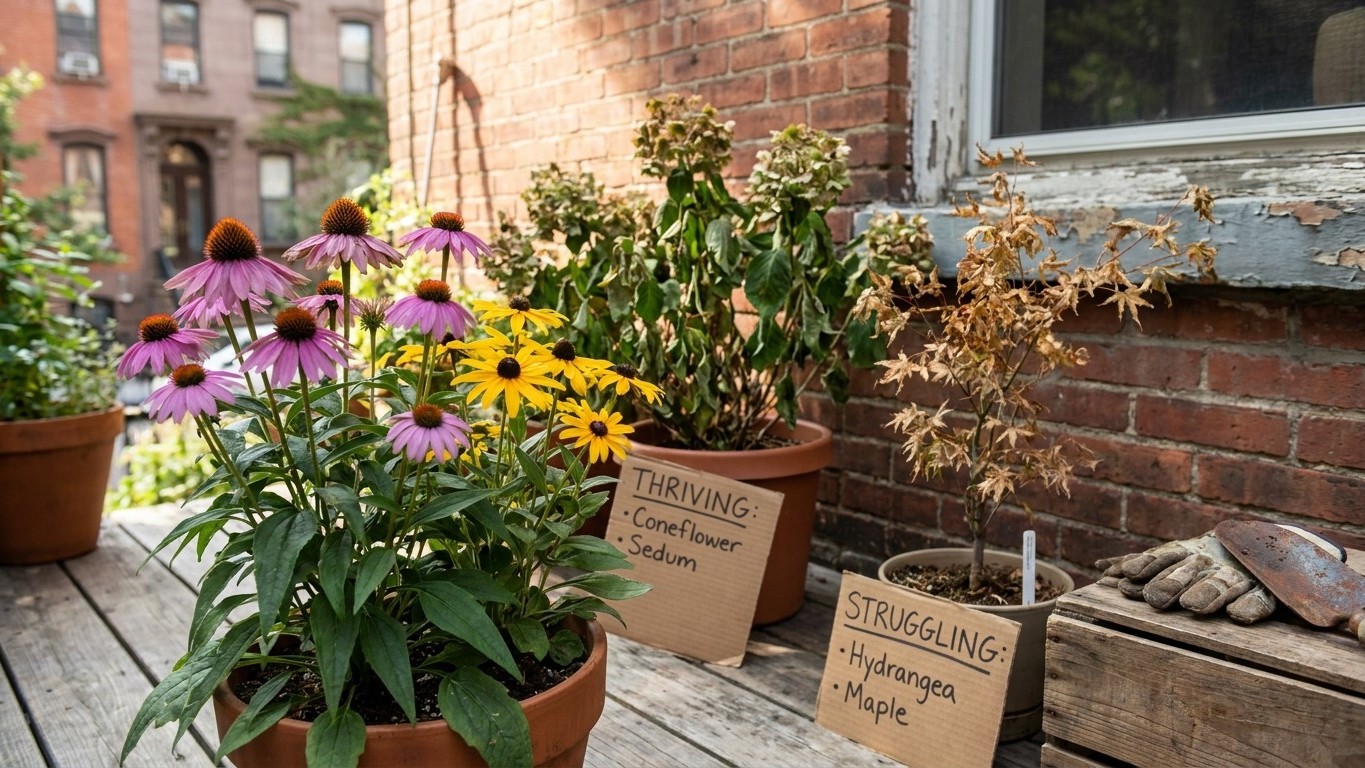

New York grows flowers well when they can handle a wide swing in conditions: freezing winters followed by short bursts of real summer heat. The USDA Plant Hardiness Zone Map puts the state anywhere from zone 3b to 7b, and NOAA’s 1991-2020 climate normals put New York City’s coldest-month minimum at 27.9°F. Flowers bred for cold winters and humid, moderately hot summers do best here. Check your own zip code against the USDA zone map before buying anything, since a plant that is hardy in Brooklyn can die outright in the Adirondacks.
What thrives in New York

Flowers that hold up here handle two separate stresses in the same calendar year: a real freeze in winter and a run of hot, humid days in summer. NOAA’s 1991-2020 climate normals put New York City’s coldest-month minimum at 27.9°F, and the USDA Plant Hardiness Zone Map spans zone 3b in the Adirondacks and Tug Hill Plateau up to zone 7b on Long Island and in New York City itself. A flower rated for only one end of that range will struggle somewhere in the state, which is why matching the plant to your own zone matters more than trusting a single statewide number.
Cold hardiness comes first
Upstate gardeners are effectively gardening in a colder climate than the coast, even though both fall under the name “New York.” A perennial that is only hardy to zone 6 will winter-kill most years north of the Catskills, but the same plant can be a reliable fixture in a Long Island border. When a tag says “zone 5,” read that as the coldest zone the plant survives, not a target: anything colder than the number on the tag is a gamble.
Summer heat and humidity
NOAA’s climate normals record 12.2 days a year at or above 90°F in New York City, and humidity stays high through most of that stretch. That combination is hard on flowers bred for dry heat, like many Mediterranean herbs and silver-leaved plants, which tend to rot at the crown in a wet, humid July. It favors plants that tolerate both wet feet and heat: garden phlox (Phlox paniculata), coneflower (Echinacea purpurea) and black-eyed Susan (Rudbeckia fulgida) all shrug off a humid summer that would mildew a lavender or rosemary bed. Daylilies (Hemerocallis) and peonies (Paeonia lactiflora) round out the list of flowers that carry both cold hardiness and summer tolerance without much fuss.
Native plants worth the space
A plant native to the Northeast has already spent thousands of years adjusting to this region’s freeze-thaw winters, humid summers and native soil fungi, so once it’s established it typically needs far less water, fertilizer and pest management than an imported ornamental. “Established” is the key word: a native perennial still needs regular watering through its first full season while its root system develops, and the payoff comes in year two and beyond.
What to plant and why
New England aster (Symphyotrichum novae-angliae) and wild bergamot (Monarda fidistula, more commonly Monarda fistulosa) are native to the wider Northeast and mid-Atlantic region and bloom right when many garden perennials are winding down, which matters for pollinators building up reserves before winter. Purple coneflower (Echinacea purpurea), though more associated with the prairie states, has naturalized widely across the Northeast garden trade and performs well in New York soils. Butterfly weed (Asclepias tuberosa) is the regional host plant for monarch caterpillars and one of the few orange-flowered perennials reliably hardy through most of the state’s zone range.
Native plantings also do more per square foot for pollinators than an equivalent bed of hybridized ornamentals, because many modern cultivars have been bred for double flowers or altered petal shapes that make nectar and pollen harder for bees to reach. A straight species aster or coneflower, rather than a heavily bred cultivar of the same plant, is usually the better choice if pollinator support is the goal. Skip the “nativar” question if you’re not sure and just ask the nursery whether a given plant is a straight species or a bred selection before you buy.
Perennials that come back

What comes back reliably depends entirely on where in the state you garden. A perennial hardy to zone 5 returns every year in New York City, where the USDA map runs warmer, but the same plant needs winter mulch or a sheltered spot to survive in zone 4 territory further north. Read a plant tag as a floor, not a guarantee: “hardy to zone 5” means it survives typical zone 5 winters, and your own zone needs to sit at or above that number for the plant to be a true perennial rather than a one-season gamble.
Grown as an annual here
Some plants marketed in New York garden centers are perennial in their native range but only survive New York’s winters as far south as zone 7, meaning they behave as annuals through most of the state. Tender salvias, many dahlias, and most tropical hibiscus fall into this group: gorgeous through summer, gone by the following spring unless the roots are dug and stored indoors over winter. Neighboring Virginia’s warmer zone range lets more of these plants overwinter outdoors, and the differences are laid out in Flowers That Actually Thrive in Virginia, and the Ones That Struggle for anyone gardening near the state line or comparing notes with family further south.
Reliable true perennials at New York’s hardiness levels include peony, daylily, hosta, Siberian iris (Iris sibirica) and garden phlox, all of which return for a decade or more with only occasional dividing. Pennsylvania sits in a similar hardiness band overall, and the tag-reading approach covered in Flowers That Actually Thrive in Pennsylvania, and the Ones That Struggle applies just as directly to a New York garden a few counties over.
Putting a border together
A border reads well when it’s layered by height, front to back or, in an island bed, shortest at the edges working up to the tallest in the middle. Put low front-of-border plants like creeping phlox or dianthus at 6 to 12 inches, mid-height perennials like coneflower and daylily in the 18 to 30 inch range, and taller anchors like Joe Pye weed or tall garden phlox at the back or center, where they can reach four feet or more without shading the rest of the bed.
Bloom succession and spacing
New York’s growing season runs from the last spring frost, which NOAA’s climate normals put at March 23 to April 3 in New York City, to the first fall frost, dated November 14 to November 27 at the same reference station. Upstate counties and the Adirondacks freeze considerably earlier in fall and thaw later in spring, so treat the New York City dates as a coastal reference point, not a statewide calendar. Within that window, stagger bloom times deliberately: peonies and iris open in late spring, coneflower and phlox carry the middle of summer, and asters and sedum close out the season into fall. Leave real gaps at planting time, 18 to 24 inches between most perennial crowns, even though the bed looks sparse the first year. Perennials planted too tight fight each other for water and airflow by year three, and a humid New York summer makes that crowding worse by trapping moisture against foliage.
Repeat two or three colors through the length of the border rather than using one plant of everything. A border with drifts of the same purple coneflower or blue Siberian iris reappearing every six to eight feet reads as designed; one of each color in the catalog reads as a collection, not a garden.
Local help
Cornell Cooperative Extension runs county-level Master Gardener programs across New York and publishes plant lists suited to specific regions of the state, which is worth checking before committing to a large border. Find your county office and current plant recommendations through the extension service. For more on gardening elsewhere in the state, our New York guides cover topics beyond flowers, including vegetables and soil.
Common questions
Can I grow the same flowers in Buffalo as in New York City?
Not always. The USDA hardiness map puts much of the state from zone 3b to 7b, and Buffalo sits considerably colder than New York City. A plant tagged hardy to zone 6 or 7 that thrives in a city garden may not survive a Buffalo winter without extra protection, so check the zone for your own county rather than assuming the city’s range applies statewide.
Why did my perennial come back one year and die the next?
Usually it’s a hard winter without snow cover, since snow insulates roots and a bare, cold winter exposes the crown to temperatures colder than the plant’s rated zone. A mulch layer of 2 to 3 inches applied after the ground freezes helps buffer that swing, especially for perennials rated right at the edge of your zone.
Is it too late to plant flowers if it’s already June?
No, but the choice narrows. Perennials and shrubs can still go in through summer with consistent watering, while most annuals from nursery starts will still bloom the same season if planted by early summer. What’s off the table is anything that needs a long head start indoors, since that window closes well before June.
Do I need to deadhead everything to keep flowers blooming?
Some perennials rebloom faster with deadheading, including coreopsis and many salvias, but others like coneflower and black-eyed Susan are better left alone late in the season so their seed heads can feed birds through fall and winter. Check the specific plant rather than deadheading on a blanket schedule.
Related guides
- Flowers That Actually Thrive in Vermont, and the Ones That Struggle
- Flowers That Actually Thrive in Massachusetts, and the Ones That Struggle
- Flowers That Actually Thrive in Pennsylvania, and the Ones That Struggle