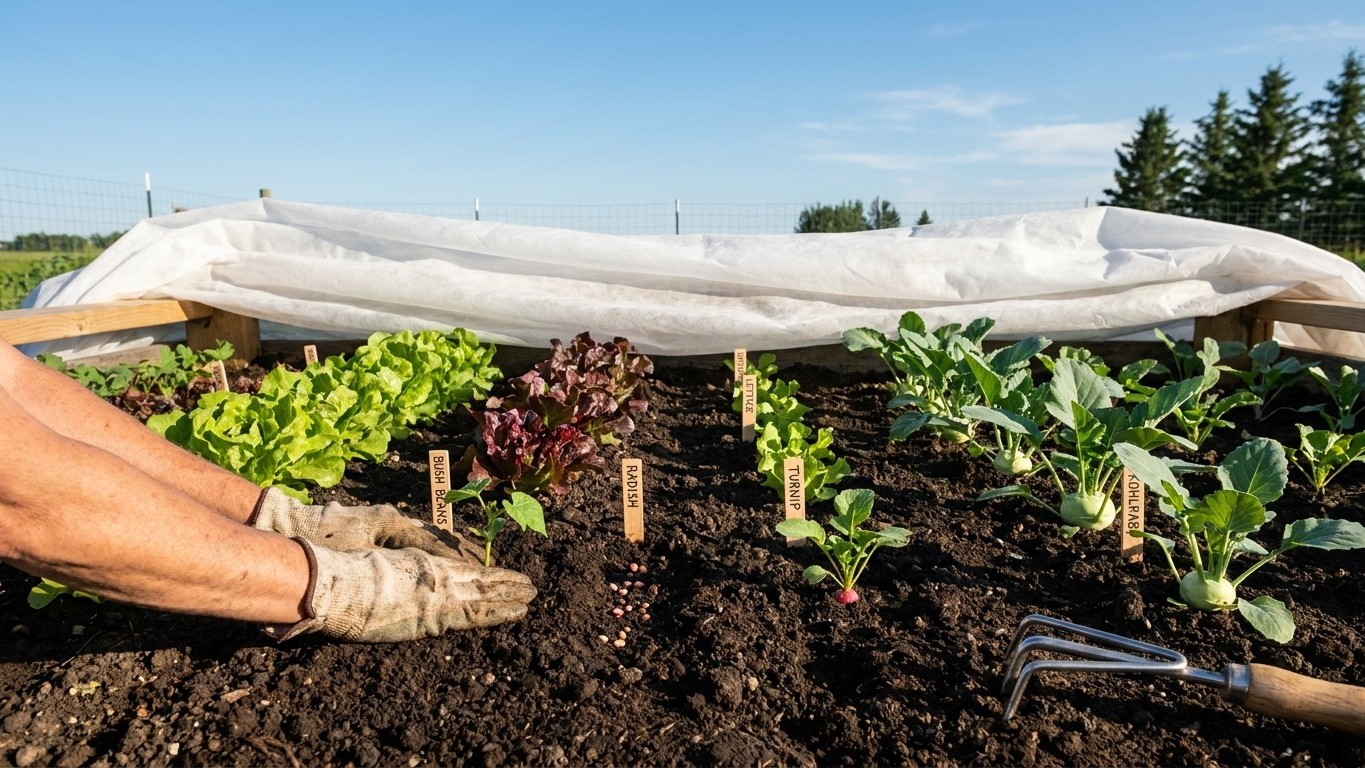

July in Alberta sits well inside the frost-free stretch, so the real question is not whether to plant, but what will actually finish before the growing season closes. The answer: quick-maturing vegetables sown directly, fall brassicas started under cover, and steady harvesting of everything that went in back in May and June.
What goes in the ground in July

By July, Alberta’s average frost-free window is already open. Environment and Climate Change Canada’s normals for the Calgary Int’l A station put the average last spring frost at May 21 and the average first fall frost at September 16, which leaves roughly 118 days of average frost-free growing between them. Those are averages, not guarantees, since in one year out of two the actual frost falls later than the mean date given. Treat both dates as the middle of a window, not a hard line, and always keep row cover within reach.
What matters for July planting decisions is not the calendar square but the math left in that window. Counting forward from a July sowing to September 16 leaves somewhere between six and twelve weeks, depending on whether it’s early or late in the month. That rules out long-season crops like main-crop squash, dry beans, or slicing tomatoes started from seed outdoors: they simply won’t mature. It does not rule out fast vegetables.
Safe direct-sow choices this month
- Bush beans, radishes, and turnips, all quick enough to finish well before the average frost
- Beets, kohlrabi, and second sowings of lettuce and spinach for fall salads
- A fall crop of peas, sown early in the month so pods form before cooler nights slow them
- Carrots for a fall harvest, provided they go in during the first half of the month
Garlic goes the other direction: it’s a fall-planted, spring-harvested crop in this climate, so July is for curing bulbs already lifted, not putting new cloves in the ground. Cover crops like buckwheat or fall rye can also go into any bed that’s finished producing, holding the soil and suppressing weeds until frost.
What to start under cover
Starting seeds under cover in July is really an exercise in counting backward from September 16, the average first fall frost. Take the weeks a seedling needs to reach transplant size, usually four to six weeks for lettuce, kale, or a quick cabbage, then add the days that variety needs after transplanting to reach a harvestable stage. If that total lands after the average frost date, the sowing is too late for a reliable outdoor finish; if it lands comfortably before, there’s still room.
Fall lettuce, spinach, and Asian greens are the safest bets started indoors or in a shaded cold frame early in the month, since they transplant quickly and tolerate the first light touches of cool fall weather better than they tolerate summer heat as direct-sown seedlings. A second round of broccoli or cauliflower for fall heads can still work if started in the first week or two of July, given how tight the runway is by late summer.
The two ways this goes wrong are mirror images of each other. Start too early in a hot month and seedlings sit too long before conditions are right to set them out, turning leggy and rootbound in their trays. Start too late and the plant runs out of daylight and warmth before it reaches a usable size, leaving a bed of half-grown greens caught by frost. Watering discipline matters more than usual here too: trays under cover in July heat can dry out within hours, and a single missed watering can stall germination for good.
What is ready to pick
July is when the earlier plantings start paying off. Peas sown in spring are usually finishing their run, and the pods should be picked as soon as they fill out, since leaving them too long toughens the pods and slows the plant’s later production. Lettuce and spinach sown early are bolting risk in the heat, so harvest whole heads rather than waiting for a “better” size once a seed stalk starts to shoot up.
Garlic planted the previous fall is nearing harvest late in the month; the signal is the lower leaves turning brown while the upper leaves stay green, at which point the bulbs get lifted and moved somewhere dry and shaded to cure. Strawberries from an established bed are usually at their peak, and early raspberries and currants, where planted, start ripening as well.
New potatoes can be dug carefully from around the edges of hilled plants without disturbing the whole hill, giving a small harvest of thin-skinned potatoes weeks before the main crop matures. Herbs like dill, cilantro, and basil are at their most productive and benefit from regular cutting, which also delays bolting. Zucchini and other summer squash, if they were transplanted in late May or June, typically start producing heavily by mid-to-late July, and they need checking every day or two since a missed fruit turns from tender to baseball-bat sized in about 48 hours.
The jobs that matter this month
Watering rhythm is the single biggest factor in how a July garden performs. Alberta summers bring long daylight hours and can swing from cool nights to hot afternoons, and shallow, frequent watering trains roots to stay near the surface where they dry out fastest. A deep soak two or three times a week, aimed at the root zone rather than the leaves, does more for drought resilience than daily sprinkling ever will.
Mulch goes down now if it hasn’t already, both to hold that moisture and to keep weed pressure from turning into a second job on top of harvesting. Straw, grass clippings, or shredded leaves around beans, beets, and squash cut watering needs noticeably and keep soil temperature more even through hot afternoons.
Staking and support work best done before plants sprawl, not after. Peas, climbing beans, and any indeterminate tomatoes that made it in as transplants need their supports checked and tied now, before the weight of a full crop snaps a stem or drags fruit onto damp soil where it rots or attracts slugs.
Pest scouting pays for itself this month more than almost any other, since aphid colonies and cabbage worm populations can go from a handful of insects to a serious infestation within a week or two of warm weather. Checking the undersides of brassica and bean leaves every few days catches problems while a simple squash or a strong hose spray is still enough to handle them. Succession sowing ties all of this together: every time a row of radishes or lettuce comes out, that space is empty real estate until something else goes in, and July is late enough in the season that gaps left unplanted for even a couple of weeks can mean the difference between a second harvest and none.
What not to do in July
The most common mistake this month is sowing something that feels like it should still have time, when the math against September 16 says otherwise. A packet of squash or a long-season carrot variety sown in the last week of July is chasing a frost date that, on average, arrives before the crop is anywhere near mature. Check the days-to-maturity on the seed packet against the weeks remaining before reaching for that spot in the bed.
Heat is the other trap. Lettuce, spinach, and other cool-season greens sown in full summer sun tend to bolt to seed within days of germinating rather than forming a usable head, so shade cloth or a spot with afternoon shade makes a real difference for any of these sown in July rather than in spring or fall.
Nitrogen timing trips people up as well. A high-nitrogen feed applied to tomatoes, squash, or beans once they’ve started flowering pushes leafy growth at the expense of fruit set, which is the opposite of what’s wanted heading into the second half of the season. A balanced or lower-nitrogen feed, or simply compost, suits this stage of growth better than a fresh dose of lawn fertilizer improvised for the vegetable bed.
Uncovering tender plants too early after a cool spell is less of a July risk than a spring one, but sudden hail, a known feature of Alberta summers, catches people off guard, and a stash of row cover or old sheets kept ready through the month is cheap insurance against a storm stripping a bed in twenty minutes.
Checking this against your own county
A province-wide frost window is a starting point, not an instruction. The May 21 and September 16 averages come from a single station, Calgary Int’l A, and Alberta’s growing conditions shift by weeks between the south and the Peace Country in the north, and between valley floors and higher elevation land. The province sits in Canadian hardiness zone 4a at that reference station, a classification built on seven climate variables rather than the single-factor USDA system, and it should never be read across to a USDA zone number for comparison.
For local frost data and planting timing specific to a county, the Alberta Agriculture and Irrigation service is the place to check before locking in a July planting plan.
Common questions
Is it too late to plant tomatoes in Alberta in July?
Yes, for tomatoes started from seed outdoors. A transplant that’s already several weeks old and going into a warm, sheltered spot can still ripen fruit before the average September 16 frost, but seed sown directly in July won’t have enough time.
Can I still start a vegetable garden from scratch in July in Alberta?
A garden started in July can still produce a real harvest of quick crops like beans, beets, radishes, and lettuce. It won’t support long-season crops like winter squash or dry beans, since those need more weeks than remain before the average first frost.
What vegetables can I direct sow in Alberta in July for a fall harvest?
Bush beans, beets, turnips, radishes, kohlrabi, and a second round of peas sown early in the month all have a realistic chance of maturing before the average frost window closes in mid-September.
Why is my lettuce bolting in July in Alberta?
Heat and long daylight hours push lettuce and spinach to flower rather than form a head. Sowing these in partial shade, watering consistently, and choosing a shaded bed for July sowings reduces bolting compared with full, unshaded sun.