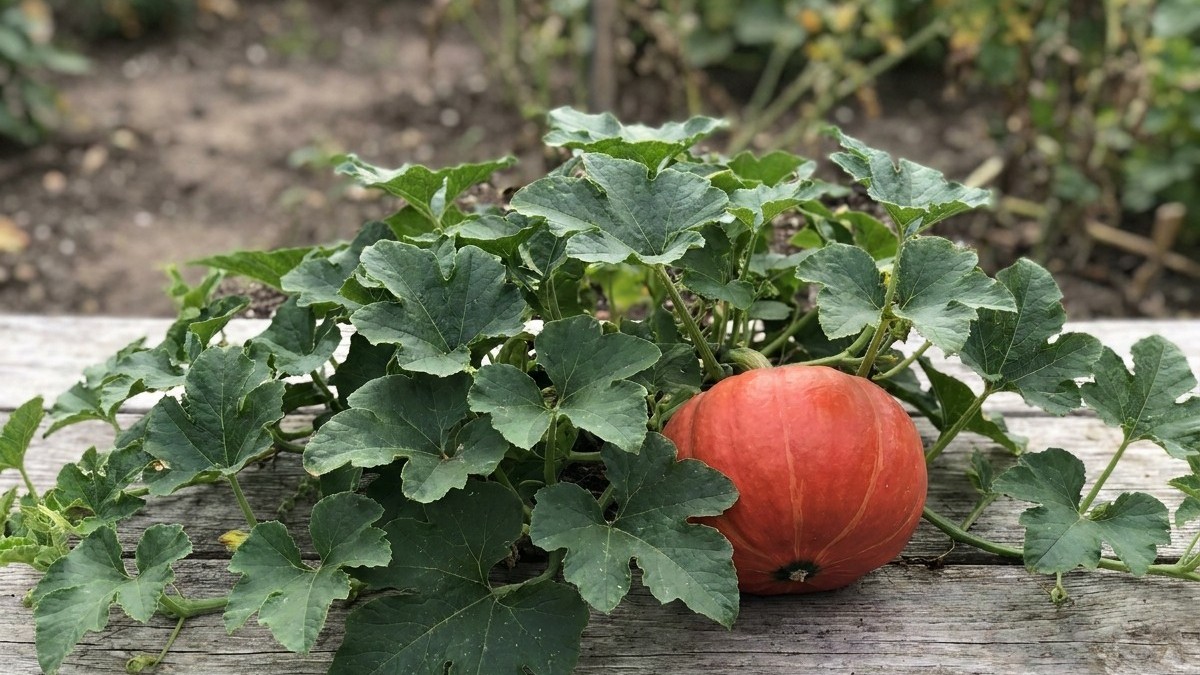

Cut a pumpkin when it is fully colored, with its stem still attached, and before frost arrives. At Calgary’s airport station, the average first fall frost lands on September 16, which makes mid-September the usual deadline and a risky one to push. A whole pumpkin stored cool and dark keeps three to six months. The harder question is whether your pumpkin will be ready at all, and that depends on when its flower opened.
The short answer
Environment and Climate Change Canada’s climate normals for the Calgary International Airport station put the average first fall frost on September 16. Pumpkins need 45 to 55 days to mature after flowering, according to Utah State University Extension. Count backward from September 16 and you get a window: a flower that opens between about July 23 and August 2 is the latest one that can still turn into a ripe pumpkin in an average year.
Counting back from frost
Notice what the count starts from. The 45 to 55 days run from the day the female flower opens, not from the day you pushed the seed into the ground and not from the day a transplant went in. A pumpkin sown in early June may not flower for weeks, and those weeks do not count toward the clock. Anyone who adds 45 to 55 days to a sowing date will land on a harvest date that is far too optimistic.
That September 16 is an average, too, not a promise. In one year out of two, frost falls later than the mean, and in the other half it falls earlier. Treat the July 23 to August 2 window as the midpoint of a range. A flower that opens in the last days of July is a gamble that pays off about half the time. Flowers that open in mid-July have a real cushion, and any that open in the second week of August are very likely to produce a green fruit.
One more caution. The figures come from a single station at Calgary’s airport, and Alberta is not one climate. Northern districts and upland or foothills sites run weeks behind it, so a gardener there should expect a frost date earlier than September 16 and shift the whole window earlier by the same amount. Canadian normals also cover an older 30-year period than the US figures used elsewhere on this site, so don’t compare the two directly. For a deeper look at whether a particular fruit will finish, see Will Pumpkins Ripen Before Frost in Alberta?
How long a cut pumpkin keeps
University of Illinois Extension says a whole pumpkin keeps three to six months in a cool, dark location between 45 and 50 F. That range is for a whole fruit. Keep the stem on when you cut it, and leave it alone afterward. Utah State’s guidance is to harvest with the stem attached and store where the pumpkins will not freeze, but it publishes no humidity figure and no keeping time of its own.
The other half of the Illinois advice is the part most people miss. Keep pumpkins away from ripening fruit and vegetables such as apples, potatoes, and tomatoes, because ripening produce gives off a gas that ages the pumpkin faster. That makes the porch beside the apple crate about the worst spot you could pick, and a cold cellar shelf with a bin of apples nearby only a little better.
When to sow here
The sowing date is set by the soil, not the calendar and not the frost. Utah State Extension says pumpkins are sown when the soil reaches 65 F. Cold ground stalls seed, and a stalled seed means a late plant, which means a flower that misses the window above. Here is how to work the arithmetic through for Alberta.
- Start with the last spring frost. At the Calgary airport station it averages May 21. That is a midpoint, so in about half of years a frost still comes after that date. Nothing about May 21 says the ground is warm.
- Add the lag. Soil trails the air by weeks, and 65 F soil is not the same thing as the last frost date. Counting a few weeks past May 21 puts you in June. This page has no published Alberta date for 65 F soil, so the number has to come from your own garden.
- Check with a thermometer. Push a soil thermometer a couple of inches down in the planting spot and wait for 65 F. A warm afternoon proves little. A reading that holds does.
- Use row covers to gain two weeks. A row cover over the planting bed warms the soil, and the advantage is about two weeks. If your bed would reach 65 F in early June uncovered, a covered one gets there around the third week of May. That puts the sowing close to the average last frost, so keep the cover on and watch the forecast.
- Test the result against the back-count. The first female flower has to open by roughly July 23 to August 2 at the very latest. Every week lost to cold soil comes straight out of that margin, which is why the two extra weeks from a row cover matter more here than they would in a longer-season state.
The reasoning behind step five is worth keeping. Sowing and flowering are separate events, and only the second starts the 45 to 55 day clock. A gardener who sows in the middle of June has used up much of the room before the first bud has formed. The Growing Pumpkins in Alberta page covers site and variety choices that help a plant reach flowering sooner.
What goes wrong here
An Alberta season leaves little slack, and the failures tend to follow the same pattern. Here are the common ones, with a fix for each.
- A late flower that never colors. A fruit set after the window stays green into fall because it simply lacks the days. Remedy: once you are past the first days of August, pinch off new flowers and tiny fruit so the plant puts its energy into pumpkins that can still finish.
- A fruit caught by frost. Frost on the average date is a coin flip, and on a bad year it comes earlier. Remedy: watch the forecast from the first week of September, cover the plants on frost nights, and cut mature fruit ahead of a hard cold snap, stems attached, instead of leaving it in the field to find out.
- A vine that dies back before the skin hardens. When the leaves go early, the fruit may be full-sized but still soft-skinned. Remedy: if the pumpkin has its color, cut it with the stem on and move it indoors to a place where it will not freeze, rather than waiting on a dying vine. Insects can hasten the decline, so check What Eats Pumpkin in Alberta, and When before blaming the weather.
- Seed sown into cold soil. Impatience in May costs more than waiting in June. Remedy: wait for 65 F on the thermometer, or warm the bed with a row cover first.
- Storage next to ripening fruit. A pumpkin that came through the season fine can still age early if it shares a shelf with apples, potatoes, or tomatoes. Remedy: give it its own cool, dark spot between 45 and 50 F, away from anything ripening.
Common questions
Is September 16 a safe date to count on?
No. It is the average first frost at the Calgary airport station, which means frost arrives later in half of years and earlier in the other half. Use it as the middle of a range, and for northern or higher-elevation gardens expect frost to come weeks sooner.
Do the 45 to 55 days start at seeding?
They start at flowering. Utah State University Extension gives the 45 to 55 days as the time to maturity after the flower opens. Seeding comes well before that, and the gap between the two varies from plant to plant and year to year.
How long will a whole pumpkin keep, and where?
University of Illinois Extension gives three to six months in a cool, dark place between 45 and 50 F. Keep it away from apples, potatoes, and tomatoes, and cut it with the stem attached. The sources used here set no humidity target.
How long does a carved pumpkin last?
The sources behind this page give no keeping time for a carved pumpkin, and the 45 to 50 F range applies only to a whole one. A cut pumpkin has an open wall and exposed flesh, so it will not behave like an intact fruit. Plan to carve close to the day you want to display it, and store any whole pumpkins you plan to carve later in the cool, dark spot until then.