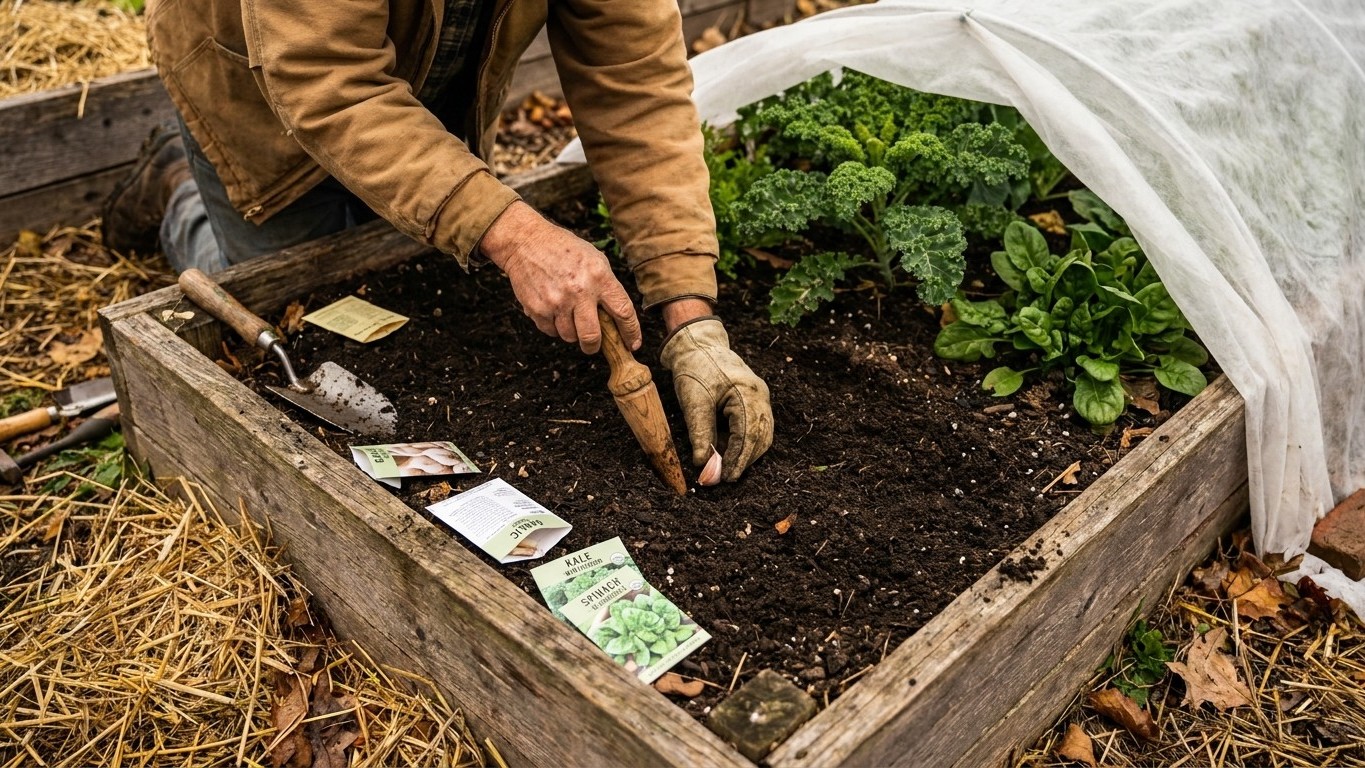

September in Alberta is a harvest-and-protection month more than a planting month. With the average first fall frost landing around September 16 at Calgary, the safe outdoor options are narrow: garlic and shallots for next year, a few hardy greens under cover, and cover crops to feed the soil. Everything tender should already be coming out of the ground, not going into it.
What goes in the ground in September

The number that matters here is the average first fall frost date of September 16, recorded at the Calgary Int’l A station. That is a mean, not a promise. In roughly half of all years, the frost arrives later than that date, and in the other half, it arrives earlier. Treat it as the midpoint of a window that can swing by two or three weeks in either direction, especially once you leave the immediate Calgary area for higher ground or a more northern latitude.
That single fact rules out almost everything warm-season. Tomatoes, peppers, beans, cucumbers, squash transplants, none of that belongs in open soil this month. The gamble isn’t worth it: a single night in the high 20s finishes them off, and by the second half of September that kind of night is common across most of the province.
What does still make sense outdoors is a short, specific list. Garlic and shallot cloves can go into a prepared bed once the soil is workable, timed so they root before hard freeze but don’t push top growth before winter. Fall rye and winter wheat, sown as cover crops, will germinate in cool soil and hold the ground over winter, which matters more than it sounds on Prairie soils that blow and erode when left bare. Spinach, mache, and other cold-hardy greens can be direct-sown under a cold frame or low tunnel in the first half of the month for a late fall or even overwintered harvest, since the cover buys several degrees of frost protection on cold nights.
Everything else waits. If the ground in your yard is still warm and the forecast looks mild, that’s a short-term condition, not a season. The calendar date doesn’t grow tomatoes; soil temperature and the nights ahead do, and in Alberta in September those nights are working against you.
What to start under cover
Counting backward from an average frost date of September 16 leaves almost no runway for starting new transplants this month. Most vegetable seedlings need six to eight weeks of indoor growth before they’re ready to face outdoor soil, which would put a transplant date somewhere in late October or November, well past any realistic growing window in this climate. If you’re weighing whether to start pepper or tomato seedlings now for an outdoor bed, the arithmetic already answers it: no.
What still works under cover this month is smaller and faster. Microgreens take ten to fourteen days from seed to harvest and can run on a windowsill or under a simple grow light regardless of what’s happening outside. Sprouting seeds in jars is even quicker. Herb pots (basil, chives, parsley) brought indoors or started fresh on a sunny sill can keep fresh cooking herbs going well past the point the outdoor garden has shut down.
The two failure modes to watch for are worth naming plainly. Starting warm-season transplants now is starting too late: there’s no realistic outdoor destination left for them this season. The opposite mistake, starting too early, doesn’t apply to outdoor transplants this month, but it does apply if you’re tempted to start spring crops indoors far ahead of when they’d actually go out. Seedlings held too long indoors get leggy and rootbound, and a plant that’s already struggling in its pot rarely catches up once it’s finally transplanted.
What is ready to pick
September is the heaviest harvest month of the Alberta garden year, and the frost date sitting mid-month makes timing the whole game. Potatoes are ready once the vines die back and the skins have set; dig them on a dry day and let them cure somewhere cool and dark before storage. Onions tell you they’re done when the tops fall over and start to dry, at which point they should come out and cure fully before going into storage. Winter squash and pumpkins are ready when the skin resists a thumbnail push and the stem has started to dry and harden.
Carrots, beets, and cabbage can generally stay in the ground a little longer and even improve in flavor with a light frost, but they should come out before any hard, prolonged freeze. Tomatoes and peppers still on the vine when frost threatens should be picked green and brought inside; green tomatoes will ripen slowly indoors on a windowsill or in a paper bag, which beats losing the whole crop to one cold night.
Anything already in storage from earlier harvests deserves a check this month too. Go through stored squash, onions, and potatoes and pull out anything showing soft spots, mold, or an off smell before it spreads to the rest of the batch. One bad potato in a bin really can take down its neighbors given enough time.
The jobs that matter this month
Watching the forecast matters more in September than in almost any other month, precisely because the average frost date sits right in the middle of it. A string of mild days doesn’t mean the season is safe; it means the season is due. Keep row cover, old sheets, or frost blankets on hand and use them on any night the forecast dips toward freezing, especially for crops you’re trying to stretch a few extra weeks.
Garlic bed preparation belongs on this month’s list even before the cloves go in: work compost into the bed, make sure drainage is good, and have the site ready so planting isn’t rushed. Cutting back and clearing spent plants also pays off now, since diseased or pest-ridden material left in the garden over winter gives problems a head start next season. Healthy plant debris can go to the compost pile; anything showing blight, mildew, or insect damage should not.
This is also the month to think ahead rather than just react. Order seed for next season early, since the more popular varieties tend to sell out well before spring. Take a soil test now while beds are still accessible, and work in amendments based on what it shows rather than guessing. Turn the compost pile one more time before cold weather slows the whole process down. Clean and sharpen tools before they go into winter storage, and drain and store hoses before a freeze splits them. If houseplants spent the summer outdoors, bring them in before nighttime temperatures start dropping consistently, since a sudden shock can set them back for months.
What not to do in September
The most common mistake this month is trusting a warm afternoon over the calendar of the season. A mild stretch of days doesn’t cancel the risk of frost; it just delays it. Gardeners who pull row covers off too early after a few pleasant days, or who leave tender crops exposed because “it doesn’t feel like frost weather,” often lose those plants on the very next cold, clear night, when temperatures drop fastest.
Planting anything warm-season now, even a quick transplant of tomatoes or squash because a nursery has them on clearance, is a bet against a frost date that’s already, on average, mid-month. It rarely pays off.
Nitrogen fertilizer is another place timing matters more than instinct suggests. Feeding nitrogen to perennials, shrubs, or lawns late in the season pushes soft new growth right when plants should be hardening off for winter, and that new growth is the first thing frost damages. If you’re amending soil this month, lean toward compost and balanced amendments rather than a nitrogen boost, and save heavier feeding for spring.
Leaving root crops in the ground too long is the last trap. Carrots and parsnips generally tolerate a freeze-thaw cycle fine, but potatoes do not; a hard freeze in the soil can turn a good potato harvest into a loss overnight. Know which crops in your beds can wait and which can’t, and harvest the vulnerable ones before the ground actually freezes, not after.
Checking this against your own county
Everything above is built around the Calgary Int’l A station, and Alberta is too large a province for one station to speak for it all. Elevation, latitude, and proximity to the mountains all shift frost timing by weeks: the Peace Region in the north typically sees frost earlier than the Calgary area, while parts of the south around Lethbridge and Medicine Hat often run later. The Canadian hardiness zone of 4a cited for the reference city is also specific to that location and that seven-variable Canadian system, which does not convert directly to the single-variable USDA zones used elsewhere in North America.
For a planting calendar and guidance built around your own county or municipal district, check with Alberta’s Ministry of Agriculture and Irrigation rather than relying on a provincial average alone.
Common questions
Is it too late to plant vegetables in Alberta in September?
For anything warm-season, yes. The average first fall frost lands around September 16, and most vegetable transplants need weeks of frost-free growth to produce anything worthwhile. Garlic, cover crops, and cold-hardy greens under protection are the realistic options left this month.
When should I harvest potatoes and onions in Alberta?
Potatoes are ready once the vines have died back and the skins have set; onions are ready once their tops fall over and begin to dry. Both should be dug and cured before any hard, sustained freeze reaches the soil.
Can I still start seeds indoors in September?
Not for outdoor transplants; there isn’t enough season left. Fast indoor crops like microgreens, sprouts, and windowsill herbs still work well and can keep fresh greens coming through the colder months.
How reliable is the September 16 frost date for planning?
It’s a long-term average from a single Calgary station, not a guarantee. In roughly half of all years, frost arrives after that date, and local factors like elevation and latitude can shift it by weeks, so use it as a midpoint to plan around, not a fixed deadline.