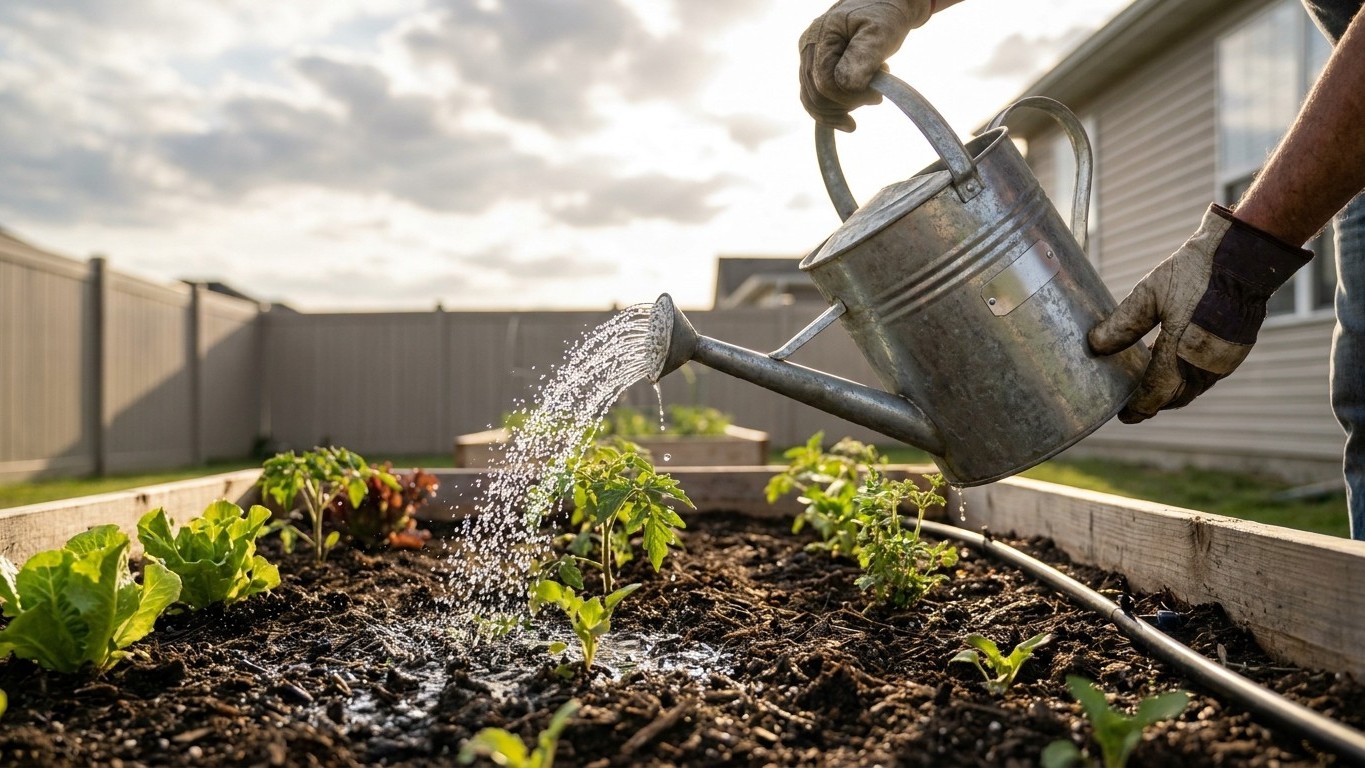

Ontario gardens get a decent hand from the sky most summers, but 2.81 inches of rain in June still won’t carry a bed through two dry, breezy weeks without help. The fix isn’t more water on a fixed schedule; it’s less, deeper, and timed to when roots actually run dry. Here’s what the numbers say about this ground, and how to water it so nothing wilts by August.
What changes here

Two figures set the terms for watering in Ontario. The driest summer month, June, brings 2.81 inches of rain on average. And the reference station near Toronto reports 0.0 days a year at or above 90F. Together they describe a garden that almost never bakes under extreme heat, but also rarely gets a single storm big enough to fill the tank for the week. Watering here is less about emergency response and more about closing a modest, steady gap.
The weekly math
A vegetable or flower bed generally wants about an inch of water a week to keep growing without stress. Spread June’s 2.81 inches across a typical 4.3-week month, and roughly 0.65 inches a week arrives free from the sky. That leaves about 0.35 inches a week for the gardener to add by hose or drip line, more of a light top-up than a full soak, if the goal is to hit that one-inch mark.
Sand versus clay
That leftover gap doesn’t land the same way in every bed. Sandy soil lets water pass through fast, so a light rain or a shallow watering can disappear into the subsoil within a day, meaning a bed on sand may need shorter, more frequent top-ups than the calendar suggests. Clay holds the same inch for close to a week, but watering it again before it’s had time to dry drowns roots rather than feeding them. Neither soil changes the target amount, just how often it needs checking.
One thing worth keeping in mind: these figures come from Canadian climate normals covering 1981 to 2010, a different reference period than the 1991-2020 normals used for many US stations elsewhere in this series, so side-by-side comparisons across the border aren’t exact. They describe what a season usually looks like at one reference station, not a forecast, and not any single yard. A rain gauge stuck in the actual bed is what turns a normal into a decision.
How to water when it matters
Deep, infrequent watering at the base of the plant, done in the morning, beats a daily sprinkle for a simple reason: roots grow toward wherever moisture sits. Water shallow and often, and roots stay shallow, right in the layer that heats up and dries out first. Water deep and less often, and roots follow the moisture down, building the kind of reach that shrugs off a dry week instead of wilting through it. Morning watering matters too, since it gives roots hours to draw water in before the day’s warmth and any wind pull it back into the air.
The only reliable way to know a bed needs water is to check below the surface, not on top of it. Push a finger or a trowel tip two inches into the soil near the plant’s base. If it comes out dry at that depth, water; if it’s still cool and damp, wait.
A starting point, not a rule
Start with about an inch of water a week and adjust from there based on what the soil actually shows.
- Check the soil two inches down before turning on the hose; dry-looking topsoil isn’t proof of anything on its own.
- Water at the base of the plant rather than overhead, so the roots get the water instead of the leaves.
- Water early in the morning, before heat and wind can pull moisture back out of the soil.
- On sandy ground, plan for shorter waterings every two to three days, since the profile drains fast; on clay, one deeper soak a week is usually enough because it holds water longer.
- Aim for roughly an inch a week total, split across one or two sessions, then check with a trowel four days later and adjust up or down from there.
What goes wrong
A little water every day
A quick daily sprinkle looks responsible, but it wets only the top inch of soil. Roots follow that moisture and stay shallow, right in the layer that dries out and heats up first once a real dry stretch settles in. A plant watered lightly every day for a month can wilt faster on a hot afternoon than one watered deeply once or twice a week.
Watering the leaves after dinner
An evening pass with the hose feels efficient, but it leaves foliage wet through the cooler night hours, exactly the window fungal disease needs to take hold. Powdery mildew and blight spread fastest on leaves that stay damp until morning, a real risk in a region that already carries humidity through summer nights.
Trusting a shower that only wet the surface
A ten-minute thunderstorm can look like a soaking from the porch and still leave the soil dry two inches down, particularly over clay, which sheds a fast, heavy rain rather than absorbing it. The only way to know is a finger or a trowel in the bed, not a glance at the sky.
Watering a clay bed before it’s had time to dry
Ontario’s moderate summer rainfall and near-total absence of 90-degree days work against aggressive watering schedules, not for them. On clay ground especially, adding water on top of a bed that’s still damp from last week’s rain drowns roots long before heat ever gets the chance to. Here, the costlier habit usually isn’t under-watering. It’s not letting the soil dry out between sessions.
Local help
For current guidance on garden care, soil, and seasonal conditions, Ontario’s Ministry of Agriculture, Food and Rural Affairs keeps regional resources online. Watering restrictions, when they’re in place, are typically set by individual municipalities and utilities rather than the province as a whole, and they shift from year to year based on local rainfall and water supply. Check with the local water provider before setting a summer schedule, since these figures describe the climate, not the current bylaw.
Common questions
How much should I water my Ontario garden each week?
Aim for about an inch total. In June, roughly 0.65 inches of that arrives from average rainfall, leaving about 0.35 inches for the gardener to add, though a rain gauge in the actual bed is the only way to confirm it in a given week.
Does Ontario get dry spells if summers aren’t that hot?
Yes. The reference station averages 0.0 days a year at or above 90F, but water demand isn’t only about extreme heat. A run of days without rain, combined with wind and normal summer warmth, can still dry out the top layer of soil well before any heat wave would.
Is my clay soil holding too much or too little water?
Clay generally holds a week’s worth of water once it’s soaked. Check with a finger or trowel two inches down before adding more; if it’s still damp, wait rather than water on schedule.
Do I need a rain gauge if summer rainfall here is already decent?
It helps more than it might seem. Ontario’s summer rain often arrives as short, uneven storms rather than steady soaking, so the amount that actually reaches root depth in any given bed can differ from the monthly average by a fair margin.