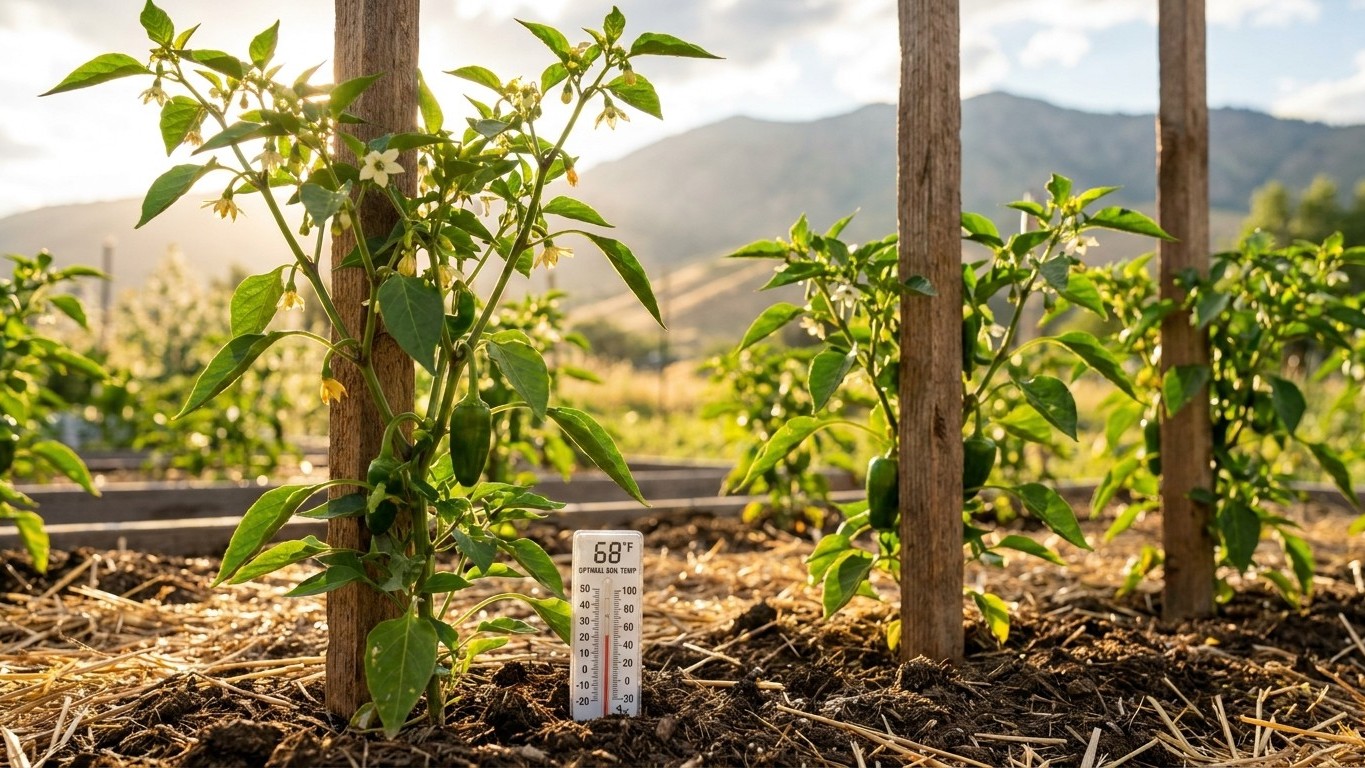

Maine’s cool, short summers actually favor peppers more than gardeners expect: heat stress that shuts down fruit set almost never happens here, but the flip side, cool nights, needs watching all season. Pick varieties that set fruit reliably below 70°F soil warmth and start seed early enough indoors, and a Maine backyard can carry a full pepper harvest before the first fall frost.
The short answer

Portland’s climate normals put the average at just 3.8 days a year at or above 90°F (NOAA NCEI Climate Normals, 1991-2020, reference station Portland). That’s the number that matters for the hot end of pepper fruit set, and it’s a small one. Days that hot are rare enough here that heat-driven blossom drop, the kind that plagues pepper growers in warmer states, isn’t the main risk in Maine. Most seasons won’t deliver a single stretch of 90-plus days long enough to stall pollination.
The other threshold is the one Maine growers actually need to track. Utah State University Extension’s guidance on peppers is direct about this: fruit set fails at both ends, not just the hot one, and nights below 55°F can shut pollen viability down just as effectively as extreme heat does. A pepper plant sitting in a bed of open flowers on a 48°F night in a coastal Maine June will often drop those blooms without setting fruit, even though the daytime high looked perfectly reasonable.
Here’s the part this site can’t hand you on a plate: summer night minima aren’t part of the data carried here, and there’s no reliable way to back into them from latitude or from how cold January gets. Coastal Portland, inland river valleys, and the Aroostook County uplands can all report the same daytime high and still swing wildly different once the sun goes down, sometimes by 15°F or more between a shoreline garden and one twenty miles inland. That means the coolnight risk is something each grower has to watch locally, not something to infer from a map. A cheap min-max thermometer left in the pepper bed through June and early July tells you more than any regional average ever will.
Put those two pieces together and the short answer holds: Maine’s heat load is low enough that fruit set rarely fails from too much warmth, but the season’s real vulnerability sits on the cold side of that window, especially in the weeks right after transplant when nights are still catching up to summer.
When to start seed here
Utah State University Extension recommends starting pepper seed 8 to 10 weeks before transplanting, and transplanting only after frost has passed and soil has warmed to 60°F. In Maine, that arithmetic has to run backward from a frost date that shifts a lot depending on where the garden sits.
- Start with the local frost window. NOAA’s 1991-2020 climate normals put the last spring freeze at the Portland reference station between April 22 and May 1. That’s the mild end of the state; inland and northern Maine counties push their last frost date meaningfully later, sometimes into late May or beyond, so a grower outside the coastal strip needs their own county’s frost data rather than borrowing Portland’s.
- Add the soil-warming lag. Air temperature crossing above freezing doesn’t mean soil has reached the 60°F peppers need at the roots. Soil typically lags several weeks behind air in spring, especially in heavier or shaded ground, so the real transplant date in most Maine gardens sits later than the frost-free date alone would suggest.
- Count back 8 to 10 weeks from that transplant date. If a coastal grower expects to set plants out in mid-to-late May once soil has caught up, seed needs to go into trays roughly 8 to 10 weeks earlier, which lands in the second or third week of March for many Portland-area gardens.
- Push the whole schedule later inland. A grower in a colder pocket of the state working from a June transplant date should count back from June, not from Portland’s date, which shifts seed-starting into early-to-mid April for that garden.
The math is simple once the local frost date is in hand: transplant date minus 8 to 10 weeks equals seed-starting date. What changes the answer isn’t the calendar, it’s which frost date a grower plugs into it.
What goes wrong here
- Blossom drop from a cool night. Nights below 55°F, the kind that show up even in a Maine July after a clear, dry evening, can cause open flowers to abort without setting fruit. The remedy is timing: hold transplants a little longer indoors if a cold snap is forecast right after the frost-free date, and use row cover on nights that dip unexpectedly, since a plant already in bloom is more vulnerable than one still building leaves.
- Blossom drop from a hot spell. Even with Maine’s low count of 90-plus-degree days, a short heat spike paired with high humidity can stall pollination for a few days. The fix is patience rather than intervention: flowers that abort during a heat spell are usually followed by a fresh flush once temperatures moderate, so there’s rarely a need to replant.
- Sunscald on exposed fruit. Peppers that lose leaf cover to disease, pruning, or wind damage can develop pale, papery patches on fruit facing direct afternoon sun. Leaving foliage intact around developing fruit, rather than pruning heavily for airflow, is the simplest prevention, and shade cloth over exposed rows helps during the sunniest stretches of midsummer.
- Blossom-end rot. Dark, sunken patches on the fruit’s bottom end usually trace back to uneven watering rather than a soil calcium shortage outright, since calcium can’t move through the plant without steady moisture. Consistent watering, mulching to hold soil moisture between rains, and avoiding the swing from bone-dry to soaked are the practical fixes most Maine gardens need.
Common questions
Do Maine summers get hot enough to hurt pepper fruit set?
Rarely. Portland’s climate normals show an average of only 3.8 days a year at or above 90°F, so heat-driven blossom drop is uncommon compared with the cool-night risk that runs through most of the growing season.
How do I know if my nights are too cold for peppers to set fruit?
There’s no published regional figure for summer night minima to check against, so the only reliable method is a thermometer in the garden itself. Watch for nights dropping below 55°F, especially right after transplant and during early bloom, since that’s when fruit set is most vulnerable.
When should I start pepper seed indoors if I garden inland from Portland?
Count back 8 to 10 weeks from your expected transplant date, and don’t borrow Portland’s April 22 to May 1 frost window if you garden inland or north, since those areas typically see a later last frost and need seed started correspondingly later.
Why did my pepper flowers drop without any fruit forming?
Blossom drop points to temperature stress at one end or the other, either a cool night under 55°F or a short hot spell, rather than a disease or pest problem. Checking recent overnight lows is usually more useful than inspecting the plant itself.