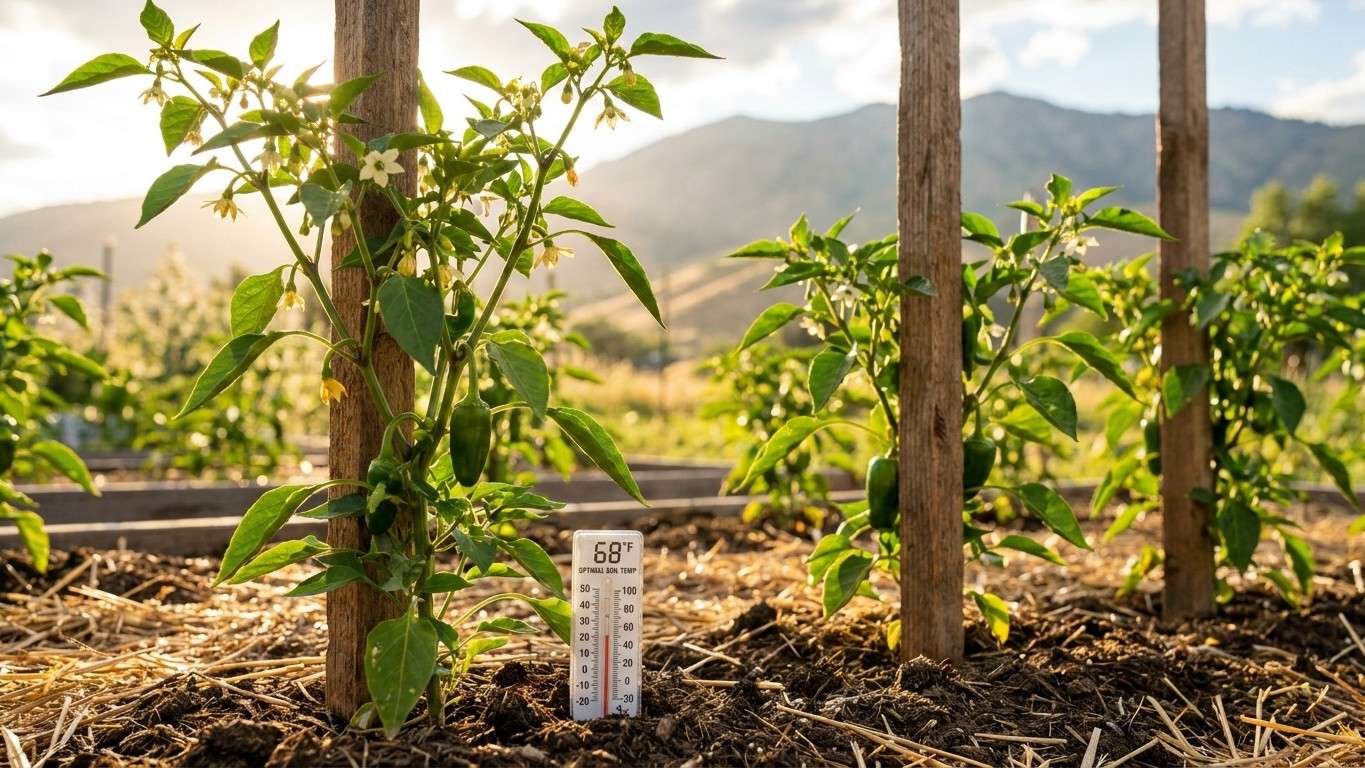

Minnesota gardeners get the best results from short-season, early-maturing pepper types, since the state’s frost-to-frost window is tight and its summer heat load runs moderate rather than extreme. Bell peppers, banana peppers, and other varieties bred to color up quickly fit the calendar better than long-season hot peppers or oversized bells that need extra weeks past flowering to finish ripening. Getting the transplant date right, and watching both the heat and the cold extremes through the season, matters just as much as which variety goes in the ground.
The short answer

Minneapolis averages 10.6 days a year at or above 90 F, based on NOAA’s 1991-2020 Climate Normals. That’s a modest heat load compared with states where triple digits show up for weeks at a stretch. For pepper growers, this matters directly: fruit set stalls when daytime temperatures push past 90 F, because the plant drops blossoms rather than spend energy on fruit during heat stress. In Minnesota, that stress tends to arrive in short bursts, a few days here and there in July, rather than as a sustained wall of heat. That’s good news for fruit set, but it’s not a guarantee. A heat dome that parks over the Upper Midwest for a week can still knock blossoms off a pepper plant just as effectively as a longer stretch would in a hotter state.
Fruit set fails at the other end too, and this is the half of the equation gardeners tend to forget. Nights below 55 F stop pollen from developing properly, and blossoms drop just as they would in a heat spell. This site doesn’t carry summer night-minimum data for Minnesota, so there’s no shortcut here: check your own overnight lows through June and July, especially if you’re gardening near a lake, in a low spot, or anywhere cold air tends to pool after sunset. Don’t guess at this number based on how far north or south you are in the state. Local terrain swings nighttime lows more than latitude does, and a difference of even a few degrees can be the line between a plant that sets fruit and one that just sits there flowering without producing.
Once a flower does get pollinated, the fruit doesn’t ripen overnight. According to Utah State University Extension, peppers typically need 35 to 45 days after flowering to reach full ripeness, not 35 to 45 days from the seed packet’s sowing date. That distinction changes how you plan the back half of the season. If your plants stop flowering by mid-August because nights are dipping, count forward from that last bloom, not from transplant day, when you’re deciding whether green fruit still on the vine has a real shot at turning red, yellow, or orange before frost.
When to start seed here
Working backward from frost and soil temperature is the most reliable way to land on a seed-starting date, and it’s arithmetic any gardener can redo for their own county.
- Find your frost-free date. For the Twin Cities area, NOAA’s 1991-2020 Climate Normals put the last spring freeze at 32 F somewhere between April 17 and April 30, a probability band rather than a single fixed day. The Twin Cities sit in the mild southern part of the state; northern Minnesota runs two to three weeks tighter at both the spring and fall ends, so a grower near Duluth or International Falls needs to shift this whole calculation earlier in fall and later in spring.
- Wait for 60 F soil, not just frost-free air. Pepper transplants stall in cold soil even after the air has warmed past freezing. Soil temperature lags air temperature by days to weeks depending on how wet and shaded the bed is, so a frost-free date on the calendar doesn’t automatically mean the ground is ready.
- Count back 8 to 10 weeks from your transplant date. That’s the indoor seed-starting window Utah State University Extension recommends for peppers. If soil in your area typically hits 60 F in mid-May, count back 8 to 10 weeks from mid-May, which lands seed-starting somewhere in early to mid-March.
- Build in a buffer for a slow spring. Since the last-frost window itself spans nearly two weeks (April 17 to April 30), and soil warms on its own separate timeline, treat your seed-starting date as a target range, not a fixed deadline. Starting a few days early costs little; starting late can push transplant, and therefore first bloom, into the part of the calendar where fewer weeks remain before fall’s night chill sets back in.
What goes wrong here
- Blossom drop during a hot spell. When daytime temperatures push above 90 F, even for a couple of days, plants shed flowers instead of setting fruit. Minneapolis only averages 10.6 such days a year, so this is usually a short-term problem rather than a season-long one. Provide afternoon shade cloth during the hottest stretches and keep soil moisture even, since drought stress on top of heat stress makes blossom drop worse.
- Blossom drop during a cool night. Peppers stop setting fruit when nights fall below 55 F, and this site doesn’t track summer night minima for Minnesota, so watch your own thermometer rather than assuming a “safe” date. If a cold snap is forecast during flowering, row cover thrown over plants in the evening can hold in a few extra degrees of warmth.
- Sunscald on exposed fruit. Fruit that loses its leaf cover, from pruning, wind damage, or disease, develops pale, papery patches where direct sun hits it for hours. Leave foliage in place rather than stripping leaves to “let more sun in,” since the leaves are protecting the fruit, not blocking it.
- Blossom-end rot. A dark, leathery patch on the bottom of the fruit signals uneven water delivery, which disrupts calcium uptake, more often than it signals a lack of calcium in the soil itself. Water on a steady schedule rather than letting the bed dry out between soakings, and mulch to buffer swings in soil moisture during dry stretches.
Common questions
Can I still get ripe peppers if my nights stay cool into June?
Fruit set simply pauses until nights climb back above 55 F; the plant itself isn’t damaged by a cool stretch, it just won’t flower productively during it. Once nights warm, flowering resumes, though a delayed start pushes the harvest window later into a season that’s already fixed at both ends by frost.
Does the number of 90 F days matter if I’m growing peppers in a container on a patio?
Containers heat up faster than garden soil and lose moisture faster too, so a plant in a black plastic pot can experience more heat stress than the 10.6-day regional average would suggest, even on a day that doesn’t officially hit 90 F. Moving pots into afternoon shade during a heat spell helps more than it would for an in-ground bed.
Is it worth starting seed earlier than 8 to 10 weeks before transplant to get a jump on the season?
Utah State University Extension’s guidance of 8 to 10 weeks reflects how long pepper seedlings need to reach transplant size without becoming rootbound or leggy indoors. Starting much earlier usually means fighting a stressed, overgrown seedling by transplant time rather than gaining real season length.
How do I know if green fruit still on the plant in late summer will actually ripen before frost?
Count back to when that fruit’s flower opened, then add 35 to 45 days, the ripening window Utah State University Extension attributes to peppers after flowering. If that math lands after your area’s typical fall frost, the fruit is more likely to stay green; picking it for cooking is a better bet than waiting.