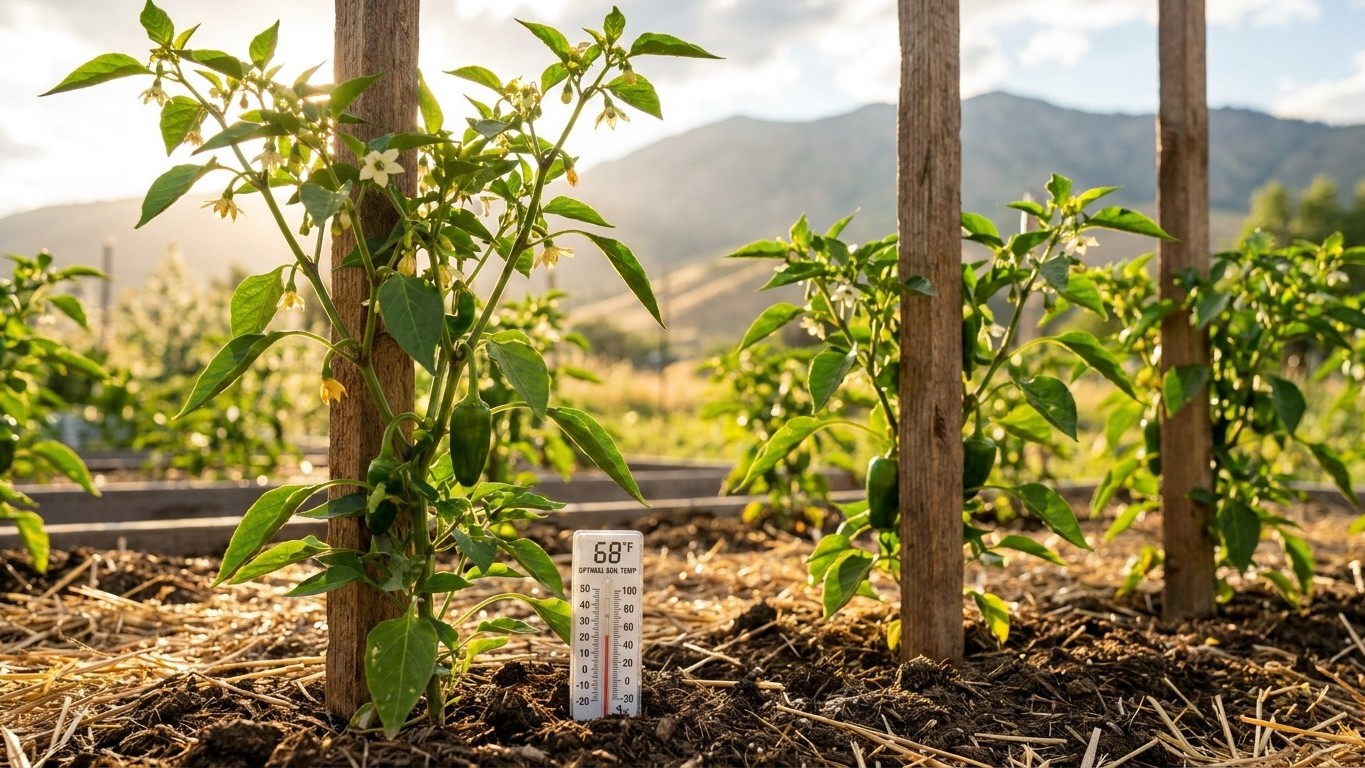

Saskatoon’s climate record shows zero days a year reaching 90 F, which means the heat-failure side of pepper growing barely exists here. The harder question is the cool side: an average last frost around May 18 that shifts every year, and summer nights this site does not measure. Get the timing right and peppers ripen fine in a Saskatchewan season.
The short answer

Start with the number that matters most for fruit set on the hot end: the Saskatoon reference station averages 0.0 days a year at or above 90 F, based on the Environment and Climate Change Canada normals for 1981-2010. That is not a rounded figure. It is the measured mean, and it tells you something specific: in a typical year, this region simply does not generate the kind of sustained heat that causes pepper flowers to abort. Growers in hotter US states spend July worrying about blossoms shriveling in 95-degree afternoons. In Saskatchewan, that particular failure mode is close to a non-issue in most years.
But pepper fruit set fails at both ends of the thermometer, not just the top. Utah State University Extension is direct about this: blossoms drop when nights fall below 55 F just as reliably as when days climb past 90 F. And here is where the local math gets harder, not easier. This site tracks daytime heat loads by station and by territory, but it does not carry summer night minima for Saskatchewan or anywhere else. That is not an oversight to shrug off. It means the number you actually need to protect your pepper harvest, the overnight low in your own yard during June, July and August, is not published here and should not be guessed at.
Do not infer it from latitude, either. A northern latitude does not automatically mean colder nights than a southern one; local elevation, wind exposure, nearby water, and even how close your garden sits to a building or a windbreak all shift nighttime lows by several degrees. Two gardens twenty miles apart on the Saskatchewan prairie can post noticeably different overnight temperatures on the same date. The only reliable fix is a min-max thermometer in your own garden, checked through the growing season, especially in the weeks right after transplanting when a late cold snap can still slip through.
So the short answer splits in two. On the hot end, Saskatoon’s climate record gives you real reassurance: essentially no days of extreme heat to knock blossoms off the plant. On the cool end, the record is silent, and that silence is the actual risk. Peppers here are far more likely to lose a bloom to a chilly July night than to a heat wave. Plan your season around that asymmetry, not around the assumption that “prairie summer” automatically means warm nights.
When to start seed here
Work backward from two anchor points: the date the ground warms and the date frost risk clears. Utah State University Extension puts it plainly, transplant peppers after frost and once soil reaches 60 F, and start seed 8 to 10 weeks before that transplant date. Here is how that arithmetic plays out for a Saskatchewan garden.
- Locate your frost baseline. The Saskatoon SRC station’s Canadian Climate Normals for 1981-2010 put the average last spring frost at May 18. That is a mean, not a promise. By definition of an average, frost arrives later than May 18 in roughly half of all years. Treat May 18 as the midpoint of a window, not a green light.
- Build in a buffer past the mean. Because a fifty-fifty average is not a safe margin, many growers push their actual transplant target one to two weeks past the mean date rather than planting right on it. That buffer matters more in a year that is trending cool, and it costs little: pepper plants held a bit longer indoors under decent light do not suffer for the wait.
- Confirm soil temperature separately from air temperature. Frost clearing and soil warming do not happen on the same day. Cold soil that stays below 60 F will stall pepper roots and stunt the transplant even if the air feels warm and frost season has technically passed. A simple soil thermometer pushed a few inches down settles this faster than any calendar guess.
- Count back 8 to 10 weeks from your real transplant date. If your working target, after adding the buffer past the mean frost date, lands in late May or the first days of June, counting back 8 weeks puts seed-starting indoors in the first half of April. Counting back the full 10 weeks pushes it into late March. Growers who want the largest, most fruit-ready transplants tend to lean toward the longer end of that window.
- Adjust for your own county, not Saskatoon’s station data alone. The SRC station reading is one point on the map. Northern communities and higher, more exposed districts commonly run behind Saskatoon’s average by a couple of weeks or more. If you garden outside the immediate Saskatoon area, shift this whole timeline later rather than trusting the May 18 figure at face value.
Redo this math with your own dates whenever you have better local information, particularly your own multi-year frost log if you keep one. The arithmetic is simple; the input data is where local knowledge earns its keep.
What goes wrong here
- Blossom drop from a cool night. Given Saskatchewan’s essentially zero days above 90 F, the more common trigger here is the cold side: an overnight dip below 55 F, easy to underestimate on the prairie in a “warm” week. Remedy: track your own garden’s night lows with a thermometer rather than assuming a summer night is automatically mild, and hold off transplanting until nights have settled, not just days.
- Blossom drop from an unusual hot spell. Even where the yearly average sits at zero days over 90 F, a single sharp heat spike can still occur and knock blossoms off during flowering. Remedy: light afternoon shade cloth over plants during any short, unseasonable heat run protects open blossoms without cutting off the light peppers need the rest of the week.
- Sunscald on exposed fruit. Prairie sun with little cloud cover and wide-open sightlines can scorch pepper skins that lose their leaf cover, whether from wind, hail, or over-eager pruning. Remedy: leave foliage in place to shade developing fruit, and stake plants so wind does not strip leaves away mid-season.
- Blossom-end rot from uneven watering. This shows up as a dark, sunken patch on the fruit’s blossom end and traces back to inconsistent soil moisture disrupting calcium uptake, more common in containers and sandy garden soil that dries out fast between waterings. Remedy: water on a steady schedule rather than in occasional heavy soaks, and mulch to even out soil moisture swings.
Common questions
Does Saskatchewan get too cold at night for peppers even in midsummer?
It can, in some gardens and some years, but this site does not carry summer night-minimum data to confirm it for your specific location. The only reliable answer comes from a thermometer in your own yard through June, July and August.
Is May 18 a safe date to transplant peppers outdoors in Saskatchewan?
No. May 18 is the average last spring frost at the Saskatoon SRC station over the 1981-2010 period, which means frost arrives later than that date in about half of all years. Treat it as a midpoint, add a buffer, and confirm soil has reached 60 F before transplanting.
Since Saskatoon averages zero days above 90 F, can I skip worrying about heat stress entirely?
Mostly, yes, on the annual average. But an occasional short heat spike can still occur in any given year and still cause blossom drop during flowering, so it is worth watching short-range forecasts during bloom rather than assuming heat is never a factor.
How long before transplanting should I start pepper seed indoors?
Utah State University Extension recommends 8 to 10 weeks indoors before transplanting, timed to when soil reaches 60 F after frost has passed. Count back from your own realistic transplant date, adjusted for your part of the province, rather than from the Saskatoon average alone.