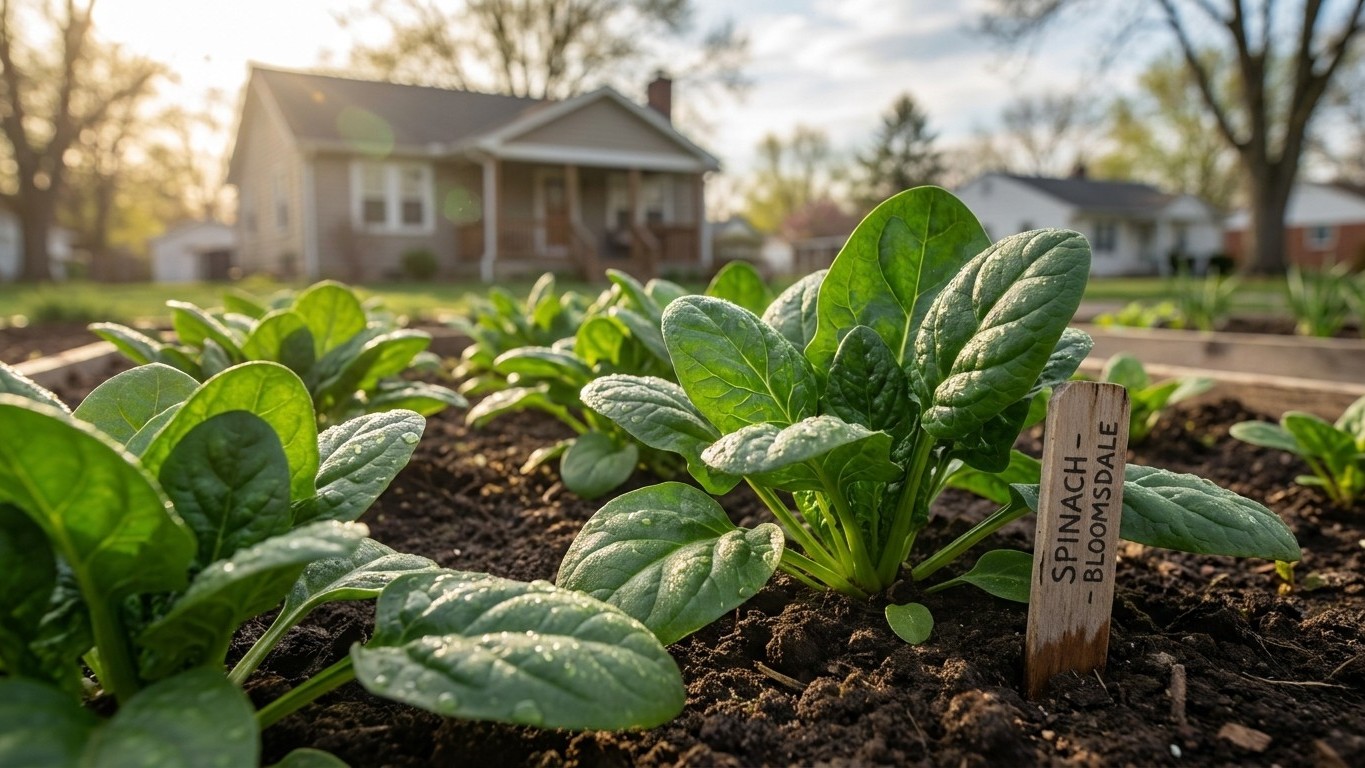

Spinach in Saskatchewan bolts because of day length, not heat. With roughly 16 hours and 31 minutes of daylight on the longest day, the plant gets the trigger it needs to flower long before Saskatoon ever sees a truly hot afternoon. That means the spring sowing window is short and the fall window is shaped by warm soil, not by cold. Will Spinach Bolt Early in Saskatchewan? Here is how those two forces play out on the calendar.
The short answer
Start with the number that matters most: 16 hours and 31 minutes of daylight on the summer solstice at the Saskatoon reference station. That is an enormous amount of light, and for spinach, long days are the signal that flips the plant from making leaves to making seed. Bolting in spinach is driven by day length as well as by warmth, so once the days stretch past a certain point, the plant begins bolting almost regardless of how mild the air feels.
That fact runs against the instinct a lot of gardeners have. A cooler summer feels like it should buy extra time. In Saskatchewan it does not, because the length of the day keeps climbing toward that solstice peak whether the thermometer cooperates or not. A gardener in a hot southern state might blame bolting entirely on heat. A gardener here has to blame the calendar itself.
Now put the heat side of the equation next to that. The Saskatoon station averages 0.0 days a year above 90 F. That is not a typo. Summers here are short on the kind of scorching heat that pushes many warm-season crops. Spinach grows best where temperatures stay under 75 F, and Saskatchewan spends most of its growing season comfortably under that ceiling. So the heat load that ruins spinach further south is largely absent here.
Put those two pieces together and the picture is clear. In Saskatchewan, the limiting factor for spinach is day length, not heat. The 75 F ceiling still matters for flavor, since it is also the bitterness threshold, and a hot spell in July can still push a plant that is already bolting into an unpleasant, sharp-tasting mess. But the actual trigger that ends the spring crop, and the reason the fall crop has to be timed so carefully, is the length of daylight climbing toward and receding from that mid-June peak. Knowing When to Sow Autumn Spinach in Saskatchewan is what separates a successful fall crop from one that bolts before it matures. A gardener who treats this as a heat problem will misjudge the whole season. A gardener who treats it as a light problem will time the sowing correctly.
This is also why variety choice matters less here than timing does. Four varieties commonly grown in home gardens, Bloomsdale, Melody, Teton, and Olympia, are the ones typically named by extension sources, but there is no published data comparing how quickly any of them bolt under long-day conditions. Without that data, the safest approach is to work the calendar hard rather than lean on a variety name to solve a day-length problem no seed packet can fully answer.
How long the spring window really is
Spinach seed is sown two to three weeks before the last frost, and growth stops being good once temperatures push past 75 F. In Saskatchewan those two facts, plus the daylight curve, sketch out a spring window that is workable but tight.
- Start with the frost date. The average last spring frost at the Saskatoon reference station is May 18. That is a mean date from Environment and Climate Change Canada’s 1981-2010 climate normals, not a guarantee, so in roughly half of all years frost arrives later than that.
- Back into the sowing date. Sowing two to three weeks ahead of that average puts seed in the ground around late April to the first days of May, while soil is still cool and germination is easy.
- Track the daylight climb. From late April onward, day length in Saskatchewan is already long and rising fast toward that 16 hour, 31 minute peak on the solstice. Spinach sown in late April is growing leaves while the bolting trigger is building in the background.
- Watch for the solstice, not a thermometer. Because days above 90 F essentially do not happen here, heat will rarely be the reason a spring crop fails early. The daylight peak around the June solstice is the more reliable marker for when bolting risk becomes serious.
- Count the usable weeks. From a late April sowing to a mid-to-late June bolt risk, the realistic spring window runs roughly seven to eight weeks. That is enough time to grow and harvest baby leaves, but it leaves little slack for a delayed sowing or a late, wet spring that pushes planting back.
A gardener who waits until the average frost date to sow, rather than sowing two to three weeks ahead of it, is effectively shortening an already tight window even further.
The autumn crop, and when the soil lets you sow
Fall spinach in Saskatchewan runs into a different obstacle than the spring crop does. It is not the cold that blocks the sowing date. It is the soil still being too warm.
Soil still too warm to germinate
Spinach seed germination drops off once soil temperature rises above 80 F. Even though Saskatoon averages zero days a year above 90 F in the air, soil in full summer sun can still sit well above 80 F through most of July, especially in bare or lightly mulched beds. That means the earliest calendar date for a fall sowing is not fixed by frost math alone. It is fixed by whenever the soil actually cools past that 80 F line, which in a Saskatchewan garden typically happens later in summer as the sun angle drops and nights lengthen.
Counting back from the first fall frost
The first fall frost at the Saskatoon reference station averages September 18, again a mean date where roughly half of all years see frost arrive later. Fall spinach is sown 50 to 75 days before the date a gardener wants to harvest. Using September 18 as a realistic harvest target, counting back 75 days lands around the start of July, and counting back 50 days lands around the end of July.
That creates a real tension. The 50-to-75-day math points to sowing in early-to-mid July, which is exactly when soil temperatures are most likely to still be running above that 80 F germination threshold. A gardener aiming for a full 75-day fall crop may need to accept a slightly later sowing than the math suggests, waiting until soil actually cools, and then treating a shorter 50-day window as the realistic target rather than the full 75. Since September 18 is only a mean frost date, there is often a bit of extra time past it in milder years, but that should be treated as a bonus, not a plan.
Checking this against your own county
Every figure above comes from a single reference station, Saskatoon SRC, and Saskatchewan is not one climate. A garden in a northern or upland district can run weeks behind Saskatoon’s average frost dates, which shifts both the spring sowing window and the fall countback in ways this page cannot capture for every location.
Before locking in a sowing date, check current conditions and local frost history with Saskatchewan’s Ministry of Agriculture, listed under agriculture and natural resources services for farmers and ranchers. Soil temperature, in particular, is worth checking directly with a thermometer in the actual bed rather than relying on air temperature averages, since the 80 F germination threshold is a soil measurement, not an air one.
Common questions
Does a cool Saskatchewan summer delay spinach bolting?
Not much. Bolting is triggered by long days as well as by heat, and Saskatchewan’s daylight still climbs to over 16 hours around the solstice regardless of how mild the temperatures stay. The near-total absence of 90 F days here removes one stress but does not remove the day-length trigger.
Can I sow spinach right after my last frost date instead of before it?
Sowing that late shortens an already tight spring window. Seed is meant to go in two to three weeks before the average last frost, around late April to early May at the Saskatoon reference point, to make the most of the roughly seven-to-eight-week spring growing period before daylight peaks.
Why can’t I just sow my fall spinach 75 days before frost every year?
Because germination itself can fail if the soil is still above 80 F, which is common in Saskatchewan through much of July. The 50-to-75-day countback from a target harvest date only works once the soil has actually cooled enough for seed to sprout.
Is one spinach variety more bolt-resistant than another in Saskatchewan?
Varieties commonly available to home gardeners include Bloomsdale, Melody, Teton, and Olympia, but there is no published data comparing their bolting behavior under long-day conditions. Timing the sowing correctly matters more than the variety chosen.