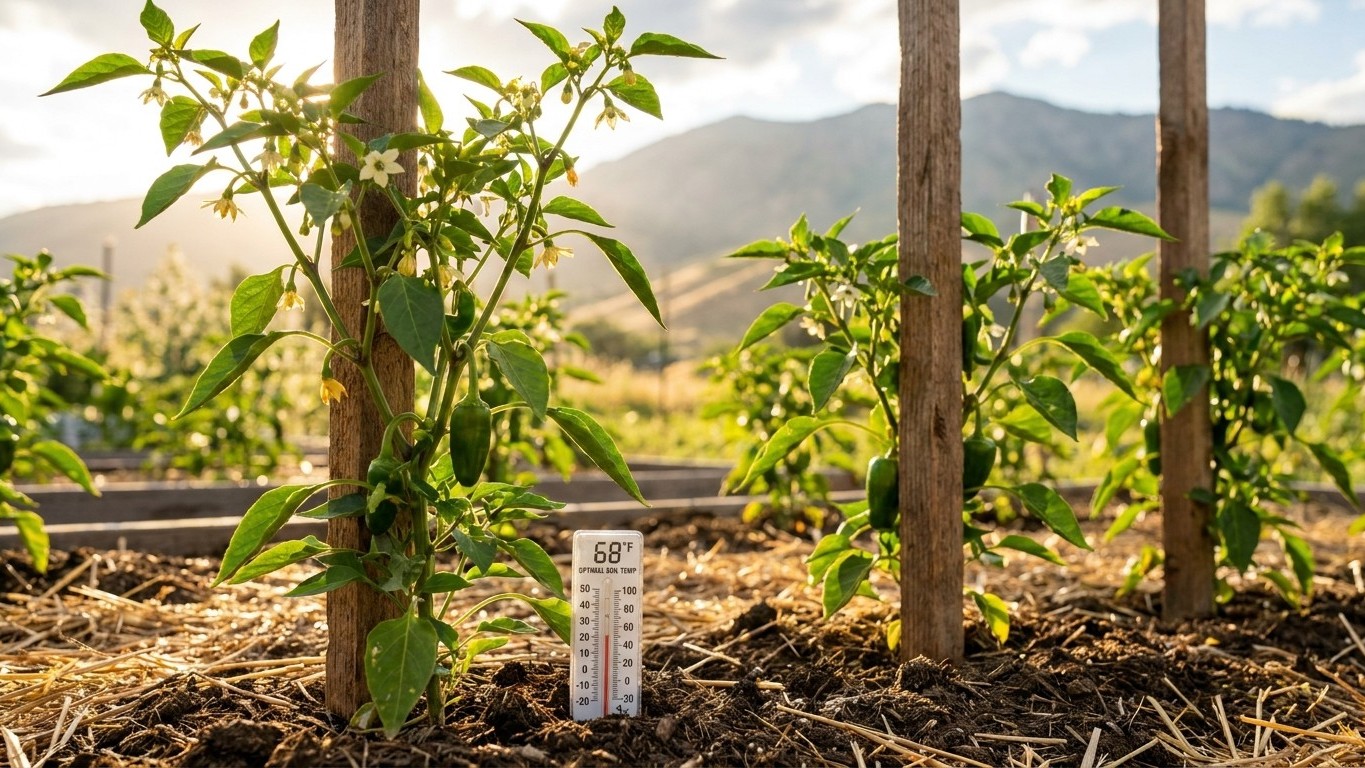

Peppers can ripen in Montana, but the window is narrower and rougher than in most states. The reference station at Billings averages 28.3 days a year at or above 90 F, which stalls fruit set during the hottest stretches of July and August. Pair that with cold nights that can just as easily stop pollination, and success comes down to timing the transplant right and picking varieties that don’t need a long season after flowering to finish.
The short answer

Start with the heat side of the ledger, because it’s the number this region actually tracks. Billings averages 28.3 days a year at 90 F or hotter, based on NOAA’s 1991-2020 climate normals. That’s not a string of consecutive days, it’s the yearly total, but even scattered across a season it adds up to real stress on a pepper plant. Pepper flowers drop when daytime highs push past 90 F for any stretch, according to Utah State University Extension. The plant doesn’t die. It just stops setting fruit until conditions calm down, which in a Montana July can mean losing a week or more of productive flowering right when the plant should be loading up.
The other failure point sits at the opposite end of the thermometer, and it matters just as much. Utah State University Extension is clear that pepper fruit set also fails when nights drop below 55 F. Cool nights cause the same kind of flower drop as extreme heat, just through a different mechanism, the pollen doesn’t perform well in cold air. This is where Montana growers run into a gap in the data: this site carries daytime heat counts for reference stations like Billings, but it does not carry summer night minimums for any Montana location. That’s not a small omission. A valley bottom can sit ten degrees cooler at 2 a.m. than a bench a few miles away, and nothing about a location’s latitude or its coldest winter month tells you what its July nights actually do.
What that means practically: don’t assume your nights are safe just because you’re in a “warm” part of the state, and don’t assume they’re too cold just because you’re at elevation. Watch your own thermometer through June and July. A cheap min-max thermometer left in the garden for a few weeks will tell you more about your pepper prospects than any regional average, because the two hazards work from opposite directions and only your own nighttime numbers close the gap the heat-day count leaves open.
The season length itself is the third constraint layered on top of both temperature problems. Montana’s frost-free window is short enough that even a plant with perfect flowering conditions still needs to convert flowers to ripe fruit before the first fall frost arrives. Add up a heat problem, a possible cold-night problem, and a tight calendar, and the “short answer” isn’t a single fix. It’s a planting strategy built around getting flowers open during the mildest stretch of summer and giving the plant every extra week of ripening time you can find on the front end.
When to start seed here
The math for starting pepper seed indoors runs backward from two dates: when the ground is safely frost-free, and when the soil itself is warm enough for a transplant to actually grow instead of sitting still. Here’s how to build that calendar for your own address.
- Find your local last spring frost window. At the Billings reference station, the 30 to 70 percent probability band for a 32 F freeze runs from April 29 to May 10, per NOAA’s 1991-2020 climate normals. Billings counts as one of the milder valleys in the state. If you garden in a mountain valley elsewhere in Montana, your frost risk can extend later, and some high valleys see frost in any month of the year, so treat this window as a starting reference, not a guarantee for your specific ground.
- Wait for 60 F soil, not just a frost-free calendar date. Utah State University Extension is specific on this point: pepper transplants go out after frost has passed and after the soil itself reaches 60 F. A calendar can clear frost risk while the soil is still too cold for pepper roots to function, so check soil temperature at a four-inch depth with a simple probe thermometer rather than transplanting on the date alone.
- Count back 8 to 10 weeks from your transplant date. That’s the indoor head start Utah State University Extension recommends for pepper seedlings. If your soil hits 60 F and your frost risk has cleared around the second week of May, count back 8 to 10 weeks and you land on seed-starting indoors in early to mid March.
- Build in a buffer for a slow spring. Soil warms unevenly year to year, and a cool, wet spring can push the 60 F mark later than the frost date alone would suggest. Starting seed on the early side of that 8 to 10 week window gives you sturdier transplants if the ground takes its time warming.
- Redo the math for your own county. Billings’ frost window is a reference point, not a statewide rule. Pull your own location’s frost probability data, track your own soil temperature in spring, and run the same 8 to 10 week backward count from there.
What goes wrong here
Montana’s climate creates a specific, repeatable set of pepper failures. Knowing which one you’re looking at changes what you do about it.
- Blossom drop from a hot spell. When daytime highs climb toward or past 90 F, a pepper plant will keep flowering but the flowers fall without setting fruit. Billings averages 28.3 days a year at that threshold, so this isn’t a rare event in a Montana summer. There’s no fix that stops the heat, but you can reduce the damage with afternoon shade cloth over the plants during the worst stretches and by keeping soil moisture consistent, since drought stress on top of heat stress makes flower drop worse.
- Blossom drop from a cool night. The same symptom, a plant that flowers but doesn’t set fruit, shows up when nights drop below 55 F, according to Utah State University Extension. Because this site doesn’t track summer night minimums for Montana locations, the only way to know if this is happening in your garden is to check your own low temperatures. Row cover pulled over plants in the evening on a night you know will run cold can hold enough heat to keep flowers viable.
- Sunscald on exposed fruit. Montana’s high elevation and clear summer skies mean strong direct sun, and pepper fruit that’s exposed rather than shaded by foliage can develop pale, papery patches where the sun hits it directly. Avoid heavy pruning of leaves during fruiting, since the foliage is doing the job of shading the fruit it’s growing next to.
- Blossom-end rot. This shows up as a sunken, dark patch on the bottom of the fruit and it’s tied to inconsistent water delivery, which interrupts the plant’s calcium uptake even when the soil itself has calcium available. Even watering, on a set schedule rather than a feast-or-drought pattern, is the standard fix, along with mulch to keep soil moisture steadier between waterings.
Common questions
Can peppers ripen in a single Montana growing season?
Yes, but the margin is tight. A frost-free window that opens around late April to early May at a milder reference station like Billings, combined with a summer that includes close to a month of 90 F-plus days on average, means growers need transplants started indoors 8 to 10 weeks ahead and set out as soon as soil hits 60 F, with no time lost to a late start.
Do hot days or cold nights hurt pepper fruit set more in Montana?
Both stop fruit set, through different mechanisms, and Utah State University Extension names both thresholds without ranking one as worse. Daytime heat above 90 F is documented for Montana reference stations like Billings (28.3 days a year on average). Nighttime lows below 55 F aren’t tracked on this site for any Montana location, so growers need to watch their own overnight temperatures rather than assume either risk is the bigger one.
How many weeks before flowering should I start pepper seed indoors?
Utah State University Extension’s guidance covers the seed-to-transplant window, 8 to 10 weeks indoors before setting plants out after frost and once soil reaches 60 F. Flowering itself happens after transplant, and the fruit development period that follows a successful flower runs 35 to 45 days from that flowering point, not from the original sowing date.
Why do my pepper plants flower but never set fruit in a Montana summer?
This is the classic sign of either heat stress (daytime highs pushing past 90 F) or cold-night stress (below 55 F), according to Utah State University Extension. Since this site doesn’t carry summer night minimum data for Montana, the fastest way to diagnose which one is happening is to log your own daytime highs and overnight lows during the weeks the flowers are dropping.