
In Montana, indoor pepper seed-starting should begin 8 to 10 weeks before you plan to move transplants outside, and outside means after the last frost date and once the soil has warmed to 60 F. In the Billings area, that frost window runs April 29 to May 10, which puts most seed-starting in mid-February to early March. Mountain valleys elsewhere in the state need to shift that calendar later, sometimes by weeks.
The short answer
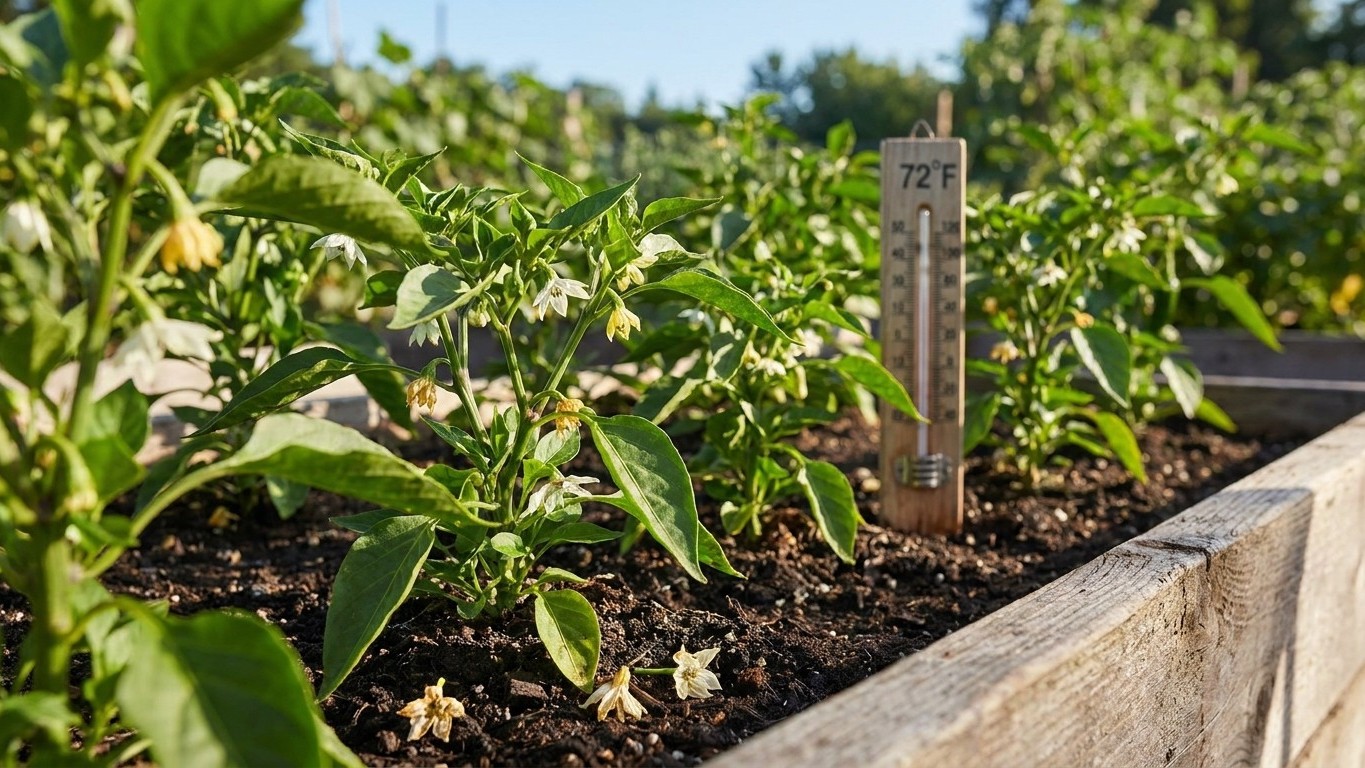
Start with the heat side of the equation, because that’s the number this site actually tracks. The Billings reference station averages 28.3 days a year at or above 90 F, based on NOAA’s 1991-2020 Climate Normals. That’s not a handful of scorching afternoons in late July. It’s closer to a full month scattered across the growing season, and pepper plants notice every one of those days. Once daytime highs push past 90 F, pepper flowers commonly abort before they ever set fruit. The plant isn’t dying, it’s just triaging: too much heat stress, and it drops blossoms rather than spend energy on fruit that might not mature.
That’s one failure point. The other sits at the opposite end of the thermometer, and it matters just as much. Pepper fruit set also fails when nights drop below 55 F, according to Utah State University Extension. A stretch of cool nights in late spring or early fall can knock blossoms off a plant just as effectively as a heat wave, even if the daytime weather looks perfect for gardening. This is the part growers tend to overlook, because a 75 F afternoon feels like ideal pepper weather right up until the sun goes down and the temperature falls into the 40s.
Here’s the catch for Montana gardeners specifically: this site tracks days above 90 F by location, but it does not carry summer night-minimum data. There’s no shortcut here, and guessing based on latitude or on how cold January gets won’t get you a reliable answer, because summer night lows depend on elevation, valley drainage, and local topography in ways that don’t track neatly with how far north or south you are. A valley floor near Billings can hold heat overnight in a way that a higher, more exposed spot forty miles away never will. The practical move is to watch your own nighttime lows through a thermometer or a nearby weather station once your plants are outside and flowering, rather than assume a number.
So the short answer has two halves. Nearly a month of days per year hot enough to stall fruit set, confirmed by Climate Normals data. And a cool-night threshold that almost certainly applies in Montana’s shoulder seasons, but that you’ll need to track locally rather than infer.
When to start seed here
The arithmetic is simple once you have the two anchor dates: your last frost and the point when soil hits 60 F. Everything else works backward from those two.
- Find your last frost window. For the Billings reference station, NOAA’s 32 F freeze-probability data puts the last spring frost between April 29 and May 10. That’s the 30 to 70 percent probability band, meaning frost is still plausible right up to the later date in a cooler year. Gardeners in mountain valleys elsewhere in Montana should expect this window to run later, sometimes considerably later, since those valleys can see frost in almost any month.
- Wait for 60 F soil, not just frost-free air. Air temperature above freezing doesn’t mean the ground is ready. Pepper transplants need soil at 60 F to root well, and cold soil in early spring often lags behind air temperature by a week or two, especially in clay-heavy or shaded beds.
- Count back 8 to 10 weeks from your transplant date. If your soil is likely to hit 60 F around mid-May, an 8-week count puts seed-starting in mid-March; a 10-week count pushes it to early March. Splitting the difference and starting in early-to-mid March gives most Montana gardeners a reasonable margin.
- Adjust for your specific ground, not the regional average. A raised bed with southern exposure warms faster than an in-ground plot in a low, shaded yard. If you’ve tracked soil temperature in past years, use that history over the general date.
- Build in a buffer for a late, cool spring. Since nights below 55 F stall fruit set even after the frost risk has passed, don’t rush transplants out the moment the calendar says it’s safe. Holding indoor seedlings an extra week rarely costs much, while planting into a cold snap can cost the whole first flush of blossoms.
Reworking this for your own county is just a matter of swapping in your local frost data and your own observed soil-warming pattern. The 8-to-10-week indoor window doesn’t change, but the calendar date it lands on will, sometimes by a month or more between a Yellowstone Valley garden and a high mountain valley further west.
What goes wrong here
- Blossom drop from a hot spell. With close to a month of 90 F-plus days on the calendar in a typical Billings-area year, a run of several hot afternoons in a row is common during peak summer. Flowers open, then drop without setting fruit. There’s no fix for the heat itself, but afternoon shade cloth over the plants during the worst stretches, along with consistent watering so the plant isn’t also fighting drought stress, keeps more blossoms viable until temperatures ease.
- Blossom drop from a cool night. The same failure, opposite cause. A late-spring or early-fall cold snap that pushes nights under 55 F can strip blossoms even when the days are warm and pleasant. Since this site doesn’t track night minima, the only real defense is watching your own overnight lows once plants are flowering and covering them with row cover or moving containers into a garage on nights that look likely to dip.
- Sunscald on exposed fruit. Montana’s high elevation and clear skies mean strong, direct sun, and pepper fruit that isn’t shaded by enough foliage can develop pale, papery patches where the skin essentially cooks. This shows up most on plants that have been over-pruned or that lost leaves to wind damage. Leaving the natural leaf canopy intact, rather than trimming for looks, is the simplest prevention.
- Blossom-end rot. A dark, sunken patch at the fruit’s blossom end, usually tied to inconsistent watering that disrupts calcium uptake rather than a soil calcium shortage on its own. Since Montana’s dry air and wind can pull soil moisture down fast between waterings, an even watering schedule, and mulch to slow evaporation, does more to prevent this than any calcium additive.
Common questions
Is it possible to Start Pepper Seed too early in Montana?
Yes. Seedlings started well beyond the 10-week window tend to get root-bound and leggy indoors, and setting an overgrown transplant outside doesn’t give it any real advantage once soil and night temperatures are actually ready.
Do all six pepper varieties named by Utah State University Extension need the same timing?
The Extension source lists several varieties but does not attach a heat rating, a days-to-maturity figure, or a size to any of them, so no individual variety can be timed differently based on that source. The 8-to-10-week indoor window and the two fruit-set thresholds apply generally.
What if my area frosts later than Billings?
Push your whole schedule later by the same margin. NOAA’s data flags Billings as one of Montana’s milder valleys, and mountain valleys elsewhere in the state can see frost in any month, so gardeners there should lean on their own local frost history rather than the Billings dates.
How do I know if my nights are staying above 55 F?
Since this site doesn’t carry summer night-minimum data, the only reliable method is a thermometer at your own site, or a nearby weather station you trust, checked through the weeks your peppers are flowering. Don’t estimate this from latitude or from how cold winter gets in your area, since neither predicts summer overnight lows.