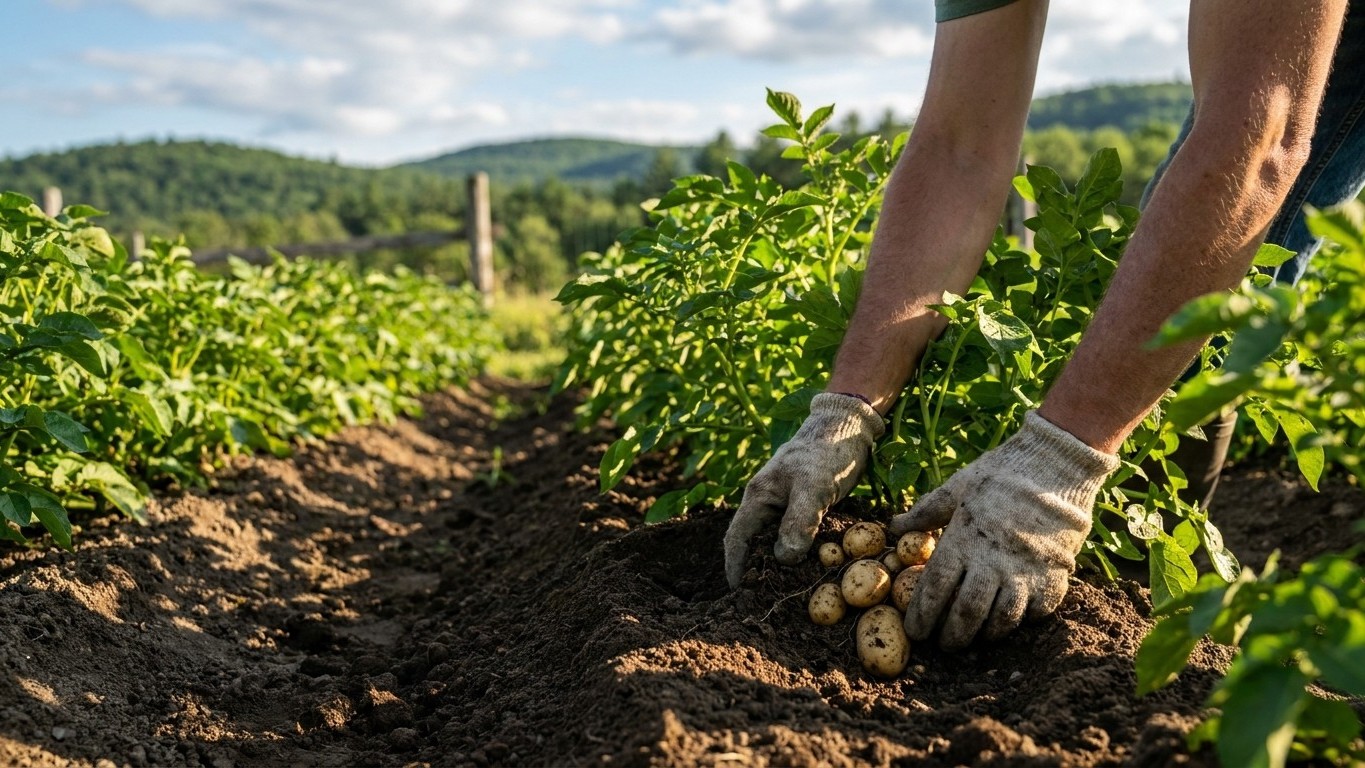

New Hampshire gardeners get a rare break on potatoes: the reference city sees under 11 days a year above 90 F, so tubers almost never stop sizing to heat the way they do farther south. Plant into soil once it hits 50 F, roughly two to three weeks ahead of the last spring frost window, pick a season class that suits your patience, and hill the rows as they grow. The state’s short, mild summers do most of the work for you.
The short answer

Manchester averages 10.9 days a year at 90 F or hotter (NOAA NCEI Climate Normals 1991-2020). That number sets the whole conversation, because per Utah State University Extension, tuber set and fill shut down once soil temperatures climb past 90 F. With fewer than 11 such days a year at the reference station, New Hampshire soil rarely spends enough time above that ceiling to stall a crop. This is a state where a full-season potato crop, planted in spring and dug in late summer or fall, is the normal path, not a gamble against the thermometer.
The other number that matters is the last spring frost window at the same station: April 16 to April 27 (NOAA NCEI U.S. Climate Normals 1991-2020, 32 F freeze probabilities). That’s a Manchester airport figure. Suburban yards and rural gardens across the state typically see their last frost land later, sometimes by one to two weeks, and elevation pushes that further out. Treat the window as a starting point, not a promise for your own soil.
Because summer heat isn’t the limiting factor here, variety choice becomes more about timing your harvest than dodging hot soil. Knowing When to Plant Potatoes in New Hampshire matters just as much as picking a variety. Extension guidance from Utah State and the University of Maine groups potatoes into season classes rather than publishing exact days-to-maturity counts, and those classes line up with what a New Hampshire garden actually needs:
| Season class | What it’s generally for | Why it fits here |
|---|---|---|
| Early | Boiling, salads, fresh eating | Off the ground before fall frost risk builds |
| Mid-season | General kitchen use, boiling and roasting | Fits comfortably inside a full New Hampshire growing season |
| Late | Baking, storage | Benefits from the state’s cool nights for longer bulking, and pairs well with knowing Harvesting and Storing Potatoes in New Hampshire |
None of these classes need to race a heat ceiling that New Hampshire barely reaches. Choosing among Potato Varieties That Suit New Hampshire is really about matching a season class to your harvest window. The bigger question is frost timing on both ends of the season, which is where planning actually pays off.
When to plant here
Work backward from your local last frost date instead of a fixed calendar day. Here’s the sequence, using the state reference window as the example:
- Start with the last spring frost date for your area. The Manchester station puts that window at April 16 to April 27, but your county may run later, especially at elevation or farther north.
- Subtract 14 to 21 days from that date. If your last frost lands around April 20, counting back two weeks puts you near April 6; counting back three weeks lands closer to March 30. That span is your planting window, not a single day.
- Confirm with a soil thermometer rather than the calendar alone. Push it 4 inches into the bed where you’ll plant, and wait until it reads a consistent 50 F, not just a warm afternoon spike.
- Plant once soil temperature and the calendar window agree. If soil is still cold and wet when the date arrives, wait. Cold, waterlogged soil does more damage than a slightly later planting date.
- Recheck after a cold snap. A late-season frost after planting rarely kills seed pieces underground, but exposed sprouts can be nipped; hilling extra soil over emerging shoots offers some protection.
The arithmetic is simple enough to redo every year: find your last frost date, subtract two to three weeks, then let the soil thermometer have the final say.
What the heat does to the crop
The mechanism is straightforward, and it’s the one fact that should drive every other decision on this page. Once soil temperature rises above 90 F, tuber set and fill stop. The plant doesn’t die, but it stops putting energy into growing potatoes underground. Watering more doesn’t reverse it, because the problem is heat in the root zone, not lack of moisture.
In states with long stretches above that threshold, gardeners plant early and dig a spring crop before soil temperatures climb, because trying to carry a potato patch through a hot summer just wastes water and seed. New Hampshire sits on the other end of that spectrum. At 10.9 days a year above 90 F air temperature, and soil temperature typically running cooler than air temperature under mulch or foliage cover, most New Hampshire gardens never spend enough consecutive time above the 90 F soil threshold to trigger that shutdown.
That means a New Hampshire gardener can generally plan for a full-season crop, planted in spring and left in the ground through summer into early fall, without the mid-season “dig before the heat hits” scramble that growers in warmer climates deal with. The bigger risk here isn’t heat stalling the tubers. It’s the calendar on the other end: a wet, cold spring delaying planting, or an early fall frost catching a late-season variety still bulking up. Heat is rarely the enemy in this state’s potato patch. Timing around frost is.
What goes wrong here
- Planting uncertified seed potatoes. Grocery-store potatoes and seed saved from an unknown source can carry viruses that stunt growth and reduce yield for years in the same bed. Buy certified seed potatoes from a reputable supplier every season.
- Planting into cold, wet soil. Seed pieces sitting in soil below 50 F are prone to rot before they ever sprout. Wait for the soil thermometer to confirm 50 F rather than planting on a fixed date regardless of conditions.
- Skipping the hilling. Tubers that develop near the surface and get exposed to sunlight turn green and produce solanine, which makes them unsafe to eat. Mound soil over the base of the plants every few weeks as they grow to keep developing tubers covered.
- Digging too early. Pulling potatoes before the vines have died back naturally often means thin, easily damaged skins that won’t store well. Let the foliage yellow and collapse on its own before harvesting for storage.
Checking this against your own county
A statewide frost window is only a starting point. New Hampshire’s elevation changes and its north-south spread move planting dates by real weeks, not days. Gardens in the White Mountains or the North Country typically see a later last frost and an earlier first fall frost than the Manchester reference station, while spots in the Merrimack Valley or closer to the seacoast often run a bit milder on both ends.
Rather than guessing at how much to adjust, check with the University of New Hampshire Cooperative Extension. They track local conditions county by county and can tell you how your specific area compares to the statewide numbers used here.
Common questions
Do I need to worry about New Hampshire summers getting too hot for potatoes?
Rarely. With only 10.9 days a year above 90 F at the reference station, most New Hampshire gardens never sustain the soil heat needed to stop tuber set and fill. Frost timing, not summer heat, is the bigger planning concern here.
How early can I plant potatoes in New Hampshire?
Count back 14 to 21 days from your local last frost date, then confirm soil has reached a steady 50 F with a soil thermometer before planting. The statewide reference window for last frost runs April 16 to April 27, but your county may differ.
Why did my potatoes turn green?
Green tubers developed near the surface and were exposed to sunlight, which triggers solanine production and makes them unsafe to eat. Hill soil up over the base of the plants regularly through the growing season to prevent this.
Should I choose an early, mid-season, or late variety?
Extension sources classify varieties by season length rather than exact days to maturity. Early types generally suit boiling and fresh eating; late types are typically better for baking and storage. In New Hampshire’s climate, all three classes can generally complete a full season without racing summer heat.