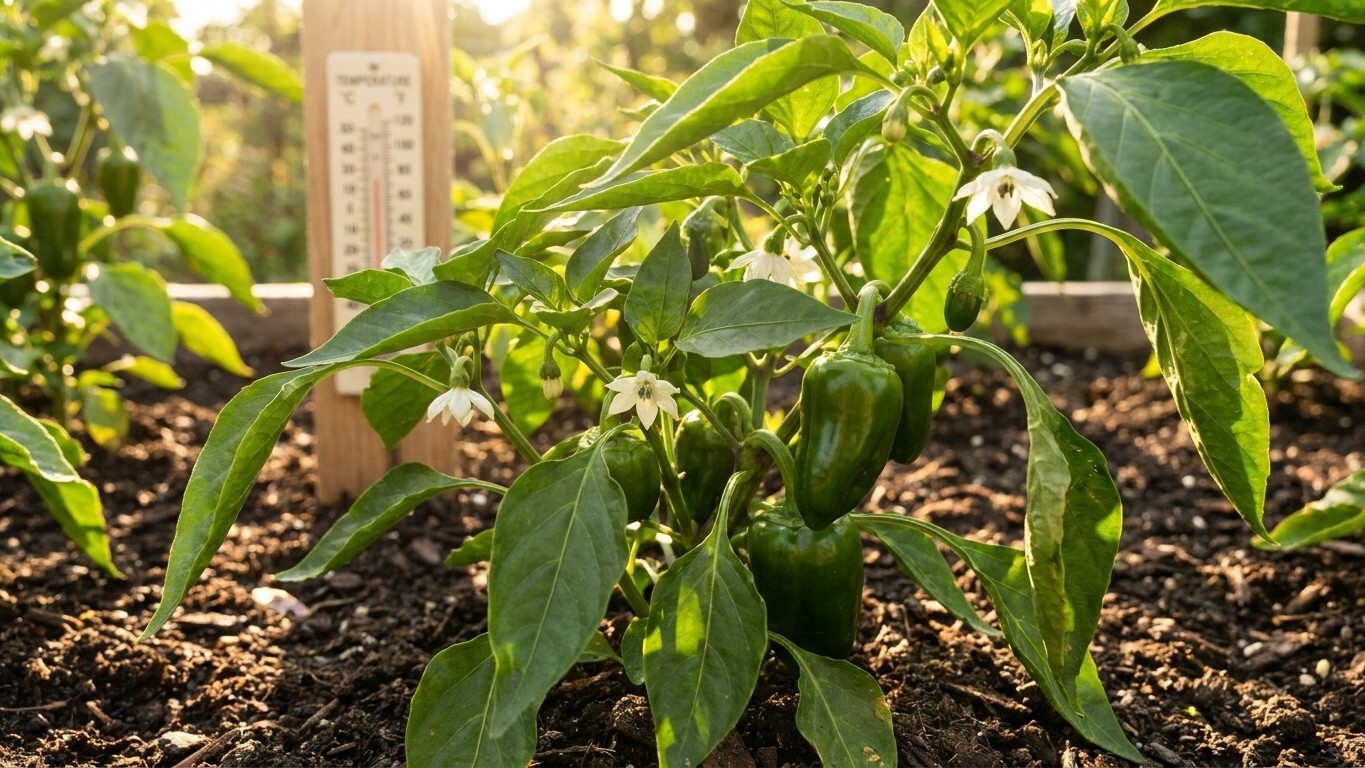

Michigan gives pepper plants a narrow window of good weather sandwiched between two real threats. Fruit set stalls when nights drop below 55 F and again when days climb past 90 F, and this state logs enough of both extremes that timing decides your harvest more than variety choice does. Still, choosing among the Pepper Varieties That Ripen in a Michigan Season can help you work within that gap. Knowing When to Start Pepper Seed in Michigan is the first step: start seed 8 to 10 weeks before your local frost-free date, transplant once soil hits 60 F, and watch your own nighttime lows all summer.
The short answer

Detroit’s reference station averages 10.3 days a year at or above 90 F, based on NOAA NCEI Climate Normals covering 1991 to 2020. That number matters more than it looks. Pepper flowers abort when daytime heat climbs into the 90s, especially if that heat arrives while the plant is setting its first flush of fruit. A single 90-degree afternoon rarely does lasting damage, but a run of them, the kind Michigan sees in scattered clusters most summers rather than one long heat wave, can strip a plant of blossoms for a week or more while it waits out the stress.
Ten days a year sounds manageable, and compared to states further south it is. But those days don’t spread evenly across the season. They tend to bunch in July, right when early varieties are moving from flower to fruit, which is exactly the stage where heat does the most damage. A plant that sailed through June without trouble can still drop its whole first set if a heat cluster lands during that flowering window.
The other failure point gets less attention because it’s less visible. Peppers also refuse to set fruit when nights fall below 55 F, and that threshold has nothing to do with frost. A night can be well above freezing, comfortable enough that nobody thinks to cover a plant, and still be cold enough to abort blossoms. This site tracks days above 90 F by territory, but it does not carry summer night minima for Michigan or any other state. That gap isn’t an oversight to work around with a guess. Nighttime lows vary by elevation, by distance from the Great Lakes, by whether a garden sits in a valley that pools cold air, and none of that shows up on a latitude line or a hardiness zone map. If your peppers are flowering and not setting, and daytime highs look fine, check what your thermometer read overnight before assuming the problem is something else.
The practical takeaway: Michigan’s pepper season is real but bracketed on both sides. You’re not fighting one obstacle, you’re threading a gap between two, and the size of that gap changes from one part of the state to another depending on nights you’ll need to track yourself. For a deeper look at both failure points and how to work around them, see Why Peppers Fail to Set Fruit in Michigan.
When to start seed here
The math behind a pepper-starting schedule runs backward from your transplant date, and the transplant date itself depends on two things happening at once: frost has to be over, and soil has to have warmed to 60 F. Here’s how to work it out for your own county.
- Find your last spring frost date. MSU Extension puts it around April 30 in the Detroit area, with early to mid May more typical across most of the Lower Peninsula. Frost dates shift with distance from Lake Michigan and Lake Erie, so a garden thirty miles inland can run a week or more behind a lakeshore location.
- Don’t stop at frost. Check soil temperature too. Air can be frost-free while soil sits in the 40s, and pepper roots stall in cold soil even if the top growth looks fine. Wait for 60 F at planting depth, which in much of Michigan lands a week or two after the last frost date rather than right on it.
- Count backward 8 to 10 weeks from that transplant date. If your frost-free, soil-warm date lands in mid May, that puts your seed-starting window in early to mid March. If you’re gardening near Detroit with an end-of-April frost date but still waiting on soil warmth into early May, back your seed start up to match, not the frost date alone.
- Build in a buffer, not a fixed day. Michigan springs vary enough year to year that a rigid calendar date is less useful than tracking actual conditions. Starting seed a few days late costs you little; transplanting into cold soil costs you weeks of stunted growth.
This arithmetic holds regardless of where in Michigan you garden. The frost date moves, the soil-warming date moves with it, but the 8-to-10-week indoor head start stays fixed. Recalculate it every year against your own conditions rather than reusing last year’s date, since a late, cool spring can push soil warmth back by two weeks or more even when the calendar frost date barely shifts.
What goes wrong here
- Blossom drop during a heat spell. When daytime highs push into the 90s, especially several days running, flowers fall before they set fruit. This is the direct cost of those 10.3 annual days above 90 F. Provide light afternoon shade during a forecasted heat run, keep soil moisture even so the plant isn’t fighting drought stress at the same time, and expect a pause in fruit set rather than permanent damage. Flowering usually resumes once temperatures ease.
- Blossom drop from a cool night. The flip side gets missed because gardeners watch for frost, not for a 50-degree night in a season that otherwise feels warm. If flowers are forming but not converting to fruit and daytime weather looks fine, the cause is likely nighttime lows below 55 F. Track your own overnight temperatures rather than assuming the season has warmed enough just because days feel summery.
- Sunscald on exposed fruit. Strong midday sun can scorch pepper fruit that loses its leaf cover, whether from over-pruning, wind damage, or disease dropping foliage. Scalded patches turn pale, then papery, and the fruit often rots from that spot inward. Leave foliage in place rather than pruning for airflow, and stake plants so wind doesn’t strip leaves from one side.
- Blossom-end rot. Dark, sunken patches at the fruit’s blossom end come from inconsistent watering, which disrupts calcium uptake even when soil calcium levels are adequate. Michigan’s mix of heavy clay in some regions and quick-draining sandy soil in others makes even watering harder than it sounds. Mulch to hold moisture steady, and water on a regular schedule rather than waiting for visible wilt.
Checking this against your own county
State-level numbers describe an average, not your backyard. A garden near the Lake Michigan shoreline warms and cools on a different schedule than one two counties inland, and frost dates, soil warming, and even the frequency of those 90-degree days can shift meaningfully across Michigan’s length. For frost dates, soil temperature guidance, and local planting calendars built for your specific county, reach out to MSU Extension. Their county offices track conditions closer to the ground than any statewide average can, and that local read is what turns this general timing into a planting date you can actually use.
Common questions
How many days above 90 F does Michigan average?
The Detroit reference station averages 10.3 days a year at or above 90 F, per NOAA NCEI Climate Normals for 1991 to 2020. That figure represents the reference station, and local totals can run higher or lower depending on where in the state you garden.
What temperature stops peppers from setting fruit?
Fruit set fails at both ends: nights below 55 F and days above 90 F, according to Utah State University Extension. Michigan’s daytime heat risk is tracked here through the days-above-90-F count; nighttime lows aren’t published on this site, so track your own thermometer through the growing season.
When should I transplant peppers in Michigan?
Transplant after your last frost and once soil reaches 60 F. MSU Extension lists the last spring frost around April 30 near Detroit and early to mid May across most of the Lower Peninsula, but soil often needs another week or two past that date to warm sufficiently.
Why are my pepper flowers falling off without setting fruit?
Blossom drop points to temperature stress at either extreme, a hot spell pushing daytime highs above 90 F or a cool night dropping below 55 F. Check both your daytime forecast and your actual overnight lows before assuming a pest or disease problem, since temperature is the more common cause in Michigan gardens.