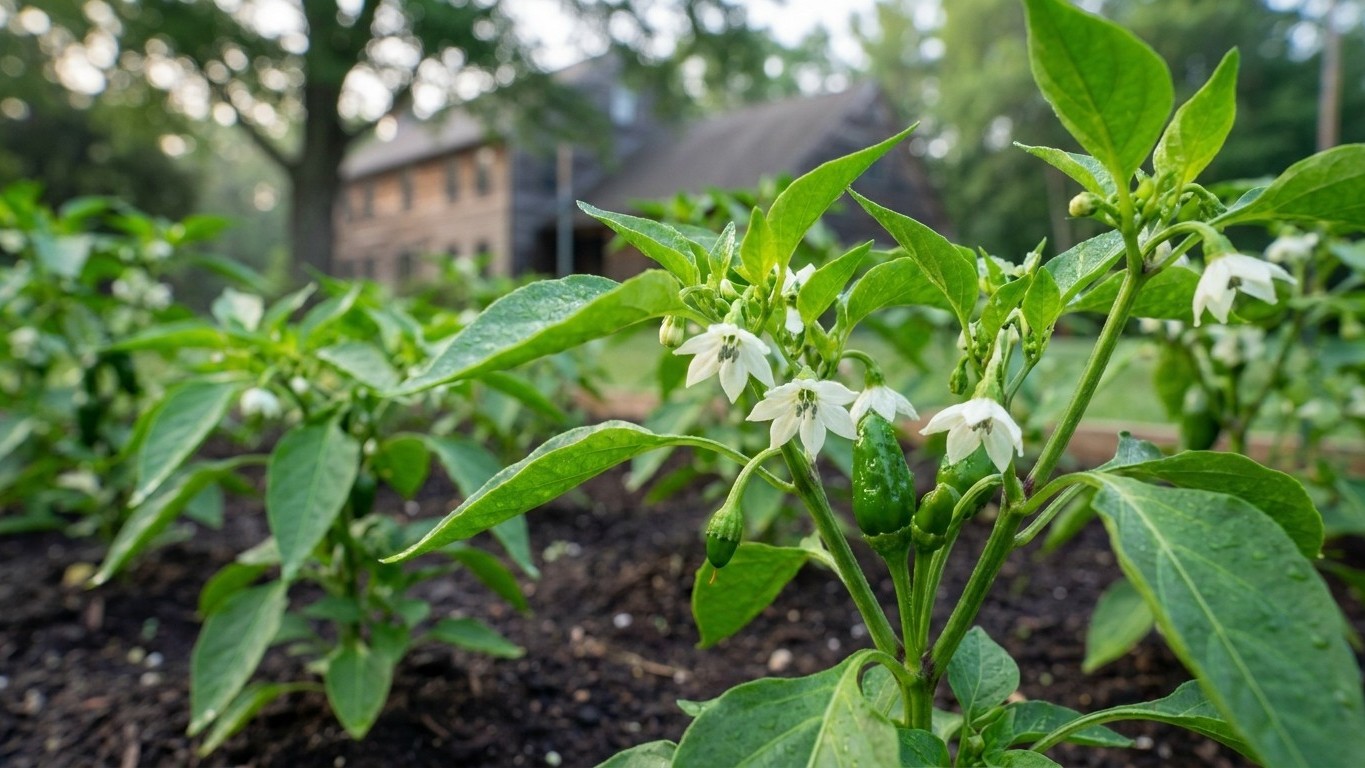

In Connecticut, pepper fruit set rarely fails from too much heat. The state averages just 6.2 days a year at or above 90°F at the Bridgeport reference station, a low heat load compared to much of the country. The bigger risk is timing: start seed too late, transplant into cold soil, or hit a stretch of cool nights during flowering, and blossoms drop before fruit ever forms.
The short answer

Start with the number that actually describes Connecticut summers: 6.2 days a year at or above 90°F, measured at the Bridgeport reference station over the 1991-2020 period. That’s a modest heat load. Pepper flowers stop setting fruit when daytime highs push past 90°F for stretches, so a Connecticut grower dealing with barely six days a year in that zone isn’t fighting the same battle as someone in Kansas or Texas. Heat stress on peppers here is the exception, not the rule, and most seasons won’t produce enough 90-plus days in a row to shut down fruit set for long.
But pepper fruit set fails at both ends, and the cool end is the one Connecticut gardeners need to watch more closely. According to Utah State University Extension, nights below 55°F stop peppers from setting fruit just as surely as days above 90°F do. Blossoms can open, look healthy, and drop anyway because the overnight temperature never gave the plant what it needed to complete pollination and fruit development, a dynamic explained further in Why Peppers Fail to Set Fruit in Connecticut.
Here’s the gap: this site tracks days above 90°F for Connecticut, but it does not carry summer night minima. There’s no published figure here for how many nights in a typical Connecticut summer dip below 55°F, and that number varies a lot across the state, between a warm coastal dooryard near Long Island Sound and a low-lying inland valley where cold air pools after dark. Guessing at that number from a map, or assuming it tracks with latitude, isn’t reliable. The only way to know is to watch your own thermometer through late spring and again in early fall, when overnight lows are most likely to slip under that 55°F line.
That makes the practical takeaway a little different from what gardeners in hotter states hear. In Connecticut, the main heat-driven risk is short and rare. The main cold-driven risk is longer, less predictable, and tied to your specific piece of ground rather than the state as a whole. Plan your season around avoiding cool nights during flowering first, and treat the rare hot spell as a secondary concern to manage as it comes.
When to start seed here
Working out a seed-starting date for peppers is really just counting backward from the transplant date, a process laid out in detail in When to Start Pepper Seed in Connecticut, and the transplant date itself depends on two separate conditions that don’t always arrive together. Choosing the right varieties matters just as much as timing the calendar, since Pepper Varieties That Ripen in a Connecticut Season will make the difference between a harvest and a frost-cut crop still holding green fruit.
- Find your local last spring frost date. At the Bridgeport reference station, the last spring freeze falls between April 2 and April 12, based on NOAA NCEI 1991-2020 Climate Normals freeze probabilities. Bridgeport sits on Long Island Sound, the mildest part of Connecticut. Inland and northwest Connecticut freeze later in spring than this coastal window, sometimes considerably later, so a Litchfield County or Windham County gardener should expect their own last frost to land after Bridgeport’s date, not on it.
- Separate the frost date from the soil temperature. Utah State University Extension is clear that peppers should go into the ground when soil reaches 60°F, after frost has passed, and those two events don’t always happen on the same week. Soil warms more slowly than air, especially in a cool, wet spring, and this site does not carry local soil temperature data. A soil thermometer pushed a few inches into the bed is the only reliable way to know where your ground actually stands.
- Use whichever condition arrives later. If the calendar says frost is done but the soil probe still reads 52°F, wait. Transplanting into cold soil stalls pepper roots and sets the plant back further than simply waiting another week or two would.
- Count back 8 to 10 weeks from your real transplant date. Utah State University Extension recommends starting pepper seed indoors 8 to 10 weeks before that transplant day. If a coastal Connecticut grower expects to move plants outside in late April to early May, counting back 8 weeks lands in early March, and counting back the full 10 weeks pushes indoor seed-starting into mid-February.
- Shift the whole schedule later for inland and northwest counties. Because frost lifts later away from the coast, a grower there redoes the same subtraction from a later transplant date, which pushes the ideal indoor seed-starting window later as well, not earlier.
What goes wrong here
- Blossom drop from a cool night. Peppers stop setting fruit when nights fall below 55°F, and Connecticut’s spring and early-fall nights can dip into that range even after the last frost has technically passed. If flowers open and fall off without ever swelling into fruit, check overnight lows rather than assuming disease or poor pollination. There’s no fix for a cold night already past, but delaying transplant until nights have stabilized, and using row cover on the occasional cool evening later in the season, reduces how often this happens.
- Blossom drop from a hot spell. Connecticut only averages 6.2 days a year at or above 90°F, but those days tend to cluster in July and August rather than spreading evenly across the season, and a short heat spike during flowering can still knock blossoms off. Providing afternoon shade cloth during a forecast heat spell, and keeping soil moisture even so the plant isn’t also fighting drought stress, limits the damage during that brief window.
- Sunscald on exposed fruit. Even with a modest number of 90-plus days, direct sun on fruit that’s lost its leaf cover, from pruning, wind damage, or disease, can scald the skin into pale, papery patches. Leaving foliage intact around developing peppers, rather than stripping leaves for looks or airflow, keeps fruit shaded without blocking the plant’s own light needs.
- Blossom-end rot on the first fruits. Irregular watering interrupts calcium uptake and shows up as a sunken, leathery patch on the blossom end of the fruit, often on the earliest peppers of the season when root systems are still shallow. Consistent watering, mulch to hold soil moisture steady, and avoiding the swing between bone-dry and soaked soil address this more reliably than any additive poured on after the spot appears.
Checking this against your own county
Everything above comes from a coastal Connecticut reference station and a national extension source, which is a useful starting point but not a substitute for local conditions. Soil warms differently in a sandy Fairfield County garden than in heavy clay farther north, and frost lingers longer in a Litchfield County hollow than the Bridgeport numbers suggest.
UConn Extension is the land-grant university extension service for Connecticut, and it’s the right place to check county-specific frost dates, soil temperature trends, and pepper variety performance against what’s published here. Calling or searching their county office listings before locking in a seed-starting date is worth the extra step, especially for anyone gardening away from the coast.
Common questions
How many days a year does Connecticut hit 90°F or hotter?
6.2 days on average, based on NOAA NCEI Climate Normals for 1991-2020 at the Bridgeport reference station. That’s a low heat load statewide, though individual summers vary.
What temperature stops peppers from setting fruit?
Both ends of the scale can shut down fruit set: nights below 55°F and days above 90°F, according to Utah State University Extension. Connecticut’s risk leans more toward the cool end, since hot days above 90°F are rare here.
When is the last spring frost in Connecticut?
At the Bridgeport reference station, it falls between April 2 and April 12, per NOAA NCEI 1991-2020 Climate Normals. Bridgeport is coastal and mild; inland and northwest Connecticut see frost linger later into spring.
How many weeks before transplanting should pepper seed be started indoors?
Utah State University Extension recommends 8 to 10 weeks indoors before transplanting, with transplanting itself timed to after frost and once soil reaches 60°F, whichever condition is met later.