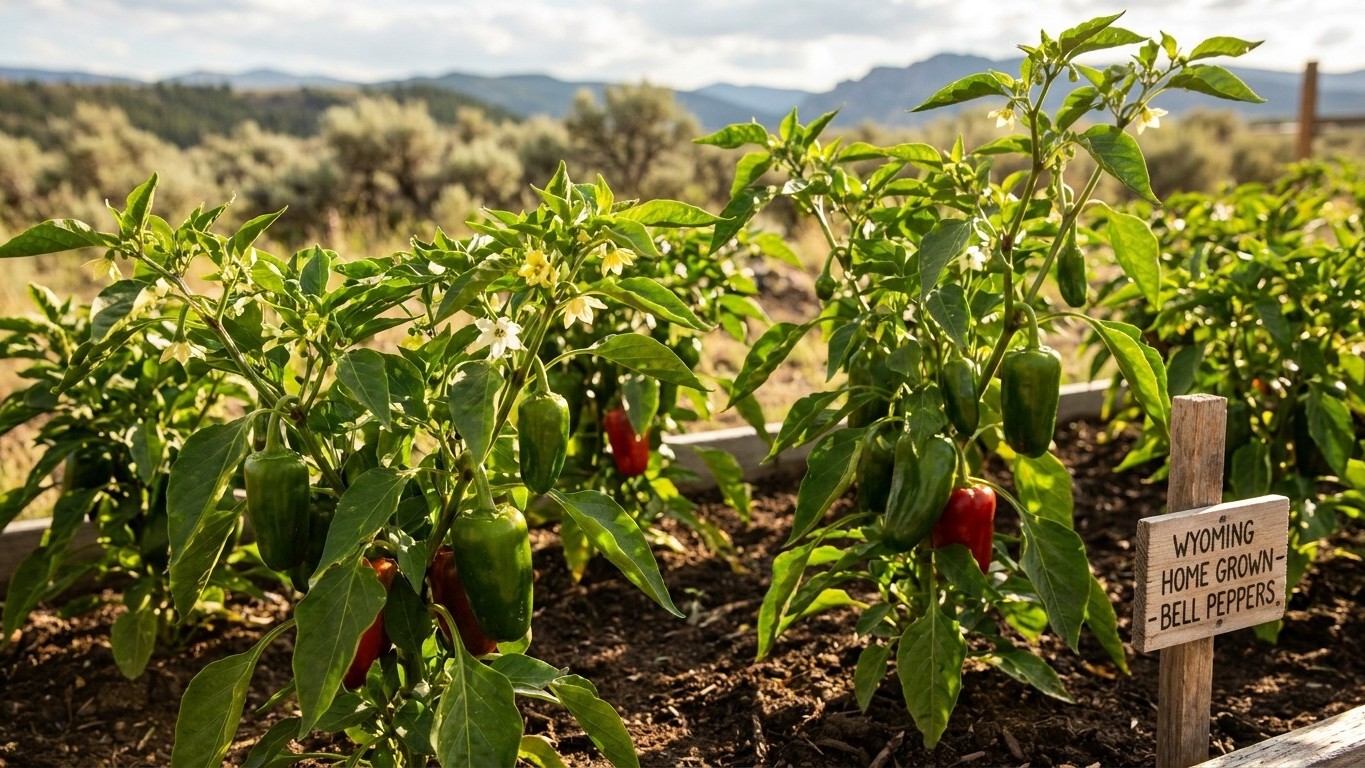

Peppers set fruit only inside a narrow window: nights above 55 F, days below 90 F. Wyoming’s Cheyenne reference station logs 10.4 days a year at or above 90 F, a moderate hot-end risk, but the cool end rides on your own county’s summer nights, which this site doesn’t track. Start seed 8 to 10 weeks before transplant, move plants out only after frost and once soil hits 60 F, and lean on Pepper Varieties That Ripen in a Wyoming Season to pick cultivars that can actually mature fruit within this narrow fruit-set window.
The short answer

Ten point four days a year at or above 90 F is the number that matters most for the hot end of pepper fruit set in Wyoming, based on the Cheyenne reference station in NOAA’s 1991-2020 Climate Normals. That’s not a brutal heat load compared to the desert Southwest, but it’s not nothing either. Pepper flowers abort when daytime highs push past 90 F for stretches, especially if that heat lands during a bloom flush rather than spread thin across the season. A handful of 90-plus days scattered through July and August is manageable. A run of five or six in a row during peak flowering can strip a plant of blossoms in a way that shows up two weeks later as a bare stretch of stem where fruit should have been forming.
The mechanism is pollen, not the plant itself wilting. Pepper pollen turns sterile or clumps when overnight lows stay too warm to let the flower recover, or when daytime heat stresses the plant faster than it can move water to the bloom. Wyoming’s dry air and big diurnal temperature swings actually help here: even on a 90 F day, the state’s elevation and low humidity often mean a real overnight cooldown, which favors pollen viability compared to a muggy Midwestern heat wave with the same daytime high.
Now the other end, and it’s the one growers here miss more often. Utah State University Extension is direct on this point: pepper fruit set fails when nights drop below 55 F just as reliably as when days climb above 90 F. Wyoming’s growing season sits at elevation, often above 6,000 feet, and mountain and high-plains nights can slide under that 55 F mark even in mid-summer, especially after a cold front or in a low-lying valley that pools cold air overnight. This site carries daytime heat data for Wyoming’s reference station, but it does not carry summer night minima for the state or for any county within it, so see Why Peppers Fail to Set Fruit in Wyoming for a fuller breakdown of both failure points. That number belongs to your own backyard, not to a statewide average, and it can vary sharply between a sheltered garden bed and an open field a mile away.
The practical move is to watch your own thermometer through the season, not to assume the answer from a map. A single unusually cool night below 55 F during bloom can cause the same blossom drop as a heat spike, and growers who only guard against the hot end often lose a week of fruit set to a cold snap they never saw coming because they weren’t tracking nighttime lows.
When to start seed here
Working backward from transplant date is the only reliable way to time pepper seed-starting in a state where frost dates swing widely by elevation. Here’s the arithmetic, laid out so you can rework it for your own county.
- Find your last spring frost window. At the NOAA reference station for Wyoming (station USW00024018), the 1991-2020 Climate Normals put the last spring 32 F freeze probability window between May 7 and May 18. That’s a range, not a single date, and it reflects roughly 130 frost-free days a year at 6,000 feet. At higher elevations, frost is possible in any month, so treat this window as a starting point to confirm locally, not a hard deadline.
- Add the soil-temperature check. Utah State University Extension is specific that peppers should go into the ground only after frost has passed and once soil temperature reaches 60 F, whichever comes later. Air temperature warming up doesn’t mean the soil has caught up, especially in Wyoming’s high, dry gardens where soil can lag several weeks behind the calendar. A simple soil thermometer pushed a few inches down at planting-bed depth, checked over several mornings, is the only honest way to know.
- Set your working transplant date. For most Wyoming gardens, that means treating late May as an earliest-possible date and being ready to push into June if soil is still cold or if a late frost risk lingers, particularly at higher elevations where the frost-free window shrinks.
- Count back 8 to 10 weeks for seed-starting. Utah State University Extension recommends starting pepper seed indoors 8 to 10 weeks before that transplant date. If your working transplant date lands in late May, that puts seed-starting in the second half of March. If you’re planning for early June because of elevation or a cold garden site, push seed-starting into late March or the first days of April instead.
- Rework the math for your exact site. Because Wyoming’s elevation range is wide, a garden at 4,500 feet and one at 7,000 feet in the same county can have transplant dates two or three weeks apart. Run the same subtraction using your own confirmed frost date and soil check rather than borrowing a neighbor’s schedule.
What goes wrong here
- Blossom drop during a hot spell or a cool night. This is the fruit-set failure Wyoming growers see most, and it cuts both directions. A run of days at or above 90 F during bloom, more likely given the 10.4 average annual count at the reference station, can abort flowers just as effectively as a night that slips below 55 F, which this site cannot forecast for your specific county. The remedy is monitoring, not guessing: track your own night and day temperatures through bloom, and expect a gap in fruit set two to three weeks after any stretch that crosses either threshold. There’s no way to force pollination through a bad night or a heat spike; the plant will resume setting fruit once conditions moderate.
- Sunscald where the sun is strong. Wyoming’s elevation and clear, dry air mean more direct solar radiation reaching the plant than at sea level, and thin-walled fruit or fruit exposed after a plant loses leaves to wind or hail damage can develop pale, papery patches on the sun-facing side. Keeping foliage full through the season, avoiding heavy pruning that opens up fruit to direct exposure, and accepting some leaf cover as protection rather than clutter all help limit this.
- Blossom-end rot. This shows up as a sunken, dark patch on the bottom of the fruit and traces back to inconsistent water delivery, which then disrupts calcium uptake at the fruit’s growing tip. Wyoming’s dry climate and often sandy or fast-draining high-plains soils make this an uneven-watering risk rather than a soil-calcium problem in most cases. Even, regular watering, particularly through hot stretches when the plant’s water demand climbs fast, is the fix, not a calcium additive applied after the damage appears.
Checking this against your own county
Everything above uses a single reference station’s climate normals, and Wyoming’s terrain means your actual garden can differ from that station by a meaningful margin, especially on frost dates and elevation-driven cold pockets. The University of Wyoming Extension is the right place to confirm local frost timing, soil conditions, and any pepper-specific guidance for your part of the state, since county-level agents there track conditions the statewide averages can’t capture. Find your local office and current guidance at the University of Wyoming Extension. Bring your own soil thermometer readings and a season’s worth of night temperature notes if you’re troubleshooting a fruit-set problem; that’s the kind of detail an extension agent can actually work with, and it’s the same detail this article couldn’t source for your specific location.
Common questions
Can I start pepper seed earlier than 8 weeks to get a jump on the season?
Utah State University Extension’s 8 to 10 week window is meant to produce a sturdy transplant sized right for the garden. Starting much earlier often means a leggy, root-bound plant sitting indoors too long before soil and air conditions allow it outside, which can set the plant back further than starting on schedule.
Does Wyoming’s elevation make peppers harder to grow than in a lower-elevation state?
Elevation itself doesn’t stop peppers from growing, but it shortens the frost-free window and increases the odds of a cold night dropping below the 55 F fruit-set threshold, even during summer months. The daytime heat side, based on 10.4 days a year at or above 90 F at the reference station, is actually milder than many lower, hotter regions.
Should I cover pepper plants if I expect a cool night below 55 F?
A single cool night during bloom typically costs you that flush of flowers rather than the whole plant, and a light row cover can buy a few degrees of protection if you’re watching your thermometer and see a cold night coming during peak bloom.
Is blossom-end rot caused by a calcium-poor soil in Wyoming?
Usually not. It’s more often a watering consistency problem in the state’s fast-draining, dry-climate soils, where calcium is present but can’t move into the fruit without steady moisture. Fixing the watering schedule addresses most cases without any soil amendment.