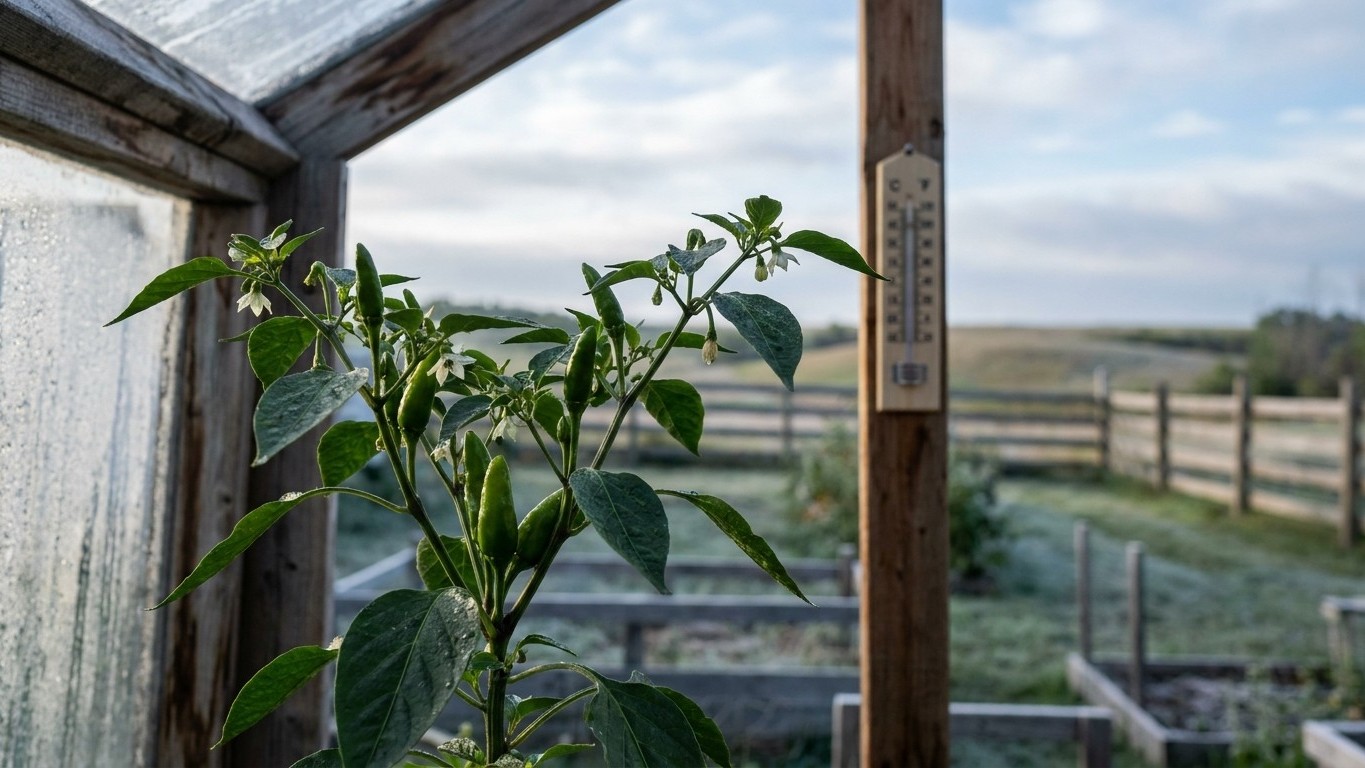

Saskatoon’s climate normals show zero days a year at or above 90 F, so heat-driven fruit drop is rarely the problem for pepper growers here. The bigger risk sits at the other end: nights under 55 F, which this site doesn’t track for your area. Add a short growing season, and timing indoor seed starting correctly matters more than fighting heat.
The short answer

Environment and Climate Change Canada’s 1981-2010 climate normals for the Saskatoon reference station list a mean of 0.0 days a year at or above 90 F. For pepper growers, that number is not a footnote. Pollen in pepper flowers starts to fail above roughly 90 F: it becomes less viable, flowers abort before setting fruit, and a plant can stall for a week or more waiting for cooler air. A season that essentially never crosses that line means the hot-end failure mode that plagues growers further south rarely shows up in Saskatchewan. A heat wave can still push a yard past 90 F on an isolated afternoon even where the long-term average sits at zero, so a stretch of unusually hot, still days in July is worth watching, but it isn’t the province’s defining risk.
The other threshold works against the grower in the opposite direction, and it’s the one that actually shapes a Saskatchewan pepper season. Utah State University Extension notes that pepper fruit set fails when nights drop below 55 F, just as it fails above 90 F. Cool nights slow pollen release and can cause the same blossom drop as a heat spell, only for the opposite reason — see Why Peppers Fail to Set Fruit in Saskatchewan for a closer look at this cool-night mechanism. This site carries daytime heat data by territory, including the 0.0 figure above, but it does not carry summer overnight low temperatures for any state or province. That’s a gap the reader has to fill locally: watch your own thermometer, ideally with a min-max unit near the plants, especially in June and again in late August when nights start cooling. Don’t guess at overnight lows from latitude or from how cold the winter runs; a river valley, a sheltered yard against a south-facing wall, or an open field a few miles out of town can differ by several degrees on the same night.
Put the two thresholds together and the practical picture for Saskatchewan is this: heat almost never shuts fruit set down, but cool nights can, and only a grower checking their own site knows how close they’re running to that 55 F line on any given week.
When to start seed here
Utah State University Extension recommends starting pepper seed 8 to 10 weeks before transplanting, and transplanting only after frost has passed and the soil has warmed to 60 F. Here’s how that arithmetic runs for a Saskatchewan garden, step by step, so you can redo it for your own county — and it’s worth pairing that timeline with Pepper Varieties That Ripen in a Saskatchewan Season so the seed you start actually matches the days you have.
- Start with the frost date. Environment and Climate Change Canada lists the average last spring frost at the Saskatoon SRC station as May 18. That’s a mean date from the 1981-2010 normals, not a guarantee: in roughly half of all years, frost falls later than May 18, sometimes well into the last week of the month or beyond. Treat it as the midpoint of a window, not a safe line to plant on.
- Wait for the soil, not just the calendar. Air can feel warm while soil a few inches down is still cold. Peppers need soil at 60 F before transplanting; check with a soil thermometer pushed a few inches into the bed rather than relying on the date alone.
- Build in a margin past the average frost date. Because May 18 is a mean and not a late-side guarantee, many Saskatchewan gardeners plan transplant week for early to mid-June, once both frost risk and soil temperature have cleared the bar in a normal year. Your own county may run earlier or later than the Saskatoon reference station, so adjust from what you’ve actually seen on your own ground in past years.
- Count back 8 to 10 weeks from your planned transplant date. If transplant week lands in early June, 8 weeks back puts indoor seed starting in early April; 10 weeks back moves it to late March. Pick the end of that range that matches how much indoor light and space you can give young seedlings before they go out.
- Re-check against the season’s other end. Peppers are slow to flower and set fruit, so a late start compounds with the region’s total frost-free window. If your county’s frost-free stretch runs short, err toward the 10-week side and the earlier transplant target, so plants have already begun flowering by the time nights are reliably above 55 F.
What goes wrong here
- Blossom drop from a cool night. Nights below 55 F during flowering stop pollen from releasing properly, and flowers fall without setting fruit. Watch overnight lows on your own property during bloom, and if a cold snap is forecast, cover plants with row cover or a sheet in the evening to hold in a few extra degrees.
- Blossom drop from a hot spell. Even in a region that averages 0.0 days above 90 F, an isolated heat spike can still hit that mark and cause the same flower abortion as cold does. Shade cloth over plants during the hottest afternoons, deep watering the day before a forecast hot spell, and mulch to keep root zones cooler all help plants ride out a short spike without dropping their bloom.
- Sunscald on exposed fruit. Prairie sun is strong, and fruit that loses leaf cover from over-pruning or wind damage can develop pale, papery patches on the side facing the sun. Leave foliage in place to shade developing peppers rather than pruning leaves back hard, and stake plants so wind doesn’t strip cover unevenly.
- Blossom-end rot. Uneven watering interrupts calcium uptake and shows up as a sunken, leathery patch on the blossom end of the fruit. Even, consistent watering and a layer of mulch to keep soil moisture steady are the standard fixes; letting the bed dry out hard between waterings is usually the trigger.
Checking this against your own county
The Saskatoon reference station is one point on the map, and a garden in a different part of the province can run days ahead or behind it in frost date, soil warm-up, and how often a summer afternoon brushes 90 F. Before locking in your seed-starting and transplant dates, check with the Saskatchewan Ministry of Agriculture for guidance closer to your own district.
Local knowledge from other growers in your immediate area, and a couple of seasons of your own soil-thermometer and overnight-low readings, will tell you more than any provincial average can about when your particular plot is ready for peppers.
Common questions
Does Saskatchewan ever get hot enough to hurt pepper fruit set?
Rarely on average. The Saskatoon reference station shows a mean of 0.0 days a year at or above 90 F, but an isolated hot afternoon can still occur in a given summer, so it’s worth watching a forecast heat spell even though it isn’t the province’s typical pattern.
What temperature at night stops peppers from setting fruit?
Utah State University Extension notes fruit set fails below 55 F at night, on top of failing above 90 F during the day. This site doesn’t carry summer overnight lows for Saskatchewan, so check your own thermometer during flowering rather than assuming a figure.
When is the last spring frost in Saskatchewan?
Environment and Climate Change Canada lists an average last frost of May 18 at the Saskatoon SRC station, based on 1981-2010 normals. That’s a mean date, so frost falls later than May 18 in roughly half of all years, and other districts in the province can differ from that station.
How many weeks before transplanting should I start pepper seed indoors?
Utah State University Extension recommends 8 to 10 weeks indoors before transplanting, timed to a transplant date that falls after both frost has passed and soil has reached 60 F.