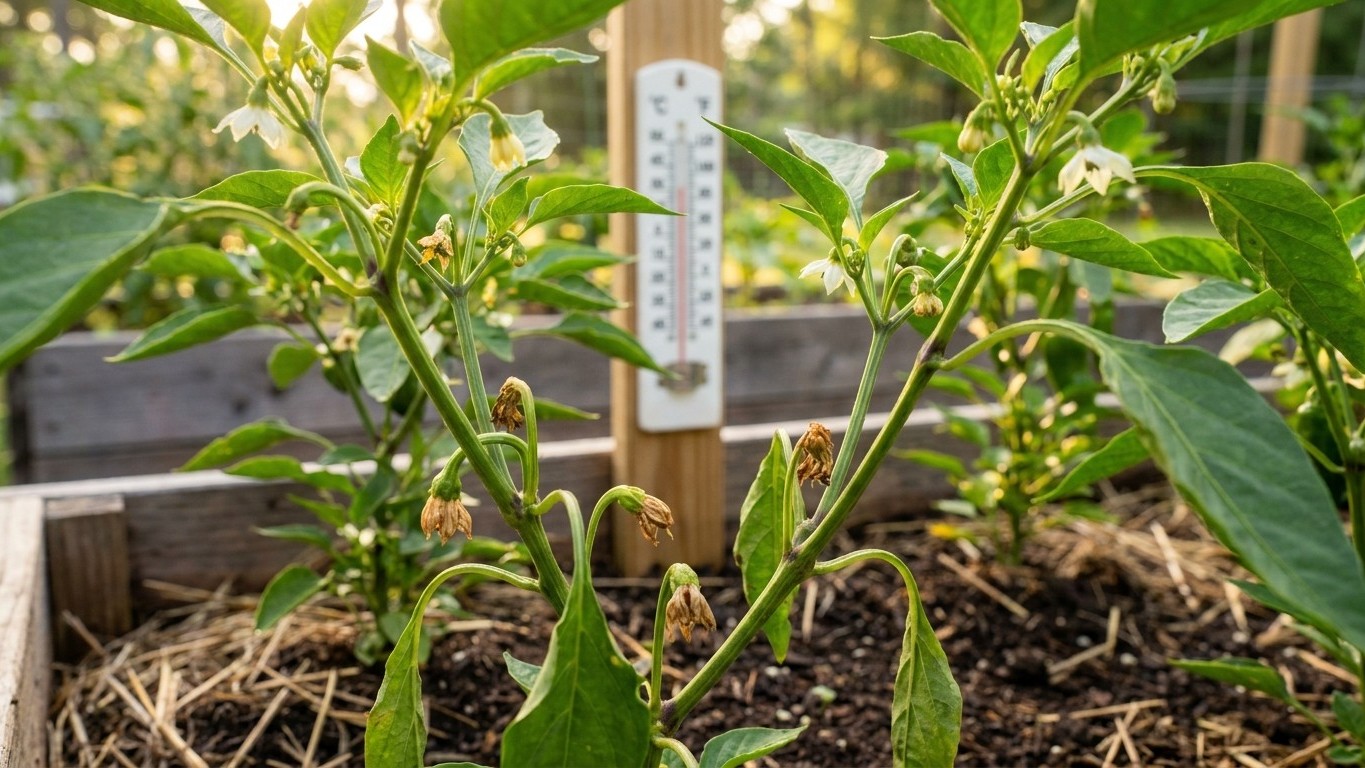

Virginia Beach averages 26 days a year at 90 F or hotter, and that heat load is only half the fruit-set equation for peppers. The other half is nights below 55 F, which this site does not track for your area, so you’ll need to watch your own thermometer. For a deeper look at Why Peppers Fail to Set Fruit in Virginia, both heat and cold thresholds are worth understanding before you time transplants around frost and 60 F soil, working back 8 to 10 weeks for seed starting indoors, or consult this guide on When to Start Pepper Seed in Virginia for more precise timing.
The short answer

Twenty-six days. That’s the average number of days per year the Virginia Beach reference station reaches or exceeds 90 F, based on NOAA’s 1991-2020 Climate Normals. For a pepper plant, that number matters more than the average summer temperature ever will, because pepper fruit set breaks down on the hot end once daytime highs push past 90 F. Pollen loses viability, flowers drop instead of setting fruit, and a plant that looked loaded with blossoms in June can sit through July with almost nothing to show for it.
This isn’t a rare fluke in coastal Virginia. Twenty-six days a year is close to four weeks of conditions that can knock blossoms off the plant, and those days tend to cluster in July and August, right when peppers should be hitting their stride. A hot spell that lands during flowering does more damage than the same heat arriving before or after bloom, which is one reason two gardens a few miles apart can have wildly different pepper years depending on when their plants happened to flower. Choosing among Pepper Varieties That Ripen in a Virginia Season can help hedge against this narrow window by favoring types that set fruit quickly once conditions allow.
The other failure point sits at the opposite end of the thermometer, and it’s just as real. Nights that drop below 55 F also interfere with fruit set, slowing pollen germination and stalling the plant’s ability to convert flowers into peppers. Early spring and late summer nights in parts of Virginia can dip into that range, especially away from the coast, in low-lying areas, or during a cool snap that rolls through after a warm stretch.
Here’s the catch: this site carries daytime heat data for Virginia territories, but it does not carry summer night minima. There’s no reliable way to infer how cool your nights run just from your latitude or from how cold your winters get, because local terrain, elevation, and distance from water all shift nighttime temperatures in ways a map can’t capture. A garden in a valley bottom can run several degrees cooler at night than one on a nearby ridge, even though both sit in the same county. If you want to know whether cool nights are costing you fruit set, the only fix is to check your own outdoor thermometer overnight during the weeks your peppers are flowering, rather than assume based on where you live.
When to start seed here
Working out a seed-starting date for peppers is really just a countdown from two fixed points: your last frost and the day your soil hits 60 F. Neither of those happens on a calendar date you can circle in advance, but you can build the schedule in steps and adjust once you’re watching your own conditions.
- Find your frost window. At the NAS Oceana station in coastal Virginia Beach, NOAA’s 1991-2020 Normals put the last spring freeze in the March 20 to April 3 window, using the 30 to 70 percent probability band for 32 F. That’s the mild end of the state. The Blue Ridge and southwest Virginia run weeks later in spring, so if you garden inland or at higher elevation, push your own frost expectation later rather than borrowing the coastal date.
- Wait for 60 F soil, not just frost-free air. Utah State University Extension is clear that pepper transplants should go in the ground once soil temperature reaches 60 F and the frost risk has passed, whichever comes later. Soil often lags behind air temperature by a couple of weeks in early spring, especially in shaded or heavy clay ground, so check the dirt with a soil thermometer rather than guessing from the weather forecast.
- Count back 8 to 10 weeks for indoor seed starting. Once you have a target transplant date, that same USU Extension guidance calls for starting pepper seed indoors 8 to 10 weeks ahead of it. If your soil is likely to hit 60 F in late April, for example, that puts your indoor seed-starting window in late February to early March, depending on which end of the 8-to-10-week range you use.
- Rerun the math for your specific county. Because the coastal frost date is the mild end of Virginia, gardeners in the Piedmont, the Blue Ridge, or the far southwest should shift every step of this countdown later. The arithmetic stays the same, but the starting point moves.
This approach also protects you from the other end of the fruit-set problem. Starting too early and pushing transplants outdoors before soil warms doesn’t just risk frost damage, it can also mean flowering arrives during a stretch of nights still running below 55 F, which stalls fruit set before the season even gets going.
What goes wrong here
- Blossom drop during a hot spell. Once daytime highs push past 90 F, and Virginia Beach sees that on average 26 days a year, pepper flowers can drop without setting fruit. There’s no way to force fruit set during the hottest days, but you can reduce the damage with afternoon shade cloth over the row and consistent watering, since drought stress on top of heat stress makes blossom drop worse. Wait for temperatures to ease and new flowers should set normally.
- Blossom drop from a cool night. The same failure, opposite cause. If nights fall below 55 F during flowering, whether from a spring cold snap or a chilly early-fall stretch, expect flowers to drop instead of setting. Since this site doesn’t track summer night minima, keep an outdoor thermometer where you can check it overnight during bloom, and if you’re seeing repeated drop with no heat wave in sight, cool nights are the more likely explanation.
- Sunscald on fruit and foliage. Strong, direct sun on exposed peppers, especially after pruning has stripped away leaf cover, can bleach or blister the fruit’s skin. Leave enough foliage on the plant to shade developing peppers, and avoid heavy pruning during the hottest weeks of summer when the sun is most intense.
- Blossom-end rot. This shows up as a dark, sunken patch on the bottom of the fruit, usually tied to uneven watering rather than a soil calcium shortage on its own. Keep soil moisture consistent with regular watering and a layer of mulch, since letting the root zone swing between dry and soaked is what typically triggers it.
Checking this against your own county
Everything above is built on statewide reference points: a coastal heat-day count, a coastal frost window, and USU Extension’s general guidance on pepper fruit set. None of it replaces local numbers for your specific county, especially since Virginia’s terrain runs from tidewater flats to Blue Ridge elevation in a matter of a few hours’ drive.
Virginia Cooperative Extension keeps county-level offices with staff who track local frost dates, soil conditions, and pest and disease pressure specific to your area. You can find your county office through Virginia Cooperative Extension, and it’s worth a call before you lock in a transplant date, particularly if you garden away from the coast where frost and soil warming both run later than the numbers cited here.
Common questions
Can I use the Virginia Beach frost date if I garden inland?
No. That March 20 to April 3 window comes from a coastal station and represents the mildest frost timing in the state. Inland and higher-elevation areas, including the Blue Ridge and southwest Virginia, see their last frost weeks later, so check with your local Extension office rather than applying the coastal date directly.
How do I know if my nights are staying above 55 F during bloom?
Check an outdoor thermometer overnight during the weeks your pepper plants are flowering. This site doesn’t publish summer night minima for Virginia, and there’s no reliable way to estimate them from latitude or winter cold, so a direct reading is the only accurate check.
Does the 26 days above 90 F happen all at once, or spread out?
The NOAA Normals figure is an annual average, not a description of how the days cluster. In practice, days at or above 90 F tend to bunch up in July and August, which is often when pepper plants are flowering, making that overlap the period to watch most closely.
If blossom drop happens, will the plant recover on its own?
Often yes, once the triggering stretch of heat or cool nights passes. New flowers that open after conditions moderate can set fruit normally. The bigger risk is repeated drop stacking up across the season, which shortens your effective harvest window even if the plant itself stays healthy.