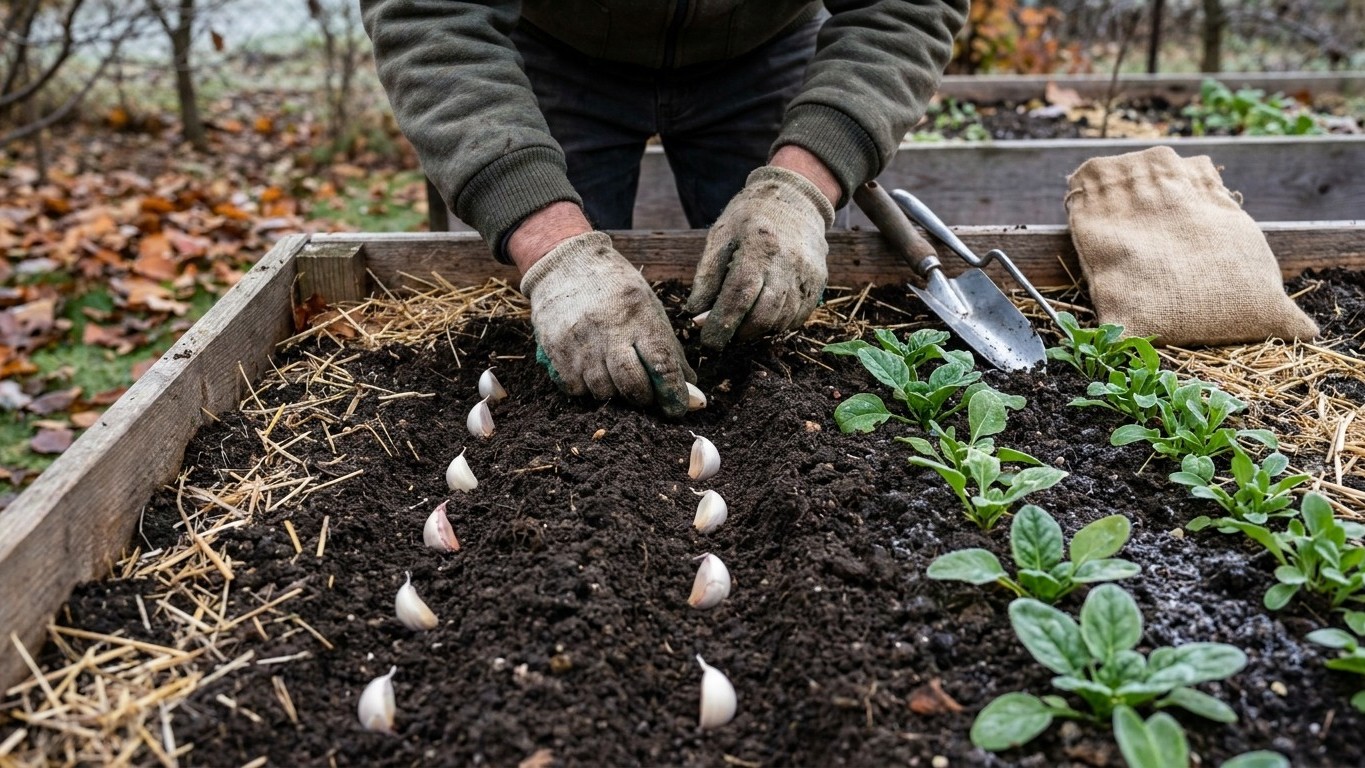

Garlic and shallot cloves, cold-hardy greens like spinach and mache, and fall cover crops such as winter rye can still go into Arkansas ground in November, as long as the soil stays workable. The state’s first fall frost typically arrives somewhere between November 7 and November 20, so the answer shifts depending on which week of the month it is and where you garden. Past that window, the work shifts from planting to protecting what’s already growing.
What goes in the ground in November

The freeze probability data behind that November 7 to November 20 window comes from NOAA’s 1991-2020 Climate Normals for station USW00013963, and it marks the range where a 32-degree freeze has a 30 to 70 percent chance of happening. That’s a probability band, not a single date, which means the first week of November can still behave like October in a mild fall, while the third week can already feel like winter. Soil temperature, not the date on the calendar, decides what survives.
Garlic and shallots are the safest bet. Cloves planted in fall root through the cooler months and put on top growth once soil warms again in spring, and Arkansas gardeners commonly get cloves into the ground through November as long as the soil hasn’t gone to mud or frozen solid. Push cloves root-down about two inches deep, space them out, and mulch with straw once the ground cools further.
Cold-hardy greens still have a place too. Spinach, mache (corn salad), and mustard greens tolerate light frost and can go in as transplants or under a cold frame or row cover for extra insurance during the first half of the month. Once the frost window closes in a given area, direct-seeding without protection stops making sense.
Cover crops belong on this list as well. Winter rye, crimson clover, and hairy vetch can still be broadcast over cleared beds early in the month to hold soil through winter and feed it come spring. Beyond that, dormant plantings take over: bare-root roses, fruit trees, and berry canes can go in once the plants have dropped their leaves and gone fully dormant, which for most of Arkansas trails a few weeks behind that first frost.
What to start under cover
Arkansas’s last spring frost falls somewhere between March 12 and March 28, based on the same NOAA station data, and that date is the anchor for anything started under cover now. Cool-season transplants like cabbage, broccoli, and lettuce typically need six to eight weeks of growth indoors before they’re ready to go outside two to four weeks ahead of the last frost. Counting backward from mid-March, that transplant date lands in late February, which pushes the seed-starting date to late December or early January, not November.
Starting those seeds now is too early, not too cautious. Plants sown this month for a spring transplant will be rootbound and leggy well before the ground and weather are ready for them, and stretched, weak seedlings rarely catch up once they’re finally set outside.
What does make sense under cover in November is short-cycle work. Quick hardy greens such as lettuce, mustard, and baby spinach sown directly into a cold frame or unheated hoop house can reach a harvestable size in four to six weeks, giving a picking window through the darker months without competing against a spring deadline. It’s also a reasonable time to start cold-stratifying seeds that need a period of chill before they’ll germinate, native perennial and wildflower seed especially, since a sealed container in a refrigerator or an unheated but insulated space for 60 to 90 days lines up neatly with a late-winter sowing date.
The other failure mode, starting too late, applies to anything meant to mature outdoors before frost. Fall broccoli, cabbage, and collards for an outdoor harvest needed to go in as seedlings back in summer; sowing them under cover now for a fall crop outside is already past the point where they’d size up before winter takes over.
What is ready to pick
Crops planted back in late summer are hitting their stride now. Collards, kale, and mustard greens sweeten after a light frost touches them, since the cold triggers the plant to convert starches to sugars, so don’t rush to pick everything before the first freeze; a little exposure actually improves flavor. Turnips, radishes, and beets sown in early fall are usually ready to pull, and carrots left in the ground under a thick layer of mulch can keep well past the first frost, getting sweeter the longer they sit.
Brussels sprouts, if they were started early enough in summer, are often near peak in November, and the lower sprouts on the stalk typically mature first. Late cabbage heads should be checked for firmness and cut before a hard freeze splits them.
Anything tender still hanging on, tomatoes, peppers, sweet potatoes, needs to come in before the frost window arrives, not after. Sweet potatoes especially should already be out of the ground and curing; a frost that touches the vines can affect the roots below if they’re left too long.
Pecans are worth watching too, since Arkansas has real pecan-producing regions and nuts start dropping from the trees through the month; gathering them promptly off the ground keeps them from molding in wet weather.
Indoors, this is a good stretch to check on stored squash, potatoes, and onions from earlier harvests. Squash with a soft spot or a sweet smell near the stem end should be used first, potatoes that have started sprouting or gone green need trimming or tossing, and any onion that’s gone soft at the neck won’t improve with more time in storage.
The jobs that matter this month
Leaf drop is heaviest now, and it’s free mulch and compost material rather than yard waste. Shredded leaves piled two to three inches deep over garlic beds, perennial crowns, and empty vegetable rows insulate roots and feed the soil as they break down, while whole leaves make a strong base layer for a compost pile that will be ready by spring if it’s turned occasionally.
Tender perennials that won’t survive the coming cold need to come out of the ground before a hard freeze settles in. Dahlia and canna tubers, caladiums, and other tender bulbs should be dug once frost has blackened the foliage, cured for a few days in a dry spot, and stored in slightly damp peat or vermiculite somewhere cool but frost-free.
Soil testing pays off more now than at almost any other point in the year. Beds are emptying out, and a test done now through the state extension service leaves enough lead time to work in lime or amendments before spring planting starts, since some corrections take months to fully change soil pH.
Seed catalogs are already circulating, and ordering early matters more than it seems. Popular varieties, especially disease-resistant tomatoes and specific pepper types, routinely sell out by midwinter, so a November order beats a February scramble.
Fruit tree and cane pruning can begin once trees have dropped their leaves and gone fully dormant, though the bulk of that work is better spread across the coldest months rather than rushed now. What does belong on the list this month is removing any dead, damaged, or diseased wood, which is easier to spot once leaves are down and won’t wait for a formal pruning session.
Tools deserve attention before they sit unused all winter. Cleaning soil off blades, sharpening pruners and hoes, and oiling metal parts now means less rust and a faster start in spring. Hoses should be drained and coiled before the first hard freeze cracks them.
What not to do in November
The most common mistake is leaving warm-season crops in the ground on the theory that a mild stretch means more time. NWS Little Rock’s own light-frost data puts the safe growing season for tender plants at 36 degrees between April 3 and October 31, so by November that window has typically already closed even before the harder 32-degree freezes tracked by NOAA arrive between November 7 and November 20. A few warm afternoons don’t reopen that window; when a freeze does hit, it can catch tomatoes, peppers, and basil that looked fine the day before. Harvest or pull those crops ahead of a forecast freeze rather than waiting to see what happens.
Feeding nitrogen this late is another regular error. A dose of high-nitrogen fertilizer on perennials, lawns, or fruit trees now pushes soft new growth that has no time to harden off before cold arrives, and that tender growth is exactly what frost damages first. Any feeding at this point should skew toward potassium and phosphorus, if it happens at all, with the bigger nitrogen application saved for spring.
Uncovering cold frames and row covers on a warm November day and forgetting to close them back up is a small mistake with a big cost, since the temperature swing between a sunny afternoon and a clear, cold night can run 30 degrees or more. Check covers in the evening, not just the morning.
Pruning fruit trees too early, right after leaf drop during a warm spell, can also backfire. Cuts made before the tree is fully dormant sometimes trigger new growth if warmer weather follows, and that growth won’t survive the freeze that comes later. Wait until the coldest stretch of the season for the bulk of that work.
Finally, don’t toss diseased tomato or squash vines into the compost pile. Blight and other pathogens can survive the composting process and reinfect next year’s beds; bag and discard that material instead.
Checking this against your own county
Arkansas spans USDA Hardiness Zones 6b to 8a, a range built on average extreme minimum winter temperature, and that spread alone signals how much frost timing shifts across the state. The Ozark and Ouachita highlands in the north and west tend to cool down earlier than the Delta lowlands in the east, and elevation differences of even a few hundred feet can move a frost date by a week or more in either direction.
The November 7 to November 20 window and the Zone 6b-8a range are both statewide figures, useful as a starting point rather than a fixed instruction. For a county-level read, check current conditions and planting guidance through the University of Arkansas System Division of Agriculture’s extension service, which tracks local frost data and crop timing across the state.
Common questions
Is it too late to plant garlic in Arkansas in November?
No. Garlic is one of the few crops where November planting is normal rather than a fallback. As long as the soil can still be worked, cloves planted this month have time to root before the ground fully cools, and they’ll resume growth in spring.
Can I still plant grass seed in Arkansas in November?
Cool-season grasses like fescue germinate best when soil temperatures sit between 50 and 65 degrees, which usually means the seeding window has already closed by November in most of the state. Warm-season lawns should not be seeded now at all; that work waits for late spring.
What vegetables can survive frost in an Arkansas garden?
Kale, collards, spinach, mustard greens, turnips, and carrots left in the ground all tolerate a light freeze, and several of them taste better for it. Anything in the cabbage family with a solid head can usually take a light frost too, though a hard freeze will still damage exposed heads.
Should I fertilize my lawn or garden beds in November?
Skip nitrogen this late. If a lawn or bed needs anything at all, a light application of potassium can support root health going into winter, but the main feeding for both lawns and vegetable beds belongs in spring when active growth resumes.