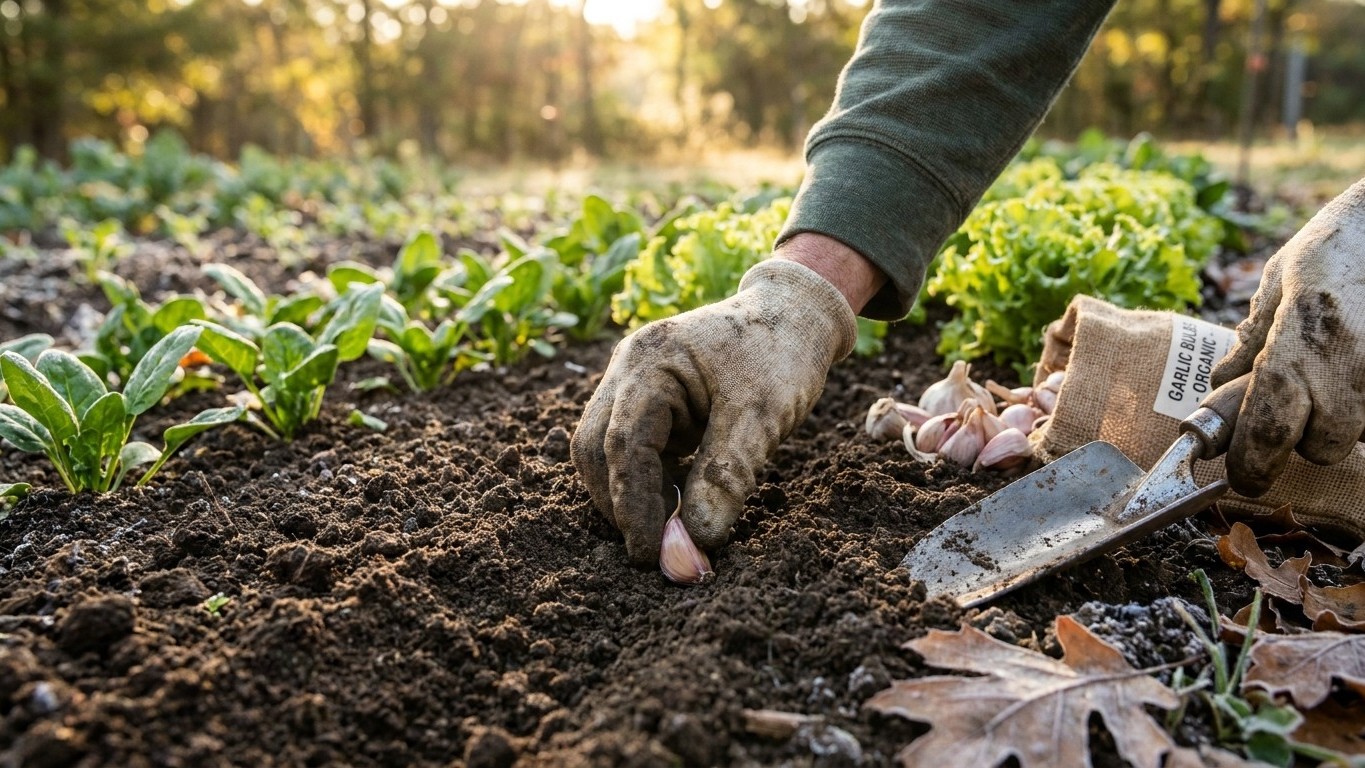

October in Arkansas still has room for the trowel. Garlic and shallots go into the ground now for a summer harvest, cool-season greens like spinach, lettuce, and turnips can be direct-sown for fall eating, and spring-flowering bulbs get tucked in while the soil is still workable. The window closes as the state’s first fall frost arrives, typically between November 7 and November 20, so the earlier in the month you plant, the more slack you have. Cover crops for bare beds fit here too.
What goes in the ground in October

The date on the calendar matters less than two numbers: soil temperature and how many weeks stand between now and the first hard freeze. Statewide, NOAA’s 1991-2020 climate normals put that first fall freeze (32°F, station USW00013963) somewhere between November 7 and November 20. But at the lighter 36°F threshold, the frost that nips tender leaves before it kills a whole plant, NWS Little Rock’s own data puts the date around October 31, one to three weeks earlier than the hard freeze most people mentally plan around. Anything still tender in the ground needs to be measured against that earlier date, not the later one.
Layer on the state’s hardiness range and the picture shifts again. Arkansas spans USDA zone 6b in the Ozark highlands down to zone 8a in the southern delta, according to the 2023 USDA Plant Hardiness Zone Map. A gardener near Fayetteville or Mountain Home is generally working toward the earlier end of that frost window; a gardener near El Dorado or Monticello often has an extra week or two of open ground before anything freezes.
With that arithmetic in mind, October splits cleanly into safe bets and gambles.
Safe for direct sowing or transplanting
- Garlic and shallots, planted for harvest the following summer
- Spinach, lettuce, and other quick salad greens, sown in the first half of the month
- Turnips, mustard greens, and radishes for fast fall eating
- Cover crops such as crimson clover or winter rye on beds going empty
- Spring-flowering bulbs like daffodils, hyacinths, and crocus
Anything that needs more than about 45 days to mature is a gamble once you’re past the middle of the month, especially in the northern half of the state. A late-October sowing of a slow-growing green can hit that October 31 light-frost date before it’s produced anything worth picking. Tender crops like tomatoes, peppers, and squash have no business going in now under any circumstances; they belong to a warmer month, not this one.
What to start under cover
Starting seed under a cold frame or low tunnel in October is less about beating the cold and more about banking growth before daylight runs short. Days are shrinking fast this month, and once a plant’s growth stalls under low light, a cold frame won’t push it back into gear until spring. Count backward from that October 31 light-frost date, not forward from the day you happen to have seed packets in hand: greens sown under cover in the first week or two of the month generally have time to size up before growth slows, while anything started in the last week is racing a clock it’s likely to lose.
Lettuce, spinach, arugula, and mustard greens all do well started under a cold frame this month, giving a household fresh salad material well into the colder weeks even after outdoor beds have shut down. Garlic beds under a loose row cover establish roots faster during the mild soil temperatures early in the month than they would once the ground cools further.
The two ways this goes wrong are predictable. Sow too early, while daytime temperatures under cover are still running hot, and seedlings stretch into leggy, weak growth that never fills out properly. Sow too late, past the point where there’s enough daylight left to build real leaf mass, and the plants sit in a kind of suspended animation, alive but not really growing, until the calendar turns back in their favor. Neither outcome feeds anyone.
What is ready to pick
October in Arkansas is a harvest month more than a planting one, at least for what went into the ground back in spring and summer. Sweet potatoes need to come out of the ground before soil temperatures drop and well before any frost damages the vines, since a hit vine can let cold reach the tubers underground. Winter squash and pumpkins are ready when the rind resists a thumbnail press and the stem has started to dry and harden; picking too early leaves them without the shelf life they need for winter storage.
Fall greens sown back in August or early September, lettuce, spinach, kale, turnip greens, are usually sizing up nicely by now and ready for cut-and-come-again picking. Peppers, tomatoes, and eggplant that are still setting fruit should get one final push of attention: pick anything showing color as soon as it’s usable, since a light frost anywhere near that October 31 date can end the season for these plants overnight.
Herbs like basil are especially frost-sensitive and worth harvesting heavily, or bringing indoors as a potted plant, before the first cold snap. Anyone storing summer’s harvest should also start checking onions, garlic braids, and any early-dug potatoes for soft spots or sprouting; one bad specimen in storage can spread rot to its neighbors faster than most people expect.
The jobs that matter this month
Bed prep for garlic and next spring’s beds pays off disproportionately if it happens now rather than after the ground turns cold and hard to work. Turning in compost while the soil is still warm and workable gives microbial life a chance to break it down before winter slows everything to a crawl. Strawberries and other shallow-rooted perennials benefit from a layer of mulch applied before, not after, the first hard freeze; mulch put down too late does nothing to protect roots that have already been damaged.
Watering rhythm needs adjusting as temperatures drop. Beds that needed watering every couple of days in August can often go a week or more between waterings now, and overwatering cooling soil invites root rot in anything still growing. Anyone who wants a last flush of quick greens should get seed in the ground in the first half of the month; succession sowing after that runs into the same daylight problem that limits cold-frame starts.
Pest scouting doesn’t stop just because summer’s over. Cutworms and aphids both find fall greens appealing, and a few minutes checking the undersides of leaves now can save a whole bed of lettuce later. Beyond the growing beds, this is also the month to clear out spent summer plants and disease-carrying debris rather than letting it compost in place over winter, order seed for next season before popular varieties sell out, sharpen and clean tools before they sit unused, and give storage sheds and cold frames a repair check before the weather that would make repairs miserable sets in.
What not to do in October
The classic mistake is trusting a warm afternoon over the calendar. A stretch of 75-degree days in mid-October doesn’t mean the frost risk has passed; it means the frost is simply delayed, not canceled, and tender plants left uncovered on the strength of a warm week are gambling against that October 31 light-frost date and the harder freeze that typically follows within a couple of weeks after it.
Feeding nitrogen to perennials, lawns, or fruit trees this late in the season is another common error. Nitrogen pushes soft new growth, and soft new growth is exactly what a frost damages first. Any fertilizing that needs to happen this month should lean toward phosphorus and potassium, which support root development rather than top growth, or should simply wait until spring.
Leaving harvested beds bare through winter is a mistake many gardeners don’t think about until spring erosion or a crust of compacted soil greets them. A quick cover crop or even a heavy mulch layer protects soil structure through the wet months far better than bare dirt does. And harvesting winter squash or sweet potatoes in cold, damp conditions instead of curing them properly afterward shortens their storage life considerably; both crops need a stretch of warm, dry air after harvest to toughen their skins before they go into long-term storage.
Checking this against your own county
Everything above is a state-wide starting point, not a set of instructions written for any one backyard. Arkansas runs from USDA zone 6b in the northern highlands to zone 8a in the southern delta, and elevation, local cold-air drainage, and simple latitude can shift a frost date by two weeks or more within the same state. A garden in a low-lying hollow will frost before one on a nearby ridge even a few hundred feet higher.
For the numbers specific to a particular county, the University of Arkansas System Division of Agriculture Cooperative Extension Service maintains local planting guidance that accounts for these regional differences far than any statewide date range can.
Common questions
Is it too late to plant garlic in October in Arkansas?
No. October is generally considered good timing for garlic across most of the state, since it gives cloves time to establish roots before the ground cools further, without pushing top growth that a hard freeze would damage. Planting earlier in the month rather than later gives a bit more margin, especially in the northern counties.
Can tomatoes still be planted in October in Arkansas?
No. Tomatoes are a warm-season crop with no frost tolerance, and October sits far too close to the first fall frost (November 7 to November 20 statewide, with a lighter frost around October 31 in the Little Rock area) for a new planting to produce anything before cold ends the season.
What vegetables can handle a light frost in Arkansas?
Spinach, kale, turnip greens, and other hardy greens generally tolerate a light frost without serious damage, and some even taste better after one. Tender crops like tomatoes, peppers, squash, and basil have no frost tolerance and need to be harvested or protected before temperatures drop that low.
Why does my part of Arkansas frost earlier than the state average?
Elevation and local terrain play a large role. Higher ground in the Ozarks or Ouachitas tends to see frost earlier than the low-lying delta in the southeast, and even within a single county, low spots where cold air settles will frost before nearby higher ground. That’s why the Cooperative Extension Service’s county-level guidance is worth checking against any statewide date range.