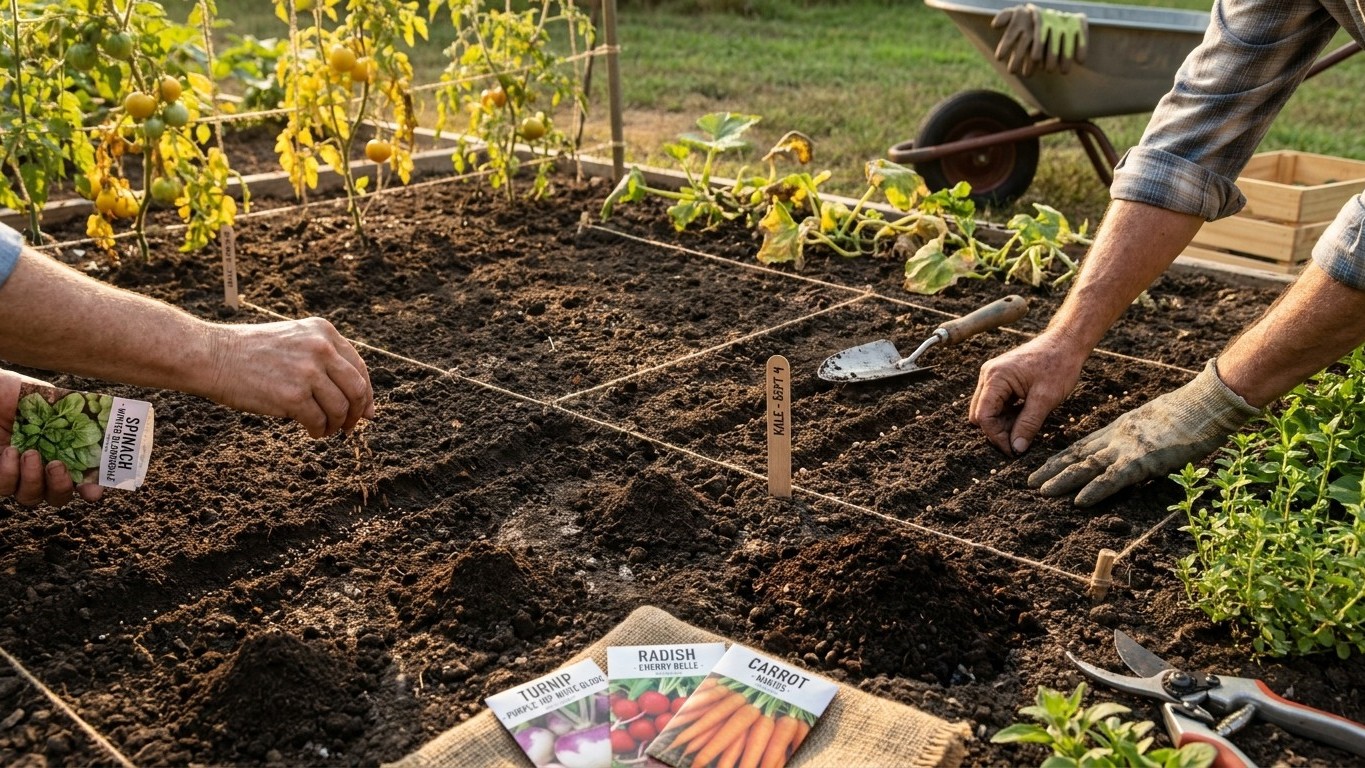

September in Arkansas is one of the state’s most productive planting windows. Soil is still warm from summer, days are shortening just enough to favor greens and roots over fruiting crops, and the first fall frost (November 7 to November 20, per NOAA climate normals) is far enough out to let a full round of cool-season vegetables mature. The trick is choosing crops that finish before that window closes, not chasing anything that needs a long, warm season from here.
What goes in the ground in September

The calendar matters less than the arithmetic behind it. With the first 32°F freeze arriving somewhere between November 7 and November 20 across the state, a September planting has roughly eight to eleven weeks of open-ground growing time before frost becomes likely. That window rules out anything that needs 70-plus days to mature from seed, and it rules in the fast, cold-tolerant crops that were too heat-stressed to plant in July.
Direct-sown into garden soil this month: turnips, radishes, spinach, mustard greens, collards, kale, carrots, and beets. All of these germinate well in soil that’s still warm and finish inside the frost window, and several (kale, collards, turnip greens) actually improve in flavor once a light frost hits them. Lettuce can go in as well, though it’s worth spacing successions a week or two apart since it bolts fast if a warm spell follows planting.
Garlic and the shoulder-season exception
Garlic doesn’t quite belong to September in most of Arkansas, its planting window generally opens later, but late in the month is a reasonable time to prep the bed: work in compost, clear weeds, and let the soil settle so cloves go into loose ground rather than compacted clay.
What doesn’t belong in September ground: tomatoes, peppers, squash, beans, or anything else that’s tender to frost. These crops are vulnerable not just to the 32°F freeze but to the lighter 36°F frost that, per NWS Little Rock, typically arrives by October 31, meaning any new tender planting this month has barely a month of runway before the season turns against it. If tender crops are already established and producing, let them ride out September, but don’t start new ones.
What to start under cover
Working backward from a November frost window rather than a fixed date is the safer way to plan indoor starts this month. Broccoli, cabbage, and cauliflower transplants need roughly six to eight weeks from seed to a plantable size, and they still need six to ten weeks in the ground afterward to head up. Counted against a November 7 to November 20 frost, that math is tight for anything not already started by early September, so this month is really the last call for starting these under cover for an outdoor fall crop, and only in the earlier part of the month.
The safer under-cover work in September is protective, not exploratory: sowing lettuce, spinach, and Asian greens into flats or a cold frame so they’re ready to transplant into a protected bed once the frost date approaches. A cold frame or low tunnel effectively buys two to four extra weeks on either end of the season, which matters more here than trying to squeeze in one more long-season crop.
The two ways this goes wrong are predictable. Start too early, without a clear plan for hardening off and moving transplants out promptly, and the result is leggy, rootbound seedlings sitting too long in small cells. Start too late, and short fall days simply won’t push a transplant to harvest size before frost slows growth to a crawl, regardless of variety.
What is ready to pick
September harvest in Arkansas still leans heavily on summer’s momentum. Tomatoes, peppers, and eggplant planted in spring keep producing as long as nights stay above the mid-50s, and okra often peaks this month, since the plant thrives in heat that’s finally starting to ease without disappearing. Sweet corn planted in a late-spring succession may still be coming in early in the month.
Winter squash and pumpkins are usually ready when the rind resists a fingernail and the stem has started to dry and harden. Pull them before a hard frost, since the fruit itself tolerates light cold but the vine doesn’t, and a frost-killed vine stops feeding the fruit further. Melons are done when the stem separates from the fruit with a light tug rather than needing to be cut.
Beans, both snap and dry, should be checked every couple of days once they start producing, since a missed picking window turns tender pods tough within days. Anything stored from earlier in the season, like onions or garlic cured over summer, is worth a quick check now for soft spots or sprouting, since Arkansas’s humidity in early fall can accelerate rot in a storage area that isn’t well ventilated.
The jobs that matter this month
Soil preparation for the fall crops going in now pays off directly: working compost into beds before the seeds listed above go in gives roots loose, fertile ground to push into during a shorter growing window than spring offers. This is also the month to lay mulch around any remaining summer crops and around new fall seedlings, since it keeps soil temperatures more even as the days cool unevenly, one week hot, the next mild.
Succession sowing and pest pressure
Succession sowing matters more in September than almost any other month, because a two-week gap between plantings of radishes or lettuce can mean the difference between a harvest that stretches into November and one that ends abruptly at the first frost. Sow small batches every ten to fourteen days rather than one large planting.
Pest scouting shouldn’t slow down just because summer’s worst pressure is easing. Fall armyworm and cabbage worms both tend to surge on new brassica seedlings in September, and catching an infestation on young kale or collards early is far easier than trying to save a stand that’s already been stripped. Check the undersides of leaves every few days on anything newly transplanted.
Watering rhythm needs adjusting, not abandoning. September days can still hit summer-like heat even as nights cool, so new seedbeds need consistent moisture to germinate evenly, typically a light watering once or twice a day until seedlings are established, then a deeper, less frequent soak as roots go down.
What not to do in September
The most common mistake this month is treating a warm afternoon as a green light for warm-season crops. Air temperature is a poor proxy for what the soil and the calendar are actually doing; a tomato transplant put in during a September warm spell still runs into the same October frost window, just with less time to produce anything worth the effort.
Feeding nitrogen at the wrong point is another classic misstep. Root crops like carrots, beets, and turnips planted this month don’t need a nitrogen boost, since excess nitrogen pushes leafy top growth at the expense of the root itself. A balanced or lower-nitrogen amendment worked in at planting is a better call than a mid-season nitrogen feed.
Covering tender plants too early, at the first cool night, wastes effort and can actually trap humidity that encourages fungal problems. The real frost risk, based on the 32°F window, doesn’t arrive until November in most of the state, so save row covers and cold frames for when frost is genuinely close rather than for the first mildly cool evening.
Finally, don’t let a good September stretch of growth lull anyone into skipping the harvest check on beans, okra, and summer squash. These crops slow down as days shorten, but they don’t stop suddenly, and letting pods or fruit sit past their prime signals the plant to stop producing new ones.
Checking this against your own county
A statewide September guide is a starting point, not a fixed instruction. Arkansas’s hardiness zones range from 6b to 8a on the USDA Plant Hardiness Zone Map, and that range alone tells you the Ozark highlands in the north run noticeably cooler than the Delta and southern parts of the state. Elevation, local frost pockets, and even proximity to a large lake can shift a real frost date by two or three weeks in either direction from the statewide range cited here.
For a planting calendar tuned to a specific county, the University of Arkansas System Division of Agriculture Cooperative Extension Service maintains local guidance and frost data worth checking before committing seed to ground.
Common questions
Is it too late to plant tomatoes in Arkansas in September?
Yes, for a new planting. With the lighter 36°F frost arriving by late October in the Little Rock area and the harder 32°F freeze following in November, a tomato transplant set out in September has too little time left to produce a meaningful harvest before cold stops it.
What vegetables can handle a light frost in Arkansas?
Kale, collards, turnip greens, and spinach all tolerate a light frost well, and several actually taste sweeter afterward as the plant converts starches to sugars in response to cold. Carrots and beets left in the ground also hold up fine through the season’s first frosts.
When should garlic go in the ground in Arkansas?
Garlic generally goes in later than September in most of the state, once soil temperatures have dropped further. September is better used to prepare the bed, since garlic wants loose, well-drained soil and does poorly pushed into ground that hasn’t been worked recently.
Why does my fall garden need less nitrogen than my spring garden?
Root and leaf crops planted for a September-to-frost harvest are grown for compact, quick growth rather than the sprawling vine and fruit production that spring’s warm-season crops need. Extra nitrogen pushes leafy growth at the expense of root development in crops like carrots, turnips, and beets, so a lighter or balanced feed at planting works better than a nitrogen-heavy one later.