
Coastal British Columbia’s mild winters mean February isn’t a dead month in the garden, but it isn’t a green light either. Garlic and shallots can still go into workable soil, hardy greens can start under cold frames, and dormant fruit trees and canes are ready for bare-root planting. Everything else waits for soil to warm and the frost risk to ease.
What goes in the ground in February

The number that matters here isn’t the calendar, it’s soil temperature, and in February across most of British Columbia that soil is still cold and often waterlogged. The average last spring frost at Vancouver International Airport lands around March 18, and that’s a midpoint, not a guarantee: in roughly half the years on record, frost arrives later than that date. February sits three to four weeks ahead of that average window, which puts it squarely in gamble territory for anything but the hardiest crops.
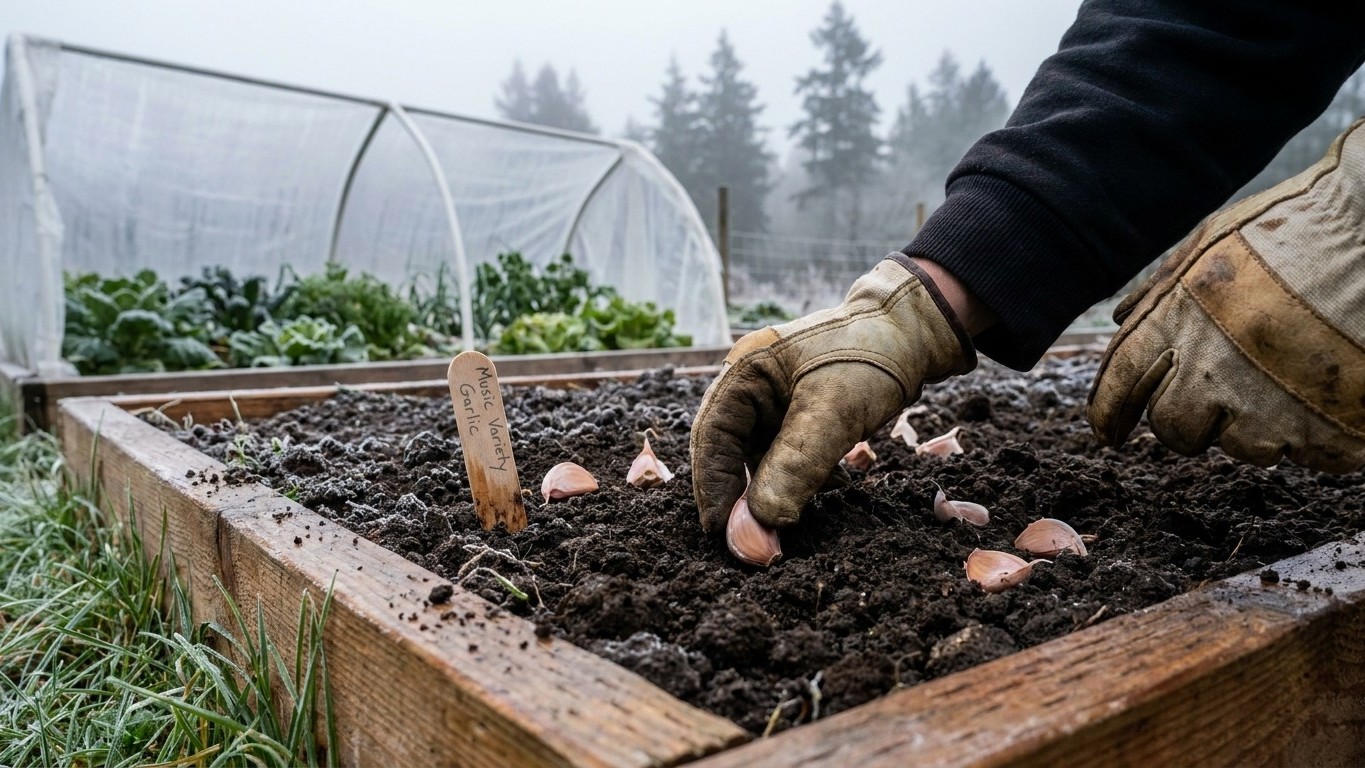
That said, coastal British Columbia’s Canadian hardiness zone of 9a (measured at the reference station under the 1991-2020 normals) is milder than most of the country, and it shows in what’s possible this month. Garlic and shallots, if they didn’t go in during fall, can still be planted where the ground isn’t frozen or saturated. Bare-root fruit trees, cane berries, and dormant roses can go into prepared holes while they’re still dormant, since planting before bud break gives roots a head start without exposing tender growth to frost.
Under a cold frame or low tunnel, hardy greens have a real shot: spinach, mache, and cold-tolerant lettuce varieties can be direct-sown where the cover buys a few extra degrees of protection. Broad beans (fava) tolerate a light frost and are often the first thing coastal gardeners risk in open ground this month, though a cloche or fleece cover reduces the odds of losing a stand to a hard cold snap. Peas can go in on the coast in a mild, well-drained bed, but a wet, heavy soil will rot the seed before it germinates faster than any frost will kill it.
Forcing is worth mentioning because it’s genuinely productive this month: rhubarb crowns and Belgian endive (chicory) roots can be forced indoors or in a dark box for a harvest weeks ahead of anything the outdoor garden will offer. Interior and northern British Columbia are a different story entirely. Ground there is frequently still frozen or under snow, and the safe move is to hold off on anything but indoor starts until local conditions genuinely change.
What to start under cover
Work backward from the frost window rather than forward from the date on the calendar. With an average last frost around March 18, and remembering that half of all years run later, transplant dates for tender crops should be set with a buffer, not against that average as if it were a promise. Onions and leeks are the classic February start: sown indoors now, they need ten to twelve weeks of growth before they’re sturdy enough to go outside, which lines up well with an April transplant even in a slow spring.
Early brassicas, cabbage, and hardy lettuce started under cover this month will be ready to harden off by the time soil actually warms, giving them a jump on the season without exposing seedlings to weather they can’t handle. Tomatoes and peppers are trickier. Starting them in February, weeks ahead of a realistic outdoor planting date that won’t arrive until well past the frost window, risks stretched, rootbound plants sulking in pots for a month or more before conditions are right. In coastal zone 9a gardens with a genuinely long growing season, a late-February start for peppers can work, but it demands strong light and consistent warmth indoors to avoid legginess.
The two failure modes worth naming plainly: starting too early leaves you with tall, weak seedlings that transplant poorly and never fully recover, while starting too late means the transplant misses its window and struggles to catch up before the season’s heat arrives. Either way, the fix is the same, count backward from the frost date for your own crop and location rather than from a fixed date on a seed packet.
What is ready to pick
Outdoors, February’s harvest in most of British Columbia is thin, but it isn’t empty. Coastal gardens growing purple sprouting broccoli, a crop that thrives in the region’s mild, wet winters, are often cutting spears this month as the plant responds to lengthening daylight. Overwintered kale, leeks, and Brussels sprouts left standing since fall are still usable, and a light touch of cold frequently improves their flavor rather than ruining it.
Cold frames extend the picture further, giving hardy greens like spinach and mache a protected space to keep growing slowly through the cooler weeks. Indoors, sprouts and microgreens fill the gap on the kitchen counter with almost no space or equipment, ready in days rather than weeks.
Storage crops need active attention now, not just occasional glances. Squash, potatoes, and onions put up in fall are reaching the point in their storage life where soft spots, sprouting, or mold start to show, and a single rotting squash left in a bin will speed up decay in everything around it. Checking through stored crops on a regular basis and pulling anything questionable protects the rest of the harvest and gives you an honest read on how much is really left for the weeks ahead.
The jobs that matter this month
Pruning and dormant-season work
Dormant pruning of apple, pear, and other tree fruit is a February staple across British Columbia, done while the plant’s structure is visible and before sap starts moving. Cane fruits like raspberries and blackberries benefit from the same timing, with old, spent canes cut out to make room for new growth. Grapevines, too, are best pruned while fully dormant, since cutting too late causes heavy sap loss known as bleeding.
One clear exception worth flagging: stone fruits such as cherries and plums are usually better left until later, closer to bloom, because pruning wounds in cold, wet weather invite fungal disease that coastal British Columbia’s damp winters make worse.
Planning, ordering, and soil
Seed catalogs move fast, and popular varieties sell out well before planting season, so ordering now protects your plan rather than leaving you scrambling for substitutes later. This is also the moment to sketch out crop rotation for the coming season, since deciding which bed grows what is far easier on paper in February than mid-scramble in May.
Soil testing and amending pay off precisely because nothing is growing yet: lime, compost, or other amendments have time to integrate before roots need them. Turning the compost pile keeps decomposition active through the cold months instead of letting it stall. Tools deserve the same attention, cleaning and sharpening pruners and hoes now means they’re ready the moment the soil is workable, rather than becoming a delay once the season actually starts. Fences, raised beds, and trellising are also easiest to repair while the garden is empty and nothing’s in the way.
What not to do in February
A stretch of unusually mild coastal weather is the classic trap this month. Air temperatures in the mid-50s feel like spring, but soil several inches down is still cold, and tender crops like tomatoes, squash, or beans planted outdoors on the strength of a warm afternoon will sit stalled or simply rot rather than grow. The fix is patient: let soil temperature, not air temperature, make the call, and use a simple soil thermometer if there’s any doubt.
Uncovering mulch or removing winter protection after a few warm days is another common misstep. British Columbia’s weather swings back to frost quickly, and plants exposed too early lose the protection right when a cold snap returns. Leave winter mulch in place until the frost pattern has genuinely turned, not just paused.
Nitrogen fertilizer applied this early is largely wasted, and worse, it can push soft, frost-tender new growth on shrubs and perennials at exactly the moment a cold night can kill it back. Hold off on feeding until plants are actively growing and better able to use what’s applied. And as noted above, pruning stone fruits like cherries and plums this month, rather than waiting closer to bloom, invites disease into fresh cuts during the wettest part of the year.
Checking this against your own county
A provincial figure is a starting point, nothing more. British Columbia spans coastal rainforest, interior desert, and mountain terrain, and elevation, lake effect, and simple latitude shift planting windows by weeks in either direction. A garden in the Okanagan or in the province’s north is working with a very different clock than one near Vancouver, even though both sit under the same provincial name.
For local frost data, soil conditions, and planting guidance suited to your specific region, the British Columbia Ministry of Agriculture and Food is the resource built for that job, and it’s worth checking before betting a season’s seed budget on a provincial average.
Common questions
Can I plant vegetables outside in British Columbia in February?
In coastal areas with workable soil, garlic, shallots, and hardy crops like broad beans or peas under cover are reasonable options. Most of the province, especially the interior and north, is still too cold and wet for direct outdoor sowing this month.
What is the average last frost date for coastal British Columbia?
At Vancouver International Airport, the average last spring frost falls around March 18, based on Environment and Climate Change Canada’s 1981-2010 climate normals. That’s a midpoint figure, so frost arrives later than this in roughly half of all years.
What hardiness zone is coastal British Columbia in?
The reference city sits in Canadian hardiness zone 9a, based on Natural Resources Canada’s 1991-2020 normals. This is the Canadian zoning system, built on seven climate variables, and it does not convert directly to the USDA zones used elsewhere in the United States.
Is it too early to start tomato seeds indoors in February?
For most of British Columbia, yes, unless you have strong supplemental light and can manage the six to eight extra weeks of indoor growth without the plants becoming leggy. Waiting until closer to the transplant window, counted backward from your local last frost, usually produces sturdier plants.