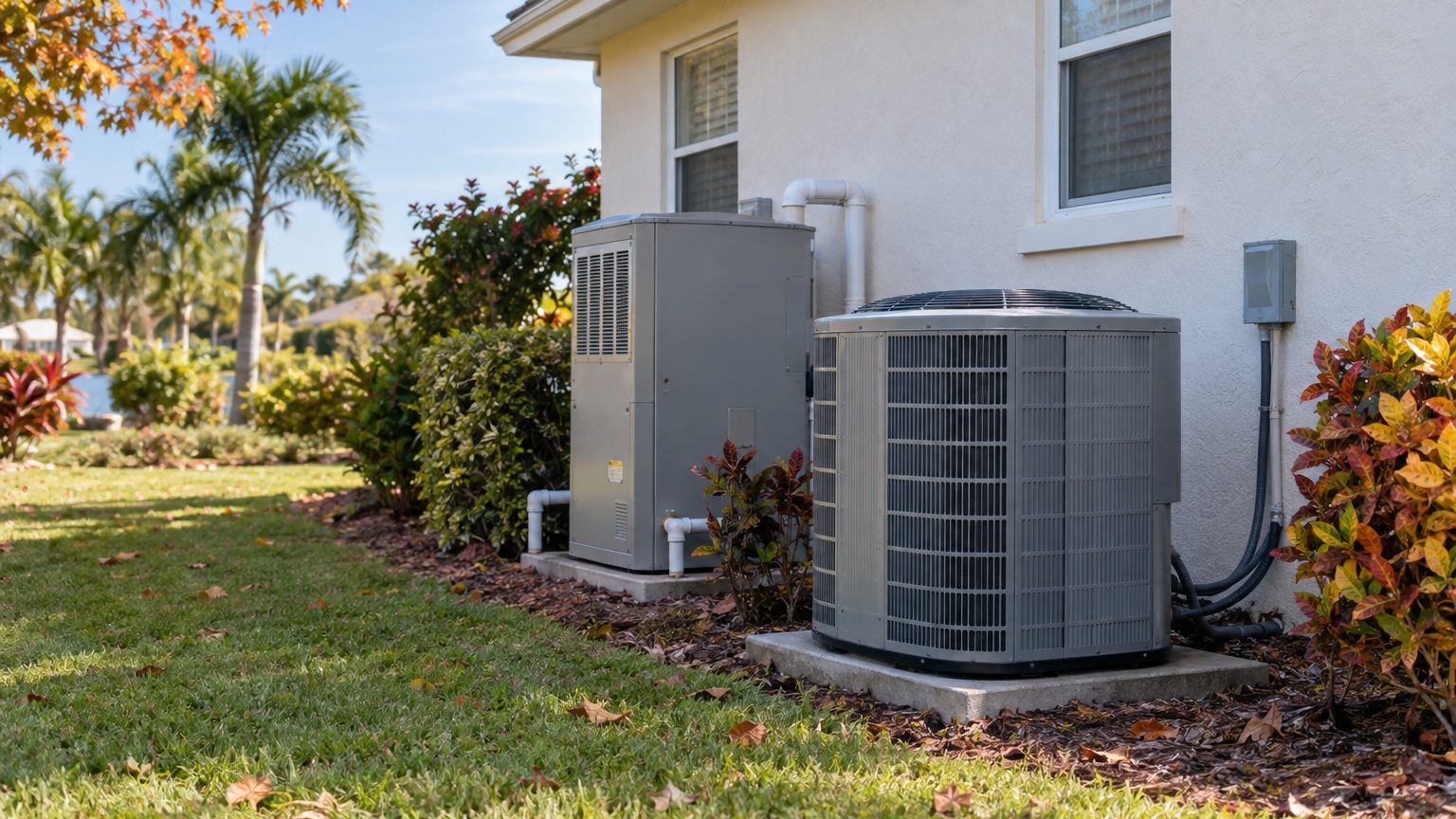

In British Columbia, a heat pump is the cheapest way to turn electricity into heat, and it costs far less to run than electric baseboard. Whether it also beats a gas furnace comes down to one number on your gas bill, and the math takes five minutes. Below: the cost per million Btu, what a Vancouver-area winter does to the comparison, and the houses where gas still earns its place.
The short answer for British Columbia
The heat pump costs less to run than electric baseboard, by C$21.37 per million Btu of heat delivered. Using Hydro-Québec’s April 2025 residential price for Vancouver and ENERGY STAR efficiencies, baseboard heat comes to C$36.93 per million Btu. A heat pump at 8.1 HSPF2 (seasonal COP about 2.4) comes to C$15.56.
Gas is the open variable. Its price comes from your gas utility’s current rate schedule, delivery charges included, and the furnace’s efficiency rating is printed on its label. Divide the gas cost per million Btu by that efficiency, written as a decimal, and you get the cost of a million Btu actually delivered into the house. If that figure is above C$15.56, the heat pump is cheaper to run; if it is below, the furnace is.
Keep the scope straight. These are running costs for the same amount of heat on the same unit, a way to compare fuels. They do not add up to a yearly bill, which depends on the size of the house, its insulation and how warm the family keeps it. Ducts, electrical work and installation sit outside the comparison, and so does the price of the equipment itself.
What each option costs to run in British Columbia
Both figures below are in Canadian dollars and measure the cost of one million Btu of heat delivered to the house.
| System | Efficiency used | Cost per million Btu delivered |
|---|---|---|
| Electric baseboard | 100% efficient | C$36.93 |
| Heat pump | 8.1 HSPF2 (seasonal COP about 2.4) | C$15.56 |
Behind the table sits one price: 12.60 cents per kWh in Canadian dollars. That is the average residential price before taxes at 1,000 kWh a month, under rates in effect April 1, 2025, measured in Vancouver. It comes from Hydro-Québec’s comparison of electricity prices in large North American cities. It is a city average, good for comparing fuels and not a copy of anyone’s bill. Don’t set it beside a U.S. price in cents, because the currencies differ. For gas, take the all-in rate from your own utility statement and convert it to cost per million Btu.
Why does efficiency matter as much as the price per kWh?
A kilowatt-hour of electricity carries 3,412 Btu, the standard EIA conversion. Baseboard turns all of it into heat. A heat pump moves heat from outdoor air into the house and delivers about 2.4 times as much for the same electricity, which is where the gap in the table comes from. A gas furnace sits on the other side of the same logic: some of the heat from burning gas leaves up the flue, so a cheap fuel in a low-efficiency appliance can cost more per delivered Btu than its price suggests.
The efficiency in the table is the ENERGY STAR minimum for a ducted heat pump, 8.1 HSPF2. The program asks 8.5 of a non-ducted system for the same label, since a ductless unit has no duct losses and starts with an advantage. What HSPF2 Measures, and Why Ductless Asks for More covers that gap. These are minimums to earn the label, not typical values. If you heat with baseboard today, a heat pump at the ENERGY STAR minimum already saves C$21.37 per million Btu.
How cold it gets, and what that does to a heat pump
Vancouver Int’l A, the reference station, logs about 2,818 heating degree days a year below 18 C, according to Environment and Climate Change Canada’s 1981-2010 normals. A heating degree day counts how far the day’s average temperature sits below 18 C, so twice the total means roughly twice the fuel for the same house. The base (18 C is 64.4 F), the unit (Celsius degree-days) and the 1981-2010 period all differ from American degree-day tables, so the number should not be lined up against a U.S. one.
The mean daily minimum of the coldest month at that station is 0.8 °C. That is an average night, not a record low, and cold snaps still dip below it. Still, a typical coldest night hovers just above freezing, so a heat pump on the coast spends most of the winter in its efficient range.
What happens to a heat pump in a cold snap or farther inland?
The C$15.56 figure rests on a seasonal average efficiency. In deep cold a heat pump’s efficiency drops, and a backup carries the coldest nights: electric resistance strips or a furnace. Strips deliver heat at the same one-for-one rate as baseboard, so those hours cost closer to C$36.93 than to C$15.56. A gas furnace as backup costs whatever your gas rate and furnace efficiency work out to.
This is one station on the coast. Interior valleys, high elevations and the north of the province run colder and for longer, and there the seasonal figure flatters the heat pump more. How Cold Is Too Cold for a Heat Pump explains how performance falls with the outdoor temperature. On the coast, the seasonal C$15.56 is a fair guide; inland and at elevation, plan on a backup and ask for performance numbers at your local winter lows.
What homes in British Columbia already heat with
Statistics Canada’s 2023 survey of primary heating systems (table 38-10-0286) puts forced-air furnaces first among British Columbia homes at 36%. Electric baseboard heaters follow at 28%, heat pumps at 10% and boilers with hot-water or steam radiators at 9%. For heating stoves the survey publishes no figure, which is different from zero. These are province-wide shares, and they should not be set against American equipment shares, which come from a different survey with different categories.
The shares describe what was installed, so they show which fuel looked cheap when the houses were built. They do not recommend a system for yours. For the wider regional picture, see Heating a Home in British Columbia.
Does your current system change the comparison?
Yes, and in a few different ways. A house with a forced-air furnace already has ducts, which makes a ducted heat pump the simplest swap, and the gas rate decides whether it also pays off in running cost. A house with no gas line has no gas option to weigh: the comparison is the heat pump against baseboard, and the table settles it at C$21.37 per million Btu in the heat pump’s favor.
Baseboard houses, more than one in four across the province, have no ducts at all. Ductless heads often fit better there, and Ductless or Central walks through that choice. A boiler house is a different conversion. Hot-water radiators cannot take warm air from a standard air-source heat pump, so the job means adding ducts or ductless heads, or choosing a system that heats water.
When the other choice wins
The heat pump is the cheaper system to run against baseboard, and against gas it wins once your delivered gas cost passes C$15.56 per million Btu. Several situations still point the other way.
When does keeping a gas furnace make sense?
The first is plain arithmetic. If your gas rate, divided by the furnace’s efficiency, lands below C$15.56, the furnace is cheaper to run and the heat pump has to win on something else. The second is age. A furnace with years of service left has already been paid for, and the decision belongs with repair costs and remaining life, which Repairing a Furnace or Replacing It lays out. Keep a sound furnace until your gas math or a major repair says otherwise.
A dual-fuel setup splits the difference. The heat pump runs through most of the winter, and the furnace takes over on the coldest nights when the heat pump’s efficiency sags. That suits colder inland homes that already have a gas line and ducts. It also avoids paying baseboard-level prices for backup heat.
Does air conditioning tip the choice toward a heat pump?
It can. A heat pump cools as well as heats, and ENERGY STAR sets a SEER2 floor of 15.2 for cooling, so one machine can replace a furnace and a separate air conditioner. Where summers stay mild, as on much of the coast, cooling adds little to the case. In hotter interior valleys it counts for more. A room used only a few weeks a year is the other exception, since baseboard there may never repay a heat pump’s higher upfront cost.
Common questions
Does a heat pump work through a Vancouver winter?
Yes. The mean daily minimum of the coldest month is 0.8 °C at the Vancouver station, which keeps the heat pump close to its efficient range most of the season. A backup still covers the occasional cold snap.
Is electric baseboard ever cheaper to run than a heat pump?
Not on a per-Btu basis. Baseboard costs C$36.93 per million Btu delivered and the heat pump C$15.56. Baseboard wins only on installation simplicity in a rarely used room.
What does HSPF2 mean on a heat pump label?
It rates heating efficiency over a whole season. ENERGY STAR asks 8.1 for ducted systems and 8.5 for non-ducted ones. SEER2 is a separate number that rates cooling, so compare the same letter between two units.
How do I compare my gas bill with these figures?
Find the gas cost per million Btu on your utility’s rate schedule, then divide it by your furnace’s efficiency written as a decimal. Compare the result with C$15.56. Use rates before taxes on both sides if you want the same basis as the electricity figure.