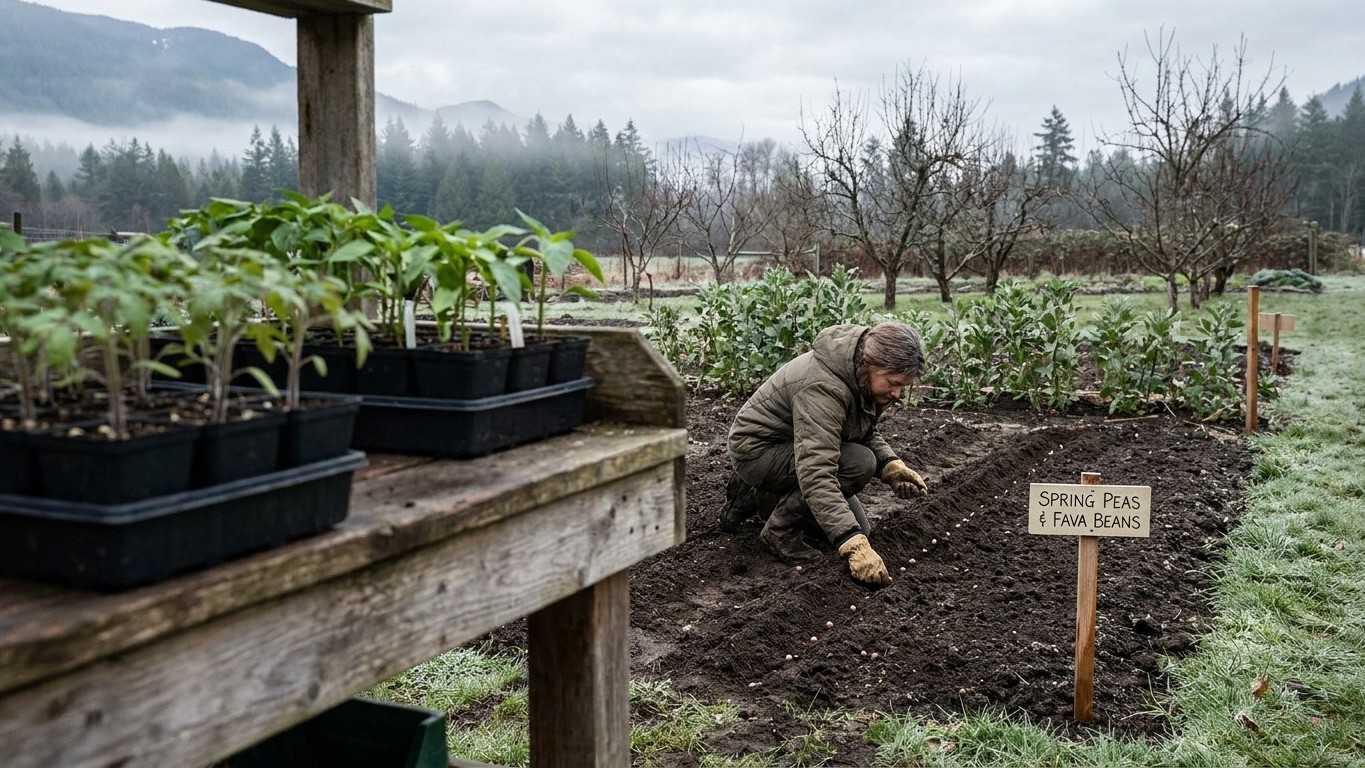

Coastal British Columbia sits right at its average last-frost mark this month, so March is a hardy-crop month, not a tender one. Peas, fava beans, garlic, shallots, and cold-tolerant greens can go into workable soil, while tomatoes, peppers, and squash stay indoors under lights. The Vancouver area sits in Canadian hardiness zone 9a, mild enough to keep gardeners busy outdoors even while frost risk lingers.
What goes in the ground in March

The number that matters here is March 18, the average date of the last spring frost recorded at Vancouver Int’l A. That word “average” carries weight: in roughly half of all years, frost arrives after that date, sometimes well after. Treat March 18 as the midpoint of a window, not a green light. Early in the month, soil on the coast is often still cold and wet from winter rain, and that matters more than air temperature for deciding what to sow.
Hardy crops tolerate a light frost and slow, cool germination, so they carry the least risk. Peas can go into raked, drained soil as soon as it stops sticking to your boot. Fava beans, onion sets, shallots, and garlic (if fall planting was missed) all handle the swings of a coastal March. Bare-root fruit trees, cane fruit, asparagus crowns, and rhubarb crowns also belong in the ground now, while they’re still dormant and before active root growth resumes.
Tender crops are the gamble. Beans, corn, squash, and cucumbers sown directly this month risk rotting in soil that hasn’t warmed enough to support germination, frost or no frost. Save them for a later month, and use a cold frame or low tunnel instead if you want a head start on lettuce, spinach, arugula, and other salad greens.
| Crop group | March status | Notes |
|---|---|---|
| Peas, fava beans | Direct sow | Tolerate cool, damp soil |
| Garlic, shallots, onion sets | Direct plant | Best done before growth resumes |
| Hardy greens | Cold frame or low tunnel | Open ground risky before month’s end |
| Beans, squash, corn | Wait | Soil too cold; frost risk still real |
What to start under cover
Work backward from the frost window instead of a fixed date. If tomatoes, peppers, and eggplant won’t move outside until well past the March 18 average, count six to eight weeks back from that later transplant target, not from the mean date itself. That arithmetic usually lands the sowing date for these warm-season crops right around now, indoors under lights or on a warm windowsill.
Brassicas run on a shorter clock. Broccoli, cabbage, and kale need about six weeks from seed to a transplant-ready seedling, and because they tolerate cool soil and a stray frost, they can move outdoors well before the tender crops do. Sowing them now under cover sets up an April transplant date without forcing the plants to sit around waiting.
Two mistakes undo all of this. Sow too early, and tomatoes or peppers turn leggy and rootbound weeks before it’s safe to plant them out, stunting the whole season. Sow too late, especially with peppers and eggplant, and there isn’t enough runway left before the growing season needs to produce fruit. A seedling that’s had to wait too long in a small pot rarely catches up once it finally reaches open ground.
| Crop | Weeks before transplant | Sow indoors |
|---|---|---|
| Tomatoes, peppers, eggplant | 6-8 weeks | Now, for transplant after frost risk eases |
| Broccoli, cabbage, kale | 5-6 weeks | Now, for an April move outdoors |
What is ready to pick
Purple sprouting broccoli is the signature harvest of a coastal British Columbia March. Planted the previous summer, it sends up tender flowering shoots right around now, and picking the central spear first encourages side shoots to keep coming for weeks. Overwintered kale, leeks, and Brussels sprouts left standing through winter are also at their best, since a season of cold has sweetened them.
Cold frames and low tunnels started earlier in winter should be yielding cut-and-come-again lettuce, spinach, and arugula by now, and thinning those beds doubles as a harvest, since the thinnings are edible. Indoors, sprouts and microgreens fill the gap for households wanting something fresh on a weekly cycle without depending on the weather at all.
Stored crops need a hands-on check this month. Squash, potatoes, and onions held since fall are entering their most vulnerable stretch, as warmer indoor temperatures and any lingering moisture push the ones that are going to turn toward turning. Go through the stack, pull out anything soft, sprouting, or smelling off, and use the borderline ones first rather than letting them spread rot to the rest.
The jobs that matter this month
Pruning and dormant work
Dormant pruning of fruit trees and cane fruit has a hard deadline: once buds break, the window closes and every cut afterward costs the plant stored energy instead of shaping growth. Early March is often the last comfortable stretch to finish this work on the coast, where mild spells can push buds open earlier than gardeners expect. Any dormant oil sprays for overwintering pests go on now too, before new leaf tissue is there to be damaged.
Soil, tools, and planning
Coastal soil is often waterlogged after a wet winter, and working it while sodden ruins its structure for the whole season, compacting it into clay-like clumps. Wait until a handful of soil crumbles rather than smears before digging in compost or turning a bed. This is also the last practical stretch to order seed before popular varieties sell out, to test soil pH and correct it before planting starts in earnest, and to sharpen and clean tools that will see heavy use once the season turns.
Chitting seed potatoes (setting them in a cool, bright spot to sprout before planting) pays off directly in an earlier crop later. Beds and fencing damaged by winter weather are easiest to repair now, before they’re full of plants and hard to access. None of this is filler work. Skip it now, and the gap shows up in June as a pest outbreak, a collapsed trellis, or a bed that never quite got amended in time.
What not to do in March
The most common mistake is reading a run of mild, sunny days as permission to plant warm-season crops outdoors. Air temperature is misleading; soil temperature is what actually decides whether a bean seed rots or germinates, and coastal soil lags well behind the air after a wet winter. Wait for the soil itself, checked by hand or with a simple soil thermometer, rather than trusting a warm afternoon.
A related error is uncovering cold frames, removing mulch, or hardening off seedlings too aggressively after a mild stretch, only to lose the lot when a colder night follows. Since the average last frost falls March 18 and half of all years run later than that, a week of pleasant weather early in the month proves nothing about what the rest of it holds. Keep protection in place and harden off gradually, a few hours outdoors at a time, rather than all at once.
Feeding nitrogen too early is the third trap, particularly on lawns and perennial beds. Fertilizer applied before root systems are actively growing either washes away in coastal rain or pushes soft, frost-tender new growth right when a late cold snap is still plausible. Hold off until growth visibly resumes, then feed in step with it rather than ahead of it.
Checking this against your own county
A province-wide month is a starting point, not an instruction. British Columbia stretches from mild coastal valleys to high interior plateaus and cold northern districts, and elevation alone can shift a planting window by several weeks in either direction. A garden in the Okanagan or the Cariboo will not track the Vancouver-area figures used here.
Check local conditions against the British Columbia Ministry of Agriculture and Food before committing tender crops to open ground, and treat every date on this page as a regional average rather than a guarantee for your own yard.
Common questions
Can I plant tomatoes outside in March in British Columbia?
No. The average last frost falls March 18, and tomatoes have zero frost tolerance. Start seed indoors now and wait to transplant until well after the frost window has passed in your area.
What vegetables can I direct sow in March in British Columbia?
Peas, fava beans, and onion sets tolerate the cool, often wet soil typical of a coastal March. Garlic and shallots can also still go in where they weren’t planted in fall.
Is March too early for peas in British Columbia?
No, peas are one of the few crops built for this month. They germinate in cool soil and shrug off a light frost, making them one of the safest direct-sown crops on the list.
When is it safe to plant after the last frost in British Columbia?
The average last frost is March 18, but that’s a midpoint, not a safe date; frost arrives later than that in about half of all years. Watch local forecasts and soil temperature rather than planting by the calendar alone.