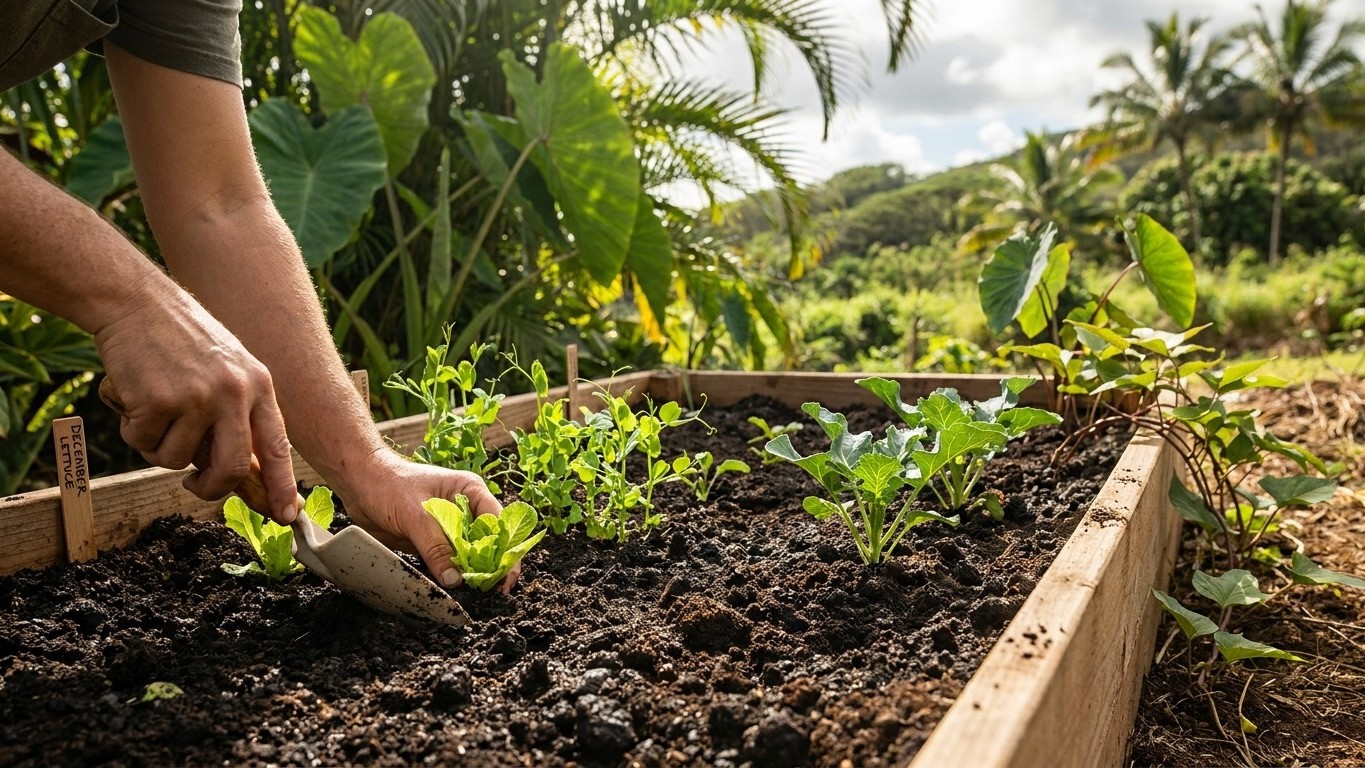

December is one of the best planting windows in Hawaii, not despite winter but because of it. With no frost anywhere gardeners actually plant, the limiting factor this month is rain and elevation, not cold. Cool-season crops like lettuce, peas, broccoli, and alliums go in now across most islands, while warm-season staples such as sweet potato and taro keep growing on the drier, leeward sides.
What goes in the ground in December

Start with the fact that changes everything about a Hawaii planting calendar: there is no freeze season in the parts of the state where people garden. NOAA’s 1991-2020 Climate Normals for the reference station show zero days per year at or below 32°F, with every freeze percentile marked “not computable” because the event simply doesn’t happen at inhabited elevations. Frost exists only on the summits of Mauna Kea, Mauna Loa, and Haleakala, thousands of feet above any garden bed. So the question this month isn’t “will it freeze,” it’s “how wet is my slope and how high up am I.”
That’s the real decision-maker in December. Windward sides of every island, the ones facing the trade winds, run into the heart of the wet season now, and soggy soil rots seeds and seedlings faster than cool air ever would. Leeward areas, like the Kona coast or Waikiki, stay drier and warmer, and elevation adds another layer: gardens in upcountry spots like Kula on Maui or Waimea on the Big Island run noticeably cooler than sea-level plots a few miles away, closer to what a mainland gardener would call a mild fall.
What’s safe to plant now
Given those conditions, December favors cool-season vegetables almost everywhere in the state:
- Lettuce, cabbage, kale, and other leafy greens, which struggle in Hawaii’s hot months but thrive now
- Broccoli and cauliflower, both better suited to the cooler stretch than to summer
- Carrots, beets, and radishes as direct-sown roots
- Peas, which actually prefer this cooler window over the tropical heat of summer
- Onions, garlic, and shallots, going in wherever drainage is decent
On warmer, drier leeward ground, sweet potato slips and taro huli can still go in too. The USDA Plant Hardiness Zone Map puts Hawaii anywhere from zone 9a to 13a depending on elevation and exposure, one of the widest ranges of any state, so a planting choice that’s routine in Hilo may need adjusting a thousand feet up the mountain.
What to start under cover
“Under cover” in Hawaii rarely means protecting from cold. It means keeping seedlings out of pounding December rain long enough to develop real roots before they hit open ground. Trays on a covered lanai or under a simple rain shelter do the job that a cold frame does elsewhere.
Work backward from your rainy season, not from a frost date that doesn’t exist here. If you want tomatoes, peppers, or eggplant transplanted once the heaviest windward rains ease, start seed in trays now so the plants are sturdy, not leggy, by the time the ground firms up. Basil and other tender herbs benefit from the same staged start, since direct-sowing them into saturated soil this month often means rot before germination.
The two ways this goes wrong are familiar even without a frost clock. Start too early, and seedlings sit in trays for weeks past their prime, stretching toward the light and becoming rootbound and weak. Start too late, and you miss the transition window between the wettest weeks and the drier stretch ahead, forcing transplants into ground that’s either still too soggy or already drying out faster than young roots can handle. Watching your own rainfall, more than the calendar, tells you which trap you’re closer to.
What is ready to pick
Harvest doesn’t pause in a Hawaii December the way it does across most of the mainland. Greens planted in the fall cooler stretch are hitting maturity now, and root crops like carrots and beets from earlier plantings are ready to pull once their shoulders show at the soil surface. Kale and cabbage that have had a few cool weeks to develop tend to taste noticeably better than the same crops grown in Hawaii’s hotter months.
Several citrus varieties also ripen during the cooler part of the year, so December is a reasonable time to be checking trees for fruit that’s colored up and giving slightly at the stem end. Sweet potato and taro planted earlier in the season can be dug as needed rather than all at once, since both store better in the ground than in a bin.
For anything already in storage, garlic and onions cured from an earlier harvest deserve a check this month. Squeeze bulbs gently; soft spots or a sour smell mean it’s time to use that one before it spreads rot to its neighbors. The same goes for stored sweet potatoes: any that feel mushy or show dark, wet patches should come out of the pile before they take others down with them.
The jobs that matter this month
December carries a full slate of work even where planting slows down, and skipping it costs more than a missed sowing date.
Drainage first. With the wet season underway on windward sides, checking that beds shed excess water is the single highest-value job this month. Raised beds, French drains, or simply reshaping a bed’s crown can be the difference between healthy roots and a rotted crop.
Mulch and stake ahead of the rain, not after it. Heavy December downpours flatten unsupported plants and splash soil-borne fungus onto lower leaves. Staking tomatoes and peppers now, before they sprawl, and mulching to break the splash, both pay off within weeks.
Prune fruit trees during the slower growth stretch. Hawaii’s fruit trees don’t go fully dormant the way temperate ones do, but growth does slow in the cooler months, making this a sensible window for shaping cuts on citrus, mango, and avocado without cutting into a active flush.
Order seed before the good varieties sell out, especially cool-season varieties bred for humid tropical conditions rather than mainland climates. Scout for pests too: slugs, snails, and slugs’ fungal allies multiply fast in wet weather, and a walk through the garden every few days catches an outbreak while it’s still manageable. Finally, use any slower stretch to turn compost, sharpen tools, and test soil pH, since acidic volcanic soils common across the islands often need lime worked in well ahead of the next planting.
What not to do in December
The most common December mistake in Hawaii isn’t about cold at all, it’s about water. Gardeners see mild, even warm daytime temperatures and assume conditions are ideal for heat-loving crops, then plant them into low spots that stay waterlogged through the wet season. Tomatoes and peppers set into standing water don’t freeze here, they simply rot at the root.
A second error is treating this month like a dead season out of mainland habit and holding off on cool-season crops that should be going in right now. Lettuce, peas, and brassicas planted late miss the mild stretch and end up struggling once the weather turns hotter and drier again.
Overwatering is its own trap during the rainy months. Gardeners on automatic irrigation timers sometimes keep watering on the usual schedule straight through heavy rain, doubling up on moisture the soil doesn’t need and inviting root disease. Turning off or adjusting irrigation during wet stretches is a simple fix that gets overlooked constantly.
Fertilizing at the wrong moment compounds the problem. Pushing nitrogen on plants right before a run of heavy rain encourages soft, lush growth that’s more vulnerable to the fungal issues that thrive in wet, warm conditions. Better to fertilize lightly and let growth stay a bit more restrained until drainage and rainfall settle into a steadier pattern.
Checking this against your own county
Everything above is a starting point, not an instruction sheet for your particular yard. Hawaii’s hardiness zones span 9a to 13a across the state, and windward versus leeward exposure, plus a few hundred feet of elevation, can shift what’s realistic by weeks in either direction. A garden in Hilo and one in Kona, roughly ninety miles apart on the same island, run on almost opposite rainfall patterns.
The University of Hawaiʻi at Mānoa’s College of Tropical Agriculture and Human Resources runs the state’s Cooperative Extension Service, and it’s the best source for local planting guidance tuned to your specific island and elevation.
Common questions
Does Hawaii ever get frost?
Not where people garden. NOAA’s climate data shows zero freeze days per year at the reference station, and frost is limited to the summits of Mauna Kea, Mauna Loa, and Haleakala, far above any cultivated ground.
Can you grow tomatoes in Hawaii in December?
Yes, particularly on drier leeward sides with good drainage. The risk this month isn’t cold, it’s waterlogged soil from wet-season rain, so raised beds or well-drained ground matter more than timing.
What is Hawaii’s wet season?
Windward sides of the islands run through their wettest stretch roughly from late fall into early spring, while leeward areas stay comparatively drier year-round. This pattern, not temperature, drives most December planting decisions.
What vegetables grow best in Hawaii in December?
Lettuce, kale, cabbage, broccoli, cauliflower, peas, carrots, beets, radishes, and alliums like onions and garlic all do well in the cooler December stretch, especially compared to Hawaii’s hotter summer months.