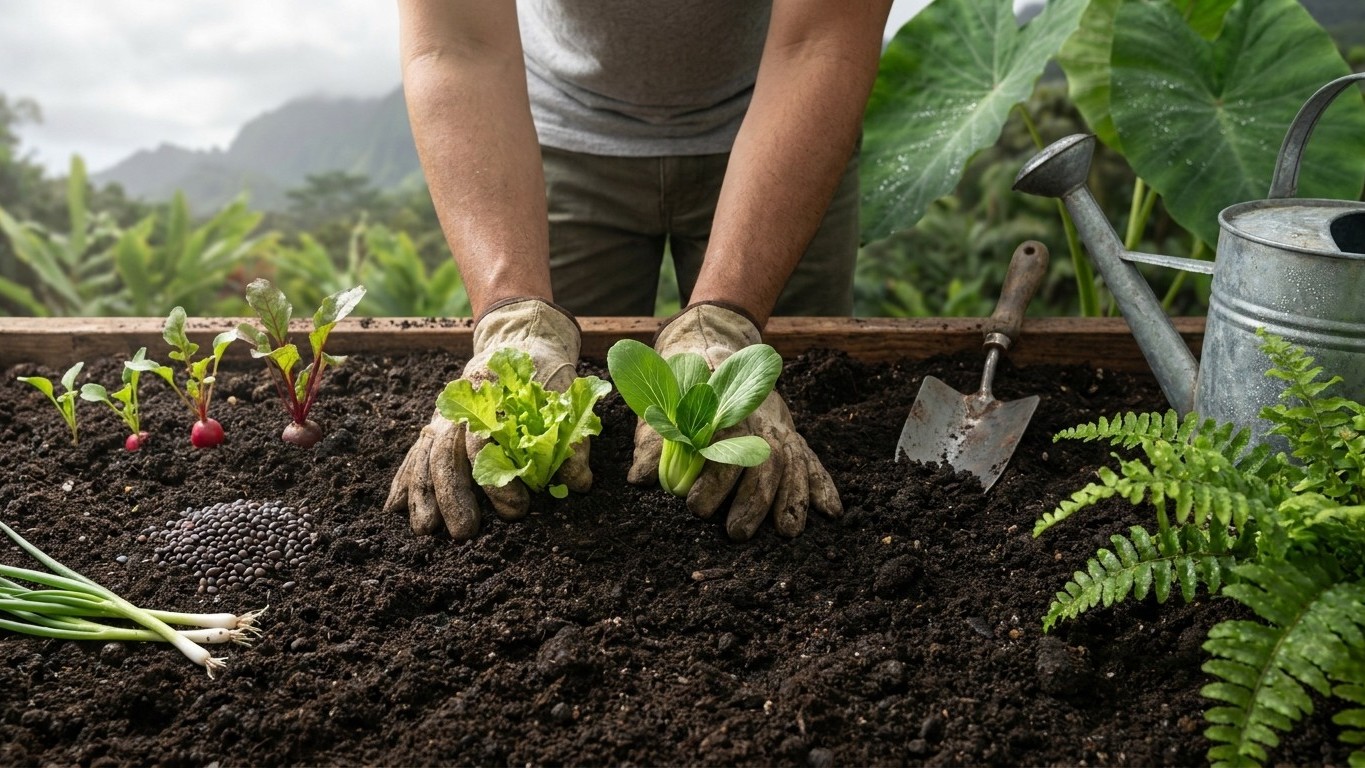

November is one of the better planting months in the Hawaiian Islands, not a lesser one. There’s no frost to dodge here, so the calendar bends around rainfall and elevation instead. Cooler air and the start of the wet season make this the month to get leafy greens, root crops and a second round of beans into the ground, especially at higher elevations where summer heat had shut things down.
What goes in the ground in November

Hawaii’s growing calendar doesn’t answer to frost. NOAA’s 1991-2020 Climate Normals for the islands show zero measurable freeze days at any threshold in populated areas, a flag the agency marks as “not-computable” because the event simply doesn’t happen where people garden. Frost exists only above roughly 11,000 feet, on the summits of Mauna Kea, Mauna Loa and Haleakala, where nobody is planting tomatoes. That means the real decision-makers this month are rainfall timing and elevation, not a freeze date on a chart.
Late October through November is when the windward wet season builds, so soil moisture improves right as summer’s heat starts to ease. That combination favors direct-sown lettuce, mustard greens, bok choy, radishes, beets and carrots almost everywhere in the state. Green onions and beans go in reliably too. At higher elevations, upcountry growing areas on Maui and Hawaii Island get cool enough this month to support garlic and shallot plantings that would rot or bolt at sea level in summer heat.
Leeward areas stay drier and warmer through the same weeks, so irrigation still matters even as windward gardens catch natural rain. The table below sketches how the same month plays out differently depending on where you’re standing.
| Zone | Rainfall pattern in November | What to plant now |
|---|---|---|
| Windward coastal | Wet season building; frequent showers | Leafy greens, root vegetables, beans |
| Leeward coastal | Still relatively dry; irrigation needed | Same greens and roots, with supplemental watering |
| Upcountry / higher elevation | Cooler nights, moderate rain | Garlic, shallots, peas, brassicas |
Sweet potato slips and banana keiki also go in year-round across most of the state, so November isn’t a special window for those, just an open one. The one real gamble is direct-seeding tender crops like cucumbers or squash into a spot about to get hit by a heavy rain event. Wait for a drier stretch or start those under cover instead.
What to start under cover
“Under cover” in Hawaii mostly means protection from pounding rain and intense sun, not from cold. Shade cloth over seed trays and a simple rain cover for flats does the job that a cold frame does on the mainland. Tomatoes, peppers, eggplant and cucumbers all do better started in trays now and transplanted out once they have a few true leaves, because young seedlings dropped straight into wet-season soil are prone to damping off.
Count backward from when you want to transplant, not from a fixed date. Tomatoes and peppers generally need six to eight weeks in a tray before they’re sturdy enough to go into the garden. If your goal is to have plants ready as the wet season eases into December and January, start those seeds now, in trays kept out of standing water and checked daily for mold on the soil surface.
The two ways this goes wrong mirror each other. Start too early and you end up with tall, rootbound seedlings sitting in cramped trays for weeks past when they should have gone out, stressed and slow to establish. Start too late and the transplants miss the window of moderate temperatures and steady rain, landing in the garden just as leeward areas dry out again or windward areas get hit with a heavier storm cycle. Neither is fatal in a climate this forgiving, but both cost you weeks of growth you don’t get back.
What is ready to pick
November harvests lean on crops planted months earlier and on perennials that fruit on their own schedule. Papaya and banana keep producing steadily if the plants were established earlier in the year. Sweet potatoes planted in spring or summer are often ready to dig now, and many citrus varieties in Hawaii ripen through the fall and winter months, so check trees for fruit that’s colored up and slightly soft to the touch rather than going by a date.
Beans and leafy greens sown in late summer should be finishing out about now, and tomatoes started earlier in the year are often still bearing if they were kept ahead of pests and disease through the wet months. Avocado timing varies a lot by variety, so a tree that fruited in summer may simply be resting while a different cultivar nearby is just starting to drop ripe fruit.
Stored crops need a check-in too. Taro and sweet potatoes held in storage are vulnerable to rot once humidity climbs with the wet season, so go through the bin and pull anything soft, discolored or leaking before it spreads to the rest. Onions and garlic held from an earlier harvest should be inspected the same way, since a single soft bulb in a mesh bag can take down its neighbors within days in humid storage conditions.
The jobs that matter this month
The wet season arriving on windward coasts and cooler nights settling in upcountry both create a short window to get ahead of problems before they compound. Pruning fruit trees, especially deciduous varieties grown at higher elevations, works best done in a dry spell rather than into wet bark, since pruning cuts made right before heavy rain are more prone to fungal infection.
Soil testing matters more in Hawaii than in a lot of mainland gardens, because volcanic soils are often highly weathered and acidic, and they tend to lock up phosphorus in a form plants can’t use. If beds have been underperforming, November’s moderate weather is a reasonable stretch to pull a sample and send it to a lab rather than guessing at a fertilizer fix. Amending now gives the soil time to adjust before the next planting push.
Drainage deserves a walk-through before the wet season peaks. Clogged swales, undersized culverts and beds sitting in a low spot all turn into standing water fast once the rain picks up, and standing water around root crops or leafy greens invites rot within days. Mulch on sloped beds slows erosion from the same rain that’s helping everything else grow.
Wind is the other seasonal risk here. Kona storms can move through with enough force to snap top-heavy papaya and young banana plants, so staking those now, before a storm rather than after, is a job that pays for itself. Rounding out the list: order seed for the next planting cycle before popular varieties sell out, turn the compost pile so it’s ready to spread, sharpen and clean tools that have been sitting through the humid months, and check fencing and raised bed frames for rot before they fail under a load of wet soil.
What not to do in November
The classic mistake in Hawaii isn’t planting into cold soil, since that risk barely exists here. It’s the opposite: treating a warm, sunny morning as permission to direct-seed tender crops right before a rain system moves in. Seeds sitting in saturated soil for days rot before they germinate, and seedlings that do emerge often damp off in the humidity that follows.
A related error is overwatering once natural rain returns. Gardeners used to irrigating through the dry season sometimes keep the hose running on the same schedule after the wet season kicks in, and the combination of irrigation plus rain drowns root systems that were doing fine on rainfall alone. Check the soil before watering rather than watering on autopilot.
Nitrogen-heavy fertilizer applied right before a heavy rain stretch is close to money poured down the drain, since it leaches past the root zone before plants can use it. Better to fertilize in smaller doses timed to drier windows, and to lean on compost and mulch for steady, slow-release nutrition through the wettest weeks. And don’t skip the wind check on tall or top-heavy plants just because the forecast looks calm today. Kona storms can build with little warning, and a papaya snapped at the base doesn’t come back.
Checking this against your own county
A statewide picture of November is a starting point, not an instruction sheet for your particular yard. Elevation shifts these windows by weeks: a garden at 3,000 feet upcountry is working with a different temperature and rainfall pattern than one a few miles away at sea level. Windward and leeward exposure on the same island can be just as different, with one side catching regular rain while the other stays dry enough to need irrigation through the same month.
The University of Hawaii’s College of Tropical Agriculture and Human Resources runs the state’s extension service, and it’s the right place to check local variety recommendations and rainfall patterns for your specific island and elevation before finalizing a planting plan.
Common questions
Does Hawaii ever get frost where people garden?
No. NOAA’s 1991-2020 Climate Normals show no measurable freeze days in inhabited parts of the state. Frost occurs only on the high summits of Mauna Kea, Mauna Loa and Haleakala, well above any garden.
What USDA hardiness zone is Hawaii in?
The USDA Plant Hardiness Zone Map, built on average annual extreme minimum temperature, places Hawaii across a wide range from zone 9a to 13a. That spread reflects how much elevation changes conditions across the islands, so a single zone number doesn’t describe the whole state.
Can I plant tomatoes outdoors in November in Hawaii?
You can, but starting them in trays first and transplanting once they’re established reduces losses to damping off during wet-season rain. Direct-seeding tender crops right before a heavy rain event is the riskier route.
Why does elevation matter more than the calendar here?
Without a frost season to mark boundaries, elevation and rainfall do the work that frost dates do on the mainland. Cooler upcountry areas support crops like garlic that would struggle at sea level, while coastal zones run warmer and drier or wetter depending on windward versus leeward exposure.
Gardeners who plant by the Moon can check the November 2026 moon planting calendar, a tradition rather than a proven method.
Related guides
Elsewhere? See what to plant in November in every state and province.