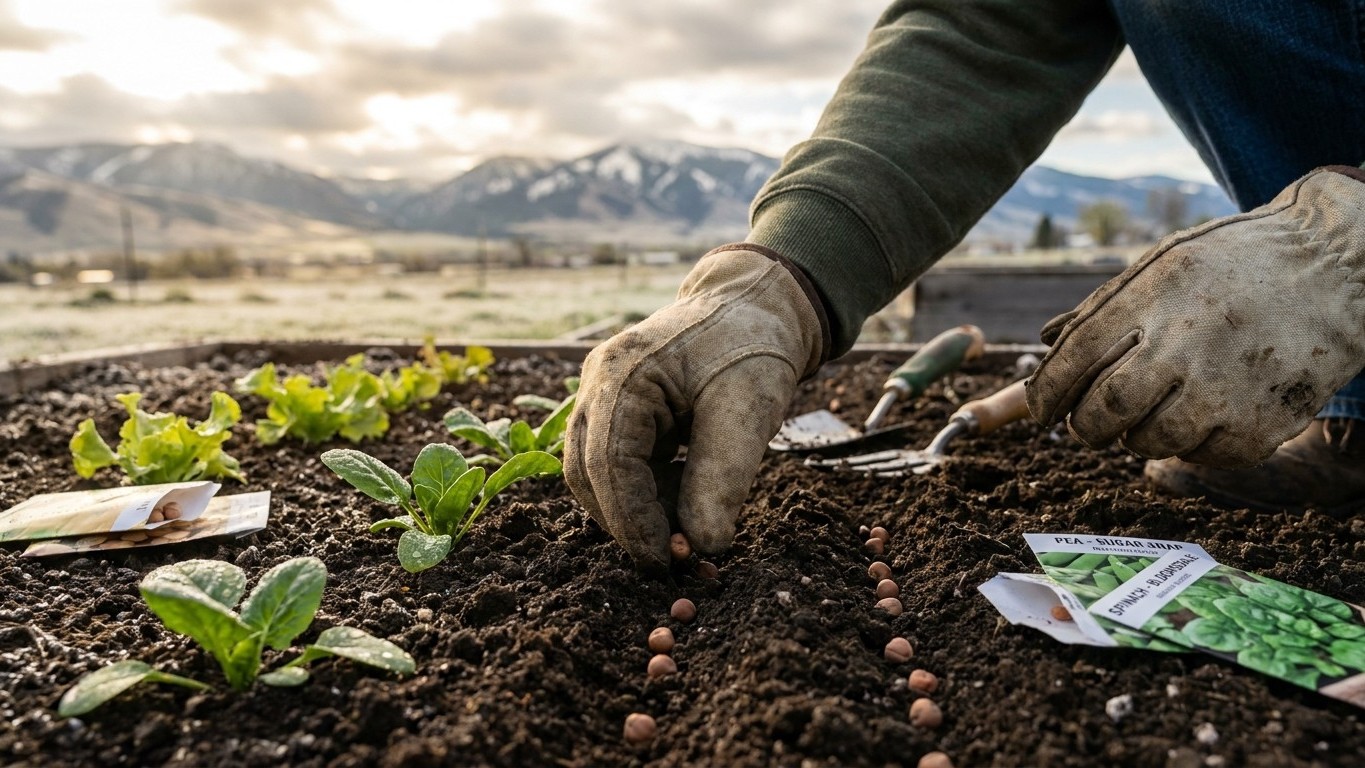

Mid-spring in Idaho still means frost risk in most counties, so April is the month for cold-hardy direct-sown crops (peas, spinach, lettuce, brassicas, alliums) while tender vegetables wait indoors under cover. The safe bet is soil you can dig without it clumping into mud, not a date on the wall.
What goes in the ground in April

Soil temperature decides this month, not the calendar page. Boise’s last spring frost, per NOAA climate normals, falls somewhere between April 23 and May 7. That means early April sits squarely inside the frost window for the state’s lowest, warmest valley, and higher ground across Idaho runs weeks behind that. A warm afternoon doesn’t change what the soil four inches down is doing.
What tolerates this stretch is a short, useful list: peas, spinach, arugula, lettuce, radishes, carrots, beets, kale, and Swiss chard can go into open ground as soon as it’s workable, since these crops germinate in cool soil and shrug off a light frost. Onion sets, shallots, and seed potatoes (toward the back half of the month in lower valleys) belong on that same list. Asparagus crowns and bare-root fruit trees or canes, if they didn’t go in during dormant planting, still have a window here too.
What doesn’t belong outside yet is tomatoes, peppers, squash, beans, cucumbers, melons, and basil. These crops stall or die outright below the mid-40s soil temperature range, and a late frost event inside that April 23 to May 7 band will kill them overnight. That’s not a maybe. Home gardeners in the Treasure Valley sometimes push tomatoes out in early April under the false comfort of a warm week, then lose the whole flat to a frost that shows up right on schedule two weeks later.
| Crop group | April status | Notes |
|---|---|---|
| Peas, spinach, lettuce, brassicas | Safe to direct-sow | Cold-hardy, tolerate light frost |
| Onion sets, shallots, seed potatoes | Safe, timing by soil workability | Potatoes best late April in low valleys |
| Asparagus crowns, bare-root fruit stock | Safe if soil is workable | Dormant planting window |
| Tomatoes, peppers, squash, beans, melons | Not yet | Wait until after the local frost window closes |
What to start under cover
Work backward from your local last frost, not forward from today’s weather. If you garden near Boise, count back roughly 6 to 8 weeks from the April 23 to May 7 window for tomatoes, which lands seed-starting indoors in late February to mid-March, a step that should already be underway by the time April arrives. Peppers and eggplant need 8 to 10 weeks, so their indoor start falls even earlier. If you haven’t started them yet, April is still workable for a slightly later transplant date, just don’t expect an early harvest.
Squash, cucumbers, and melons run the other direction: they resent root disturbance and grow fast, so 3 to 4 weeks before transplant is enough. Starting these too early leaves you with vines outgrowing their pots weeks before it’s safe to plant them outside, a common and avoidable mistake.
The two failure modes bracket the whole month. Start too early and tomato or pepper seedlings turn leggy and rootbound sitting on a windowsill waiting for frost risk to pass, weak stems and pale leaves the visible result. Start too late, especially at higher elevations where the frost-free season is already short, and warm-season crops never mature before fall frost arrives. Anyone gardening above the valley floor, where the season runs noticeably shorter than Boise’s, should lean toward starting seed on the early side of these ranges rather than the late side.
Cold frames and unheated hoop houses do double duty this month: they’re a place to start hardening off indoor seedlings for a few hours a day, and they’re also warm enough to direct-sow a second round of lettuce or spinach two to three weeks ahead of the open garden.
What is ready to pick
Overwintered greens are the honest answer here. Kale, spinach, and leeds that spent the cold months under mulch, snow cover, or a low tunnel often resume growth as soon as daytime temperatures climb, and they’re usually the first fresh harvest of the season, well ahead of anything newly planted. Cold-frame lettuce and arugula sown in late winter can also be ready to cut by mid-to-late April in warmer valleys.
Sprouting broccoli and any perennial herbs (chives, sorrel, French tarragon) that made it through winter start putting out edible new growth too, worth checking every few days once the weather turns.
Indoors, sprouts and microgreens fill the gap on a rotation of five to ten days, no garden required, and they’re a reliable way to get fresh greens on the table while the outdoor harvest is still thin.
Stored crops need a hands-on check this month. Potatoes should feel firm, without soft spots or a sweet, fermented smell that signals rot setting in. Winter squash with a soft neck or a sunken, water-soaked patch on the skin is on its way out and should be used first, not saved for later. Onions that have started sprouting green shoots from the neck are still edible but won’t keep much longer, so work through those before they turn.
The jobs that matter this month
Pruning and planting windows that close
Dormant pruning of fruit trees, grapevines, and cane berries needs to wrap up before buds swell and break. Once new growth starts, pruning cuts stress the plant and invite disease in a way that dormant-season cuts don’t. If you haven’t gotten to the apple or cherry trees yet, April is the deadline, not a comfortable buffer.
Beds, soil, and tools
Beds that sat wet all winter need a walk-through before anything goes in the ground. Working soil while it’s still saturated compacts it for the whole season, so wait for it to crumble in your hand rather than smear. This is also the month to turn finished compost into beds ahead of planting, top-dress with an inch or two of aged compost, and get a soil test done if you haven’t tested in the last two or three years, since amendments need time to work into the root zone before summer crops go in.
Staking, covering, and scouting
Peas and any climbing crop going in now should get their trellis or stakes set at planting time, not after they’ve flopped over. Floating row covers earn their cost this month, protecting new seedlings from both a stray frost and the first wave of flea beetles and cabbage moths, which start scouting gardens as soon as brassicas appear. Check stored bulbs, seed potatoes, and any overwintered root crops one more time for rot before they go in the ground, since a soft potato planted now becomes a source of disease in the row later.
What not to do in April
The most common mistake is planting tomatoes, peppers, or squash outside because the air felt warm for a week. Air temperature swings fast; soil temperature doesn’t, and a warm afternoon in a state where the last frost can run as late as May 7 in the valley (and later above it) means almost nothing about what’s safe to plant. Wait for the soil, not the forecast.
A close second is pulling row covers or cold-frame lids off too early after a mild stretch, then losing tender seedlings to a frost that arrives right on schedule. Keep protection in place through the whole local frost window, not just until the first warm day shows up.
Nitrogen timing trips people up too. Heavy nitrogen feeding before transplanting pushes leafy, soft growth that’s more vulnerable to both cold damage and pest pressure, exactly the wrong trait for a plant that still has to survive a frost risk. Hold the nitrogen-heavy feeding until plants are established and actively growing, and lean on compost and balanced amendments at planting time instead.
Working wet soil is the quieter mistake. It looks harmless, but compacted clay or silt loam stays compacted for the whole growing season, choking root growth in beds that won’t get a second chance to be worked loose until fall.
Checking this against your own county
Everything above is a starting point built around a single low-valley station, not an instruction for every county in the state. Elevation changes frost timing by weeks, not days, and Idaho’s range runs from USDA hardiness zone 3b in the coldest mountain valleys to 7b in the warmest low ground, a spread wide enough that a date that works in Boise can be wrong by a month for a garden a few thousand feet higher. North Idaho’s lake-moderated pockets and the Snake River Plain in the south don’t share a planting calendar either.
Check your own frost history and local planting calendar through the University of Idaho Extension before locking in a planting date.
Common questions
Is it too early to plant tomatoes outside in Idaho in April?
Yes, in almost every part of the state. Boise’s last frost typically falls between April 23 and May 7, and higher elevations run later still. Tomatoes belong indoors under cover until that window closes.
Can I plant potatoes in April in Idaho?
In lower valleys, late April is a reasonable window for seed potatoes once the soil is workable and not waterlogged. At higher elevations, wait longer and check local frost timing first.
What vegetables can handle a light frost in April?
Peas, spinach, kale, lettuce, arugula, radishes, carrots, and beets all tolerate a light frost and are standard direct-sow choices for this month across most of Idaho.
Why does my garden’s timing differ from what a statewide guide says?
Idaho’s hardiness zones span 3b to 7b, and elevation, latitude, and lake effect all shift frost dates by weeks. A statewide answer is a starting point; your county’s own frost record through University of Idaho Extension is the final word.