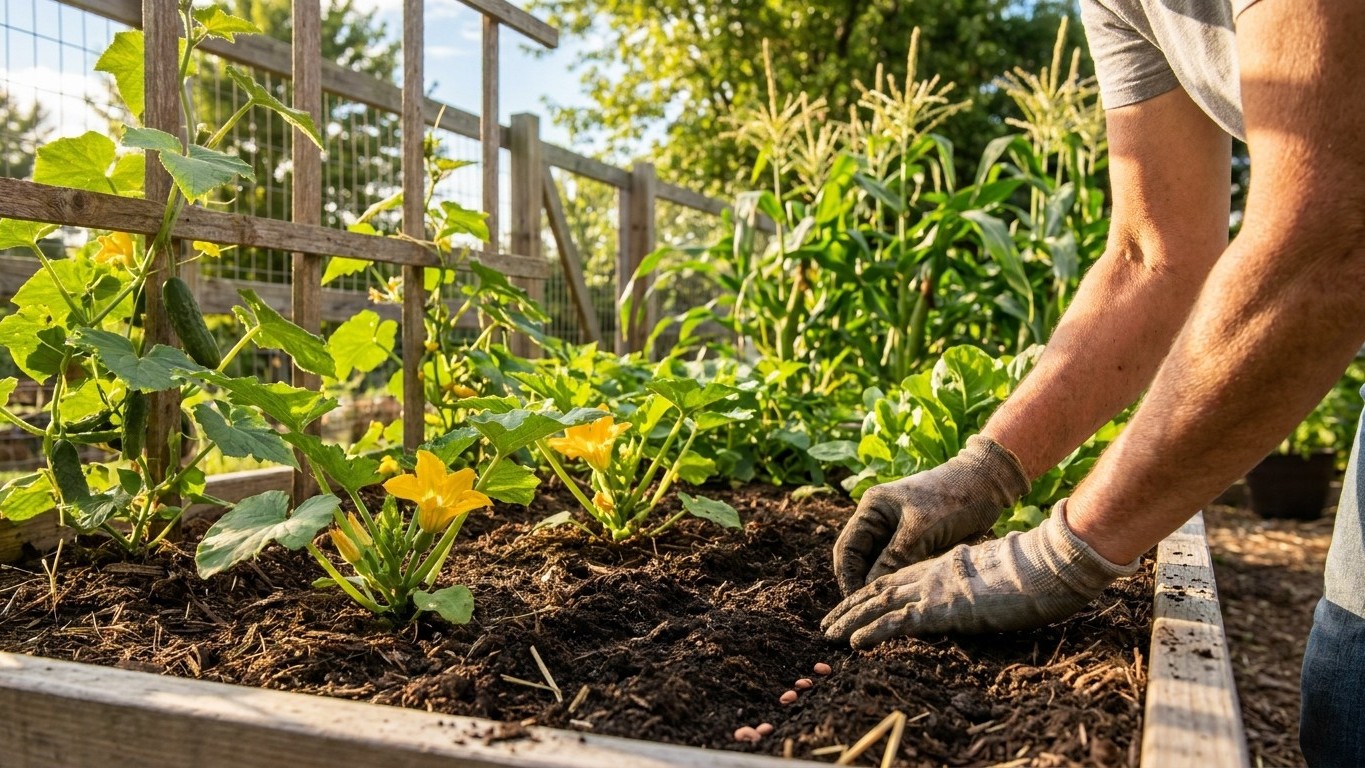

July in Illinois means the frost windows are irrelevant, not the crops. With the last spring frost long past (April 11 to April 22 at the reference station) and the first fall frost still months away (October 24 to November 3), the soil is warm enough for almost anything. The real question in July isn’t “will it survive the cold” but “will it mature before the season runs out.”
What goes in the ground in July

By July, Illinois gardens sit deep in the warm-season window. The reference station’s last spring frost fell between April 11 and April 22, months behind by now, and the first fall frost won’t arrive until sometime between October 24 and November 3. That gives a working season of roughly three to four months from any July planting date, which is enough for fast crops but tight for slow ones.
Direct-sown bush beans are one of the safest bets this month. They germinate fast in warm soil and mature in 50 to 60 days, comfortably inside even the earliest fall frost estimate. Summer squash and cucumbers planted in the first half of July will also produce before frost, and planting a second round now often outproduces the spring planting because it dodges the worst of the squash bug and cucumber beetle pressure that builds early in the season.
Sweet corn is a different story. Early July is the last realistic window for a final succession planting, and only for shorter-season varieties. Anything planted after the first week or so risks running out of warm days before the ears fill out, especially in the northern part of the state where the growing season runs shorter than the statewide hardiness range of 5a to 7b would suggest.
Root crops for fall storage deserve a spot now too. Carrots and beets sown in early to mid-July have time to size up before the ground cools, and both improve in flavor once nights turn cold in October. Bush beans, squash, cucumbers, corn (only in early July), carrots, and beets round out the list of what’s genuinely safe to direct-sow this month.
What’s a gamble: long-season winter squash, pumpkins meant for a fall harvest, and any melon variety rated past 80 days. These can technically go in during the first days of July, but only in a mild fall and only in the warmer southern counties. Everywhere else, they’re racing a clock that usually wins.
What to start under cover
The crops worth starting indoors in July aren’t for this summer’s harvest at all. They’re for fall. Broccoli, cauliflower, and cabbage transplants started now, under cover or in a shaded seed-starting area to avoid heat stress, are timed to go into the garden in August for a harvest that lands well before the first fall frost.
The math works backward from that October 24 to November 3 frost window. Fall broccoli typically needs 60 to 70 days from transplant to harvest, plus another 3 to 4 weeks of indoor growing before it’s ready to go outside. Counting back from the earliest frost estimate, October 24, that puts the ideal start date for seed trays somewhere in the second half of July for most of the state, a little earlier in northern counties where the season closes sooner.
Two mistakes show up every year with fall starts. The first is starting too early: seedlings begun in early July often sit too long in cell trays waiting for the August heat to break, and they get rootbound and stressed before they ever reach the garden. The second is starting too late, usually because a gardener waits for cooler weather that doesn’t show up until September, by which point there isn’t enough season left for the crop to mature before frost.
Lettuce and other tender greens can also be started indoors now, in a cool spot away from direct heat, for transplanting once the worst of the July heat has passed. Starting them in a shaded cold frame or under row cover keeps the soil temperature low enough for germination, since lettuce seed often stalls or goes dormant above 80°F.
What is ready to pick
July is when the garden starts paying its rent. Bush beans planted in late spring are usually in full swing, and picking them every two to three days keeps the plants producing instead of bolting to tough, stringy pods. Zucchini and summer squash move fast this time of year, sometimes doubling in size overnight, so a daily check prevents the baseball-bat squash nobody wants to eat.
Tomatoes begin ripening in earnest, especially early and mid-season varieties, and the fruit is ready when it colors fully and gives slightly to a gentle squeeze rather than feeling hard. Cucumbers should come off the vine while still firm and dark green; overripe ones turn yellow and bitter fast in summer heat.
Garlic planted the previous fall is typically ready to pull in July once the lower third to half of the leaves have browned and died back. Pulling too early means small, underdeveloped bulbs; waiting too long risks the cloves splitting apart in the ground. Onions follow a similar cue, with tops flopping over signaling it’s time to harvest and cure.
Blueberries, if they’re in the garden, hit their peak in most of the state during July, and the berries are ready when they pull off with a light tug rather than resisting. New potatoes can be dug now too, gently, from the edges of the hill, without disturbing the whole plant, for a harvest of small, thin-skinned potatoes that don’t store but taste better than anything from the fall dig.
The jobs that matter this month
Watering rhythm matters more in July than almost any other task. Inconsistent watering, a dry week followed by a heavy soak, is the direct cause of blossom end rot in tomatoes and peppers and of split skins on cucumbers and carrots. Deep, even watering two to three times a week beats a daily light sprinkle every time, because it encourages roots to grow down instead of staying shallow and vulnerable to heat.
Mulching pays off fastest this month. A 2 to 3 inch layer of straw, shredded leaves, or grass clippings around vegetables cuts soil moisture loss dramatically and keeps root zones several degrees cooler during heat waves. Beds left bare in July lose water fast and stress plants right when they’re setting fruit.
Staking and caging should happen before plants sprawl, not after. Indeterminate tomatoes and vining cucumbers that get away from a gardener in July are much harder to corral once they’re tangled with their neighbors, and sprawling fruit sitting on wet soil rots faster and attracts slugs.
Pest scouting deserves a few minutes every couple of days. Squash vine borer moths are active in July across much of Illinois, and the first sign is often a wilting squash vine with a small hole near the base, by which point the larva is already inside. Checking stems early and covering young plants with row cover during the moth’s active window prevents the worst damage. Japanese beetles and tomato hornworms also peak this month, and hand-picking them off in the early morning, when they’re sluggish, is more effective than waiting until an infestation is obvious.
Succession sowing beans, carrots, and beets every two to three weeks through mid-July keeps the harvest coming instead of arriving all at once and then stopping.
What not to do in July
The most common mistake this month is letting a hot stretch fool the calendar into thinking there’s more season left than there is. Long-season winter squash or pumpkins planted in the last half of July, chasing a warm spell, often don’t finish before the first fall frost arrives, particularly in the northern part of the state where that frost tends to land closer to the earlier end of the October 24 to November 3 range.
Feeding nitrogen at the wrong point is another classic error. High-nitrogen fertilizer applied to tomatoes or peppers once they’ve started flowering pushes leafy growth at the expense of fruit set, leaving a lush, green plant with almost nothing to harvest. Nitrogen belongs early in the season, before flowering; once fruit is forming, a lower-nitrogen, higher-potassium feed supports the plant better.
Overhead watering in the middle of a hot day wastes water to evaporation and, worse, can scorch leaves and spread fungal spores like powdery mildew and early blight from plant to plant. Watering at the base, early in the morning, gives plants time to dry off before evening humidity sets in.
Letting weeds flower and go to seed in July is a mistake that costs years, not just weeks, since a single mature weed can drop thousands of seeds into the soil that resurface for seasons afterward. And harvesting zucchini or cucumbers too late, letting them grow oversized, doesn’t just waste the fruit, it also signals the plant to slow down further production, since the plant’s energy shifts toward maturing seed inside that one overgrown fruit instead of setting new ones.
Checking this against your own county
A statewide frost window is a starting point, not an instruction. Illinois spans USDA hardiness zones 5a to 7b, and that range alone tells you how differently the north and south of the state behave in the same month. Elevation, proximity to Lake Michigan, and local topography all shift the practical planting window by a week or two in either direction from the reference station’s numbers.
A garden in the far north of the state should plan around an earlier fall frost than the statewide range suggests, while a garden in the southern tip often has real weeks of extra season. The University of Illinois Extension publishes county-level guidance that accounts for these differences, and it’s worth checking against local data before locking in a planting date based on statewide averages alone.
Common questions
Is it too late to plant tomatoes in Illinois in July?
Transplanting new tomato starts in July is risky for main-season harvest since fruit-bearing varieties typically need 60 to 80 days, cutting it close against the first fall frost window of October 24 to November 3. It can work in the southern part of the state with a fast-maturing variety, but it’s a poor bet farther north.
Can I still plant sweet corn in July in Illinois?
Only in the first week or so of the month, and only with a short-season variety. Corn planted later than that risks running out of warm days before the ears mature.
What vegetables can I start now for a fall harvest?
Broccoli, cauliflower, and cabbage started indoors in mid to late July, then transplanted in August, are timed to mature before the first fall frost. Direct-sown carrots and beets in early to mid-July also have enough time to size up for fall.
Why is my squash wilting suddenly in July?
A sudden wilt with a small hole near the base of the stem usually points to squash vine borer larvae feeding inside the stem. Checking stems regularly and covering young plants with row cover during the moth’s active period helps prevent it before damage sets in.