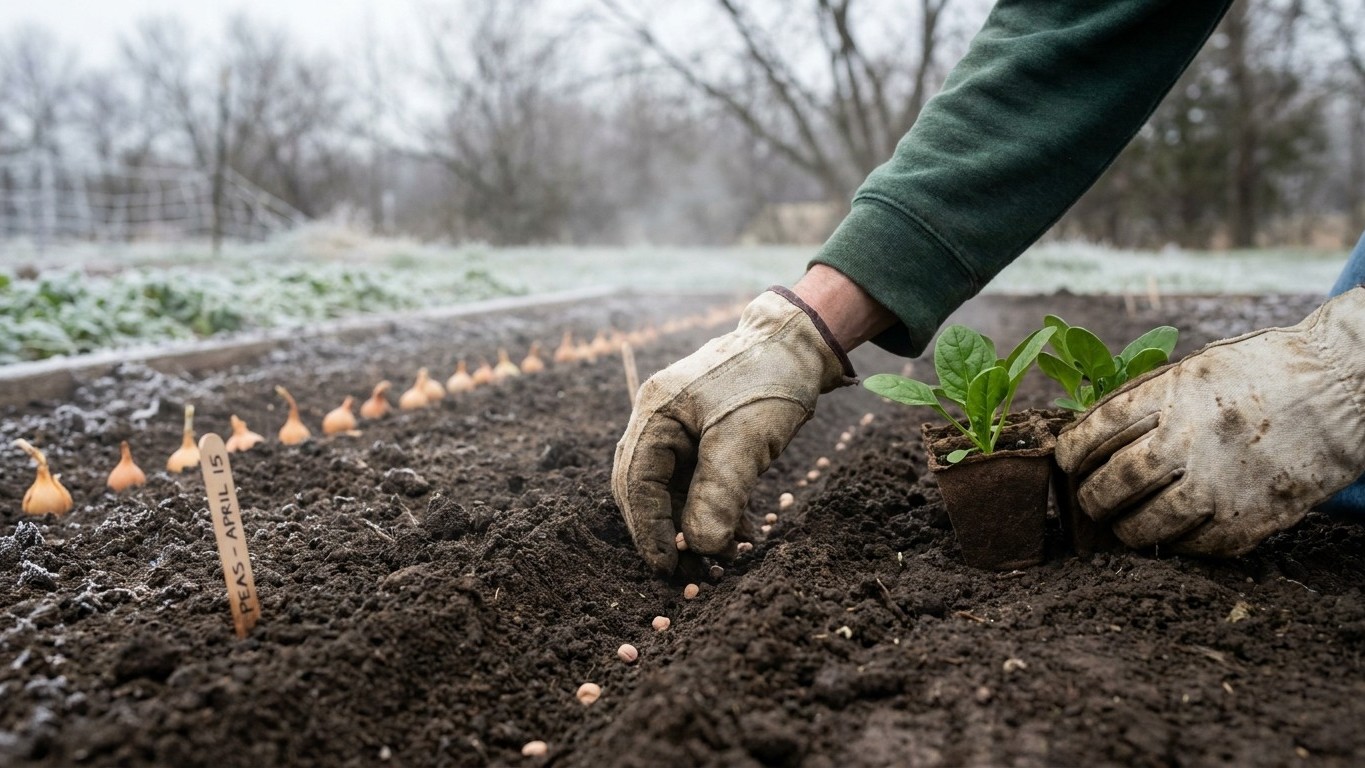

Direct-sow peas, spinach, and onion sets only once the soil can be worked, not by the calendar. Garlic and shallots still go in where ground isn’t frozen. Everything else waits: Iowa’s last spring frost falls between April 12 and April 24 at the reference weather station, and county-level records push that closer to late April. March is a soil-prep and seed-starting month first, a planting month second.
What goes in the ground in March

The frost math matters more than the date on the wall. NOAA’s 1991-2020 climate data puts the last spring freeze at one Iowa airport station between April 12 and April 24, and Iowa State Extension’s own county-level figures, drawn from records going back to 1950, run about four days later than that. Add it up and most counties are still three to seven weeks from a safe last frost when March begins. That’s the number that decides everything this month, not whether the afternoon feels warm.
Soil temperature is the other gatekeeper, and it lags behind air temperature by days or weeks, especially on ground that was frozen a month earlier. A 55°F afternoon does nothing for soil sitting at 38°F six inches down. So the safe list stays short and cold-hardy: peas (snap, snow, or shelling) germinate in soil in the low 40s and shrug off a light frost once up. Spinach does the same. Onion sets and hardened transplants can go in toward the back half of the month in southern counties where ground thaws first. Garlic cloves and shallot bulbs, ideally planted in fall, can still go in now if the ground is workable and wasn’t done earlier.
Bare-root and dormant plantings belong here too: fruit trees, cane berries, and grapevines can go into the ground while they’re still leafless, before sap starts moving. Asparagus crowns and rhubarb divisions are dormant plantings as well, and March is typically the window before growth resumes. Cold frames and low tunnels widen the list slightly, letting lettuce and kale starts go out a few weeks ahead of open-ground timing. Anything tender, corn, beans, squash, tomatoes, stays indoors. Planting those now isn’t early, it’s a loss.
What to start under cover
Count backward from the frost window instead of a fixed date, since that window itself spans nearly two weeks and shifts again at the county level. Tomatoes and peppers typically need six to eight weeks indoors before they’re ready to transplant, which means starting them roughly in mid-to-late February through early March for most of the state, aiming for a transplant date somewhere after the local last-frost range clears. Broccoli, cabbage, and other brassica transplants need four to six weeks before they go out, and they tolerate a light frost once hardened off, so their start date sits a bit later than tomatoes. Onions grown from seed rather than sets need the longest lead time, eight to ten weeks, which for many Iowa gardeners means they should already be under lights by the start of March.
Two mistakes account for most failed starts. Starting too early leaves plants rootbound and leggy in small cells weeks before it’s safe to plant them out, stretching toward light and toppling over. Starting too late means the plant never reaches transplant size before the ground warms enough to receive it, which shortens an already short growing season for heat-loving crops. Neither error shows up until it’s too late to fix cheaply, so working backward from your own county’s frost range, not the airport-station optimistic end, is worth the five minutes it takes.
What is ready to pick
Not much comes out of an open Iowa garden in March, and there’s no point pretending otherwise. What keeps a household in fresh food this month comes from what survived winter under cover or in storage. Kale and leeks that overwintered under mulch or snow cover are often still usable once uncovered, sometimes sweeter after cold exposure. Cold frames holding spinach, lettuce, or mache from a fall planting can still be producing leaves for cutting.
Indoors, sprouts and microgreens fill the gap in days rather than weeks, and forced rhubarb or chicory, brought in from the cold and kept dark, can be ready for harvest even while the garden outside sits bare. Stored crops need a hands-on check now rather than later: squash should be firm with no soft spots or mold at the stem end, potatoes should show no green shoulders or wet rot, and onions that have started sprouting or gone soft at the neck should be used first, not left for later. A single soft squash left in storage can spread rot to its neighbors within days, so a monthly sort through the root cellar or pantry shelf pays for itself.
The jobs that matter this month
March carries more weight than the planting list suggests, because most of the season’s outcome gets decided here rather than in the ground.
Pruning and structure
Dormant pruning of fruit trees, cane berries, and grapevines should happen before buds swell and sap starts moving; prune after that and the plant bleeds energy it needs for the season. This is also the last practical window to repair trellises, garden fencing, and raised bed frames before new growth makes the work harder and messier.
Soil and planning
Testing soil now, while beds are still open and workable, gives time to amend before anything goes in. Turning finished compost into beds, and keeping the pile itself turned so it’s ready by planting time, both belong on the March list. Seed ordering is closer to a deadline than a suggestion by this point in the season, since popular varieties of tomatoes, peppers, and specialty greens sell out well before transplant dates arrive. Sketching out crop rotation, moving nightshades and brassicas away from where they grew last season, is easiest to do with a bed map in hand before anything is planted and the plan gets abandoned out of convenience.
Tool maintenance rounds out the list: a sharpened hoe or pruner cuts cleanly and heals faster on the plant than a dull one that tears. None of this is filler work. Skip it in March and the cost shows up in June as blunt tools, rootbound transplants, and a rotation plan that never happened.
What not to do in March
The most common mistake is planting by air temperature instead of soil temperature. A stretch of 60°F afternoons feels like spring, but seed for corn, beans, squash, or direct-sown tomatoes dropped into soil still in the 40s will rot before it germinates rather than sprout early. Wait for the soil, not the forecast.
Uncovering mulch, cold frames, or row cover too early after a mild spell is the second trap. Iowa’s March weather swings hard, and a week of warmth is no guarantee against a hard freeze the following week. New growth exposed too soon by an impatient gardener gets hit by exactly the kind of cold snap the cover was protecting against.
Nitrogen applied too early is the third mistake, and it cuts two ways. On soil that’s still partly frozen or saturated from snowmelt, applied nitrogen runs off rather than getting absorbed, wasting the input and adding to nutrient runoff. On soil that has warmed just enough, an early nitrogen push encourages soft, fast growth in plants and lawns that then gets damaged by the next frost. Hold off until soil is both workable and consistently above the low 40s.
Working wet soil, whether tilling a bed or walking a field, compacts it and undoes structure that took a season to build. If soil sticks to your boot or a shovel in a solid clump, it’s not ready.
Checking this against your own county
A statewide frost window is a starting point, not an instruction for a specific yard. Elevation, local terrain, and simply where a county sits between the northern and southern edges of the state can move the safe planting window by weeks, not days. The airport-station figures used here run several days earlier than the county-level averages Iowa State Extension has tracked since 1950, and that gap tends to widen further north. Before committing seed or transplants to the ground, check the Iowa State University Extension and Outreach site for county-specific frost data and planting calendars, since a garden two counties north can still be weeks behind one in the southern tier.
Common questions
Is it too early to plant a garden in Iowa in March?
For most crops, yes. The state’s last spring frost falls between April 12 and April 24 at the reference station, and county records run about four days later, so most of March sits well ahead of that window. Cold-hardy exceptions like peas, spinach, onion sets, and garlic can go in once soil is workable.
Can you plant potatoes in Iowa in March?
Seed potatoes tolerate cool soil better than many crops, and some gardeners get an early planting in during the back half of March in southern counties once the ground can be worked. A hard freeze after sprouts emerge can still damage exposed growth, so covering with straw or row cover is worth doing if a cold snap is forecast.
What vegetables can I start indoors in March in Iowa?
Tomatoes and peppers are commonly started six to eight weeks before the local transplant date, which for many counties means starting in late February or early March. Onions from seed need the longest lead time, eight to ten weeks, so those should already be under lights.
When is the last frost date in Iowa?
NOAA’s 1991-2020 climate data for the reference airport station puts it between April 12 and April 24. Iowa State Extension’s county-level analysis, based on records from 1950 to 2021, runs about four days later in spring, so treat the airport figure as the optimistic end and check county data for a more reliable window.