
For most of Kansas, January means the open garden stays closed. The soil is frozen or too wet to work across zones 5b to 7a, and the last spring frost doesn’t clear until April 4 to April 18 at the earliest. What you can actually do this month is plant garlic where the ground allows, start onions and leeks under lights, and get ahead on pruning, ordering seed, and testing soil.
What goes in the ground in January

Soil temperature decides what goes in the ground, not the date on the calendar. Kansas sits in USDA hardiness zones 5b to 7a, and January soil across most of that range is either frozen solid or too saturated to dig without compacting it. The state’s last spring frost window runs April 4 to April 18 at the reference weather station used for these figures, and that’s still ten to fourteen weeks out. So the honest answer for this month is that almost nothing goes into open, unprotected ground.
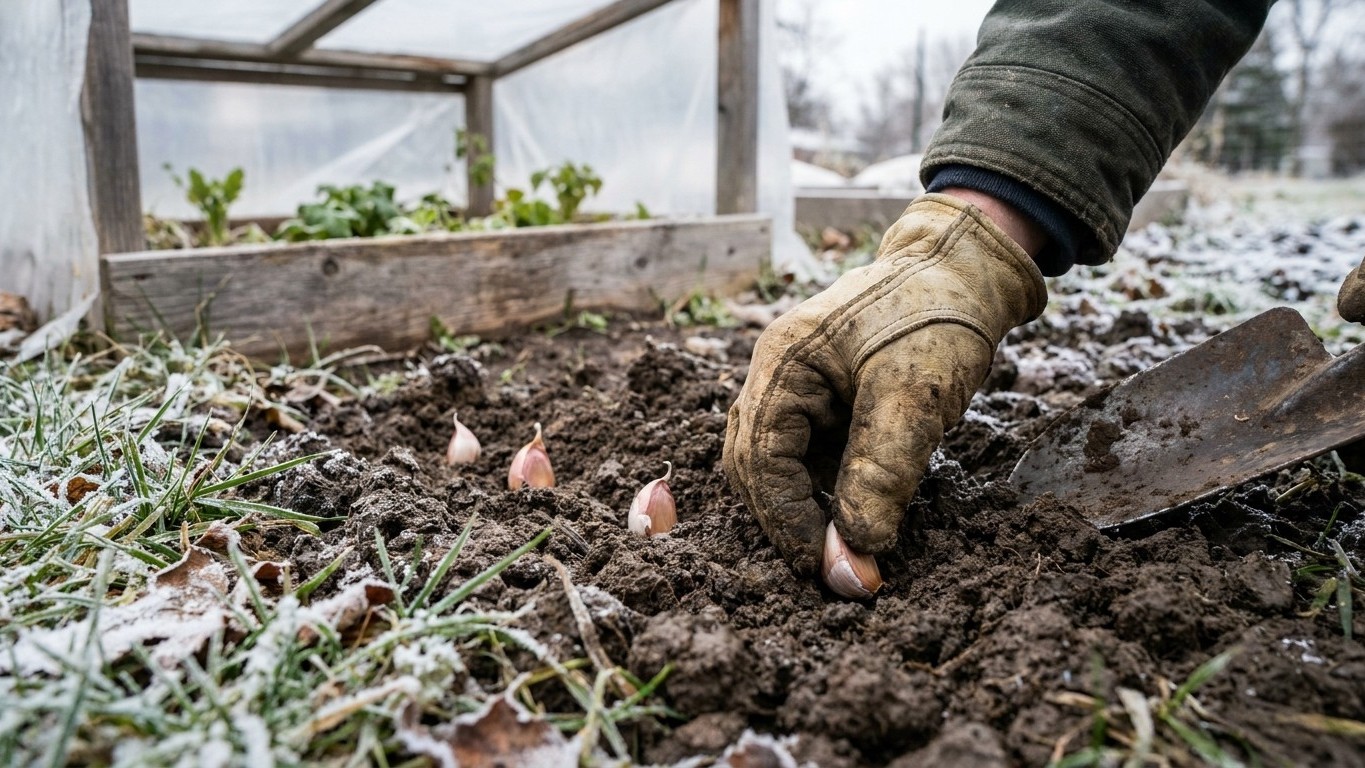
There are exceptions, and they matter. If garlic and shallot cloves didn’t go in during fall, a dormant planting is still possible during a thaw, especially in the southern tier of the state where zone 7a soil warms faster and drains sooner. Push cloves in whenever the ground is workable rather than waiting for a specific week; garlic tolerates cold and needs the chill to form proper bulbs later.
Cold frames and low tunnels change the math entirely. Hardy greens sown the previous fall, such as spinach, mâche, and claytonia, keep growing slowly under cover even when the air outside sits well below freezing. If you already have a frame running, this is the month it earns its keep.
Bare-root and dormant plantings are the other legitimate January job outdoors. Fruit trees, grapevines, and cane fruit sold bare-root can go into a prepared hole whenever the soil isn’t frozen or waterlogged, because the plant is fully dormant and isn’t trying to grow roots into cold, wet ground the way a transplant would. Rhubarb crowns and chicory roots lifted from the garden or bought dormant can also be forced indoors in a dark, cool spot for an early, tender harvest weeks before anything stirs outside.
What to start under cover
Indoor sowing this month runs backwards from the frost window, not forward from a fixed date. Count weeks back from April 4, the early edge of the last-frost range, if you garden in a colder pocket, or from April 18 if your ground reliably warms later. That arithmetic, not the sight of a calendar page, tells you when to start trays.
| Crop | Weeks before last frost to sow | Notes |
|---|---|---|
| Onions (from seed) | 10 to 12 weeks | Slow to size up; earliest tray to start |
| Leeks | 10 to 12 weeks | Same timeline as onions, tolerates a longer wait to transplant |
| Celery and celeriac | 10 to 12 weeks | Needs steady warmth to germinate, slow grower |
| Peppers | 8 to 10 weeks | Only for gardeners near the early end of the frost window |
Counted against an April 4 to April 18 frost window, onions, leeks, and celery for the earliest counties land squarely in January. Gardeners whose ground doesn’t clear until closer to mid-April have a bit more room and can wait until early February without losing much.
Two mistakes show up every season. Starting too early leaves you with rootbound, leggy plants sulking on a windowsill for weeks past their prime, since there’s nowhere outside for them to go yet. Starting too late means the transplant never catches up to the short growing season Kansas summers demand, particularly for anything that needs to bulb or head up before real heat arrives. Neither error is fatal, but both cost yield.
What is ready to pick
Outdoors, the pickings are genuinely thin this month across Kansas, and there’s no point dressing that up. What keeps a household eating from the garden in January comes mostly from what was tucked away or covered before the ground locked up.
Overwintered kale, leeks, and Brussels sprouts left standing under a layer of snow or straw mulch often taste better after a hard freeze; the cold converts starches to sugar. Pull back the mulch, check the stalk is still firm, and harvest what you need rather than clearing the whole row at once. Cold-frame greens, spinach, mâche, and claytonia among them, can be cut a little at a time all month if the frame holds heat on sunny days.
Indoors, sprouts and microgreens fill the gap fast. A jar of sprouting seeds or a tray of microgreens on a windowsill goes from seed to harvest in a week to ten days, which makes them the closest thing to a January garden most Kansas households will have.
Stored crops need a hands-on check this month too. Go through squash, potatoes, and onions in storage and pull anything showing a soft spot, a sprouting eye, or a sweet, fermenting smell before it spreads to the rest of the bin. One rotting potato in a sack of fifty will take down its neighbors within a couple of weeks if it’s left in place.
The jobs that matter this month
Dormant pruning tops the list, and January is squarely inside the window for it. Apple and pear trees, grapevines, and brambles can be cut back any time they’re fully dormant and the wood isn’t frozen brittle, which makes a mild January afternoon as good a time as any. Hold off on peaches and other stone fruit until later in the dormant season, since their buds are more sensitive to cold injury after a fresh cut.
Seed catalogs move fast this month, and the popular varieties, especially disease-resistant tomatoes and short-season sweet corn bred for Kansas summers, sell out earlier every season. Order now rather than in March.
Planning next season’s rotation costs nothing but time, and it’s easier to do with last year’s garden map still fresh than to reconstruct it later. Pair that with a soil test; Kansas State University’s testing lab can tell you whether beds need lime, phosphorus, or a nitrogen boost before you guess with a bag of fertilizer in spring.
Smaller tasks that still matter
- Turn the compost pile on any thaw day to keep it breaking down instead of freezing solid
- Clean and sharpen pruners, loppers, and shovels while there’s time before the rush
- Repair raised bed frames, trellises, and fencing that winter weather has loosened
- Recheck stored crops weekly rather than once and forgetting them
What not to do in January
A stretch of 60-degree afternoons in the middle of a Kansas January fools a lot of gardeners into acting like spring arrived. It hasn’t. Air temperature that feels warm to skin doesn’t mean soil four inches down has warmed at all, and warm-season seeds sown into cold, wet soil will simply rot before they germinate rather than get a head start.
Pulling mulch or cold-frame covers off after one mild week is another classic misstep. Kansas winters swing hard, and a week of thaw is routinely followed by a hard freeze that catches exposed crowns and emerging growth with no protection left. Leave the covers in place until the frost pattern is genuinely breaking, not just pausing.
Feeding nitrogen to dormant plants is wasted effort at best and harmful at worst. Fruit trees and perennials aren’t taking up nutrients while dormant, so a nitrogen application now either leaches away before the plant can use it or pushes soft, untimely growth during a brief warm spell, growth that then gets killed by the next freeze. Save the feeding for when active growth actually resumes.
Starting warm-season transplants, tomatoes and cucumbers especially, this early is the last common error. Even counted correctly against the April frost window, tomatoes only need six to eight weeks indoors before transplant. Started in January, they’ll be leggy, stressed, and past their prime long before the ground and air are warm enough to take them.
Checking this against your own county
A statewide month is a starting point, not an instruction. Kansas stretches from the Missouri border to the Colorado line, and elevation alone shifts frost dates by weeks between the eastern lowlands and the higher ground farther west. The north-south spread across zones 5b to 7a moves things further still; a county near the Oklahoma border can be working soil while one near Nebraska is still frozen solid.
The Kansas State University Research and Extension service publishes county-level guidance and a planting calendar that accounts for these local differences far better than any single statewide date can.
Common questions
Can I plant anything outdoors in Kansas in January?
Direct sowing is off the table for nearly all counties, but garlic and shallots can still go in during a thaw where the ground is workable, and cold frames keep hardy greens growing through the month.
When should I start onion and leek seeds for a Kansas garden?
Count back 10 to 12 weeks from your local last-frost date. Against the April 4 to April 18 window at the reference station, that lands most Kansas gardeners in January for the earliest start.
Is it too early to prune fruit trees in January?
No, dormant pruning of apples, pears, grapes, and canes fits well into January as long as the wood isn’t frozen brittle. Peaches and other stone fruit are better left until later in dormancy.
Why shouldn’t I uncover my cold frame after a warm week?
Kansas winters swing between mild spells and hard freezes. Pulling covers too soon after one warm stretch leaves tender growth exposed to the next freeze, which usually follows within days.