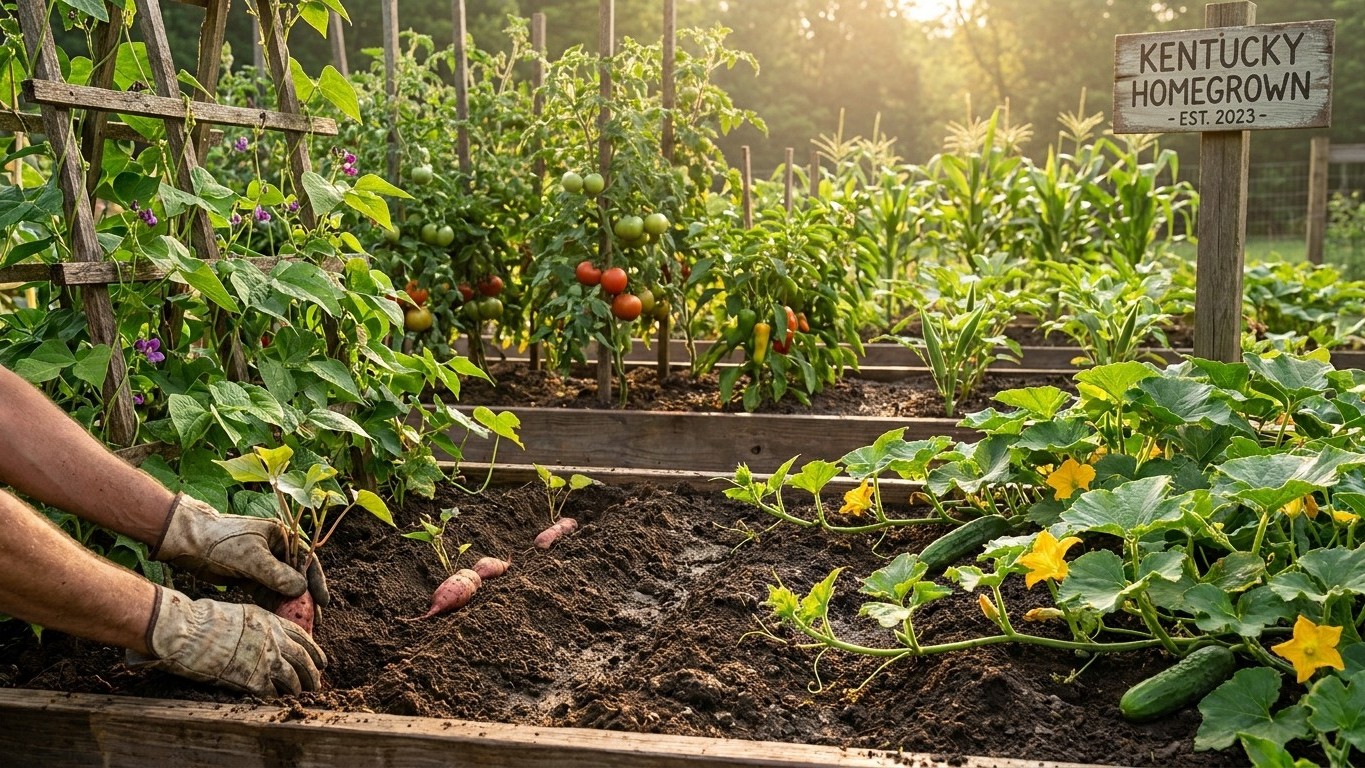

By June, Kentucky gardens are well past the risk of frost, and the state’s soil has warmed enough for nearly every warm-season crop to go straight into the ground. Beans, squash, cucumbers, melons, sweet corn, okra, and sweet potato slips all belong outdoors now. Tomatoes and peppers should already be settling in as transplants. The harder question this month is what to stop growing, not what to start.
What goes in the ground in June

Soil temperature, not the calendar, is what actually decides a planting date, and by June that argument is mostly settled across Kentucky. The state’s last spring frost falls between March 24 and April 4 according to NOAA’s 1991-2020 Climate Normals, so by the time June arrives, the ground has had two full months to warm past the point where cold-sensitive roots rot or sulk. This is the window warm-season crops were waiting for.
Direct-sow bush and pole beans, summer and winter squash, cucumbers, watermelon and cantaloupe, okra, and southern peas straight into garden soil. Sweet corn can go in through the first half of the month, and again two to three weeks later if space allows, so the harvest doesn’t all ripen the same week. Sweet potato slips want warm, loose soil and go in now if they haven’t already. If tomato and pepper transplants are still waiting in trays, early June is the last comfortable window before summer heat starts stressing new roots before they can establish.
What to leave out
Spring lettuce, spinach, and peas are on their way out, not in. Sown now without shade, they bolt or turn bitter within days as soil temperatures climb. If a gardener wants greens through summer, that means shade cloth, a spot with afternoon shade, or heat-tolerant varieties bred for the purpose, not the same seed packet used in April.
Kentucky’s USDA hardiness range spans 6a to 7a, and the University of Kentucky’s extension service, headquartered in Lexington, is the reference point most planting guides use. Gardeners in the cooler eastern uplands or the warmer far-western Purchase region should expect that reference to run a little early or late for their own ground.
What to start under cover
Fall frost in Kentucky arrives between November 2 and November 12, and that date is the one worth counting backward from this month, not forward from today’s weather. Fall broccoli, cabbage, and cauliflower need roughly ten to twelve weeks from seed to a mature head, which puts a June start squarely in range for transplanting out in late summer and harvesting before the ground turns cold.
Start these in trays under light shade or indoors under grow lights, since direct summer sun and heat make it hard for brassica seedlings to germinate evenly outdoors. Leeks and celery for fall harvest can also go in now, both being slow enough that a July start risks running out of season before frost.
The two ways this goes wrong are familiar to anyone who has started seeds before. Start too early, and the seedlings sit too long in a small tray, becoming rootbound and leggy before the soil or weather is ready for them. Start too late, working backward from November 2 rather than the later end of that range, and a slow-maturing crop like cabbage may not finish before a hard freeze. Counting backward from the fall frost window, rather than picking an arbitrary date, is the only way to get this right for a specific crop.
What is ready to pick
June is one of the fullest harvest months in a Kentucky garden, bridging the last of spring’s cool-season crops and the first of summer’s. Garlic planted the previous fall is finishing up, with scapes curling first and bulbs ready to pull once the lower leaves start browning. Onions are bulbing out and can be harvested as soon as their tops begin to fall over.
Peas, both shelling and snap types, are at their peak early in the month, with plump, well-filled pods the sign to pick before the heat toughens them. Strawberries planted in prior seasons are producing their heaviest flush, and the fruit should come off the plant fully red, since strawberries don’t ripen further once picked. Early lettuce, spinach, radishes, and the first cuttings of kale round out the harvest, though lettuce and spinach won’t last much longer before bolting sends energy into a flower stalk instead of leaves.
The first squash, cucumbers, and green beans from any crops planted in May are also starting to come in by late June, which is the cue to start checking vines daily. Squash and cucumbers left on the plant even one extra day past ideal size turn tough and seedy fast in early-summer warmth.
The jobs that matter this month
Mulching is the single job with the biggest payoff in June, because rising temperatures pull moisture out of bare soil fast, and a two- to three-inch layer of straw or shredded leaves around tomatoes, squash, and beans slows that loss while also keeping weed pressure down. Skipping it now means hauling a hose out daily by midsummer.
Staking and caging tomatoes, and running trellis for pole beans and cucumbers, needs to happen before the plants sprawl, not after. Once a tomato vine has flopped over and started rooting along the ground, working a cage around it damages roots and stems that a few minutes of staking in early June would have avoided entirely.
Watering rhythm matters more than watering amount. A single deep soak that reaches six inches down, done once or twice a week, builds deeper roots than a daily shallow sprinkle, which trains roots to stay near the surface where they dry out fast in July heat. Succession sowing of beans, squash, and corn every two to three weeks keeps harvests coming instead of arriving all at once and then stopping.
Pest scouting earns its place on this list because June is when Japanese beetles, squash bugs, and the first tomato hornworms show up. Checking the undersides of squash and tomato leaves weekly catches egg clusters before they hatch into a problem too large to hand-pick.
What not to do in June
The most common June mistake is letting spring greens linger past their season out of reluctance to pull a still-green plant. Lettuce and spinach that have started to send up a central flower stalk are done being sweet, and leaving them in the ground only takes up space and light that a heat-tolerant crop could use instead.
Overwatering on a shallow, frequent schedule is the second trap. It feels responsible in the heat, but it trains roots to stay near the surface, which then leaves plants worse off, not better, during the first real dry spell. A deep, infrequent soak does more for drought resilience than daily sprinkling ever will.
Nitrogen timing catches a lot of gardeners on tomatoes and peppers specifically. A heavy nitrogen feeding once plants are flowering pushes lush green foliage at the expense of fruit set. Side-dressing with a balanced or lower-nitrogen fertilizer once flowering starts, rather than repeating the nitrogen-heavy feed used at transplant, keeps the plant’s energy going toward fruit instead of leaves.
Removing row cover or shade cloth too early after a stretch of mild weather is the last one worth naming. A few cool days don’t mean the heat is over, and pulling protection off tender greens or new transplants right before a sudden hot spell can undo weeks of careful growth in a single afternoon.
Checking this against your own county
Everything above is a state-wide starting point, not a set of instructions for a specific backyard. Elevation changes across Kentucky’s eastern uplands, the difference between the cooler north and the warmer far-western Purchase region, and even local microclimates can shift these windows by two or three weeks in either direction. The frost data cited here comes from an urban station, and the National Weather Service in Louisville has noted that this kind of station typically runs later in spring and earlier in fall than the surrounding rural county, meaning rural gardens should plan on a tighter frost-free window than the dates above suggest.
For a planting calendar tuned to a specific county, the University of Kentucky Cooperative Extension Service is the reliable next stop, with local offices that track soil and frost conditions county by county.
Common questions
Is it too late to plant tomatoes in June in Kentucky?
No. Early June is still a workable window for tomato transplants, though later plantings will produce a shorter harvest window before fall frost arrives between November 2 and November 12.
Can I still direct-sow sweet corn in June?
Yes, and a second sowing two to three weeks after the first spreads the harvest out instead of ripening all at once.
Why is my lettuce turning bitter in June?
Rising soil and air temperatures push lettuce and spinach to bolt, sending energy into a flower stalk that makes the leaves bitter. Shade cloth or a heat-tolerant variety slows this down.
What USDA hardiness zone is Kentucky in?
Kentucky spans USDA Plant Hardiness Zones 6a to 7a, based on the 2023 USDA Plant Hardiness Zone Map, with the cooler end typical of higher eastern elevations and the warmer end typical of the western part of the state.