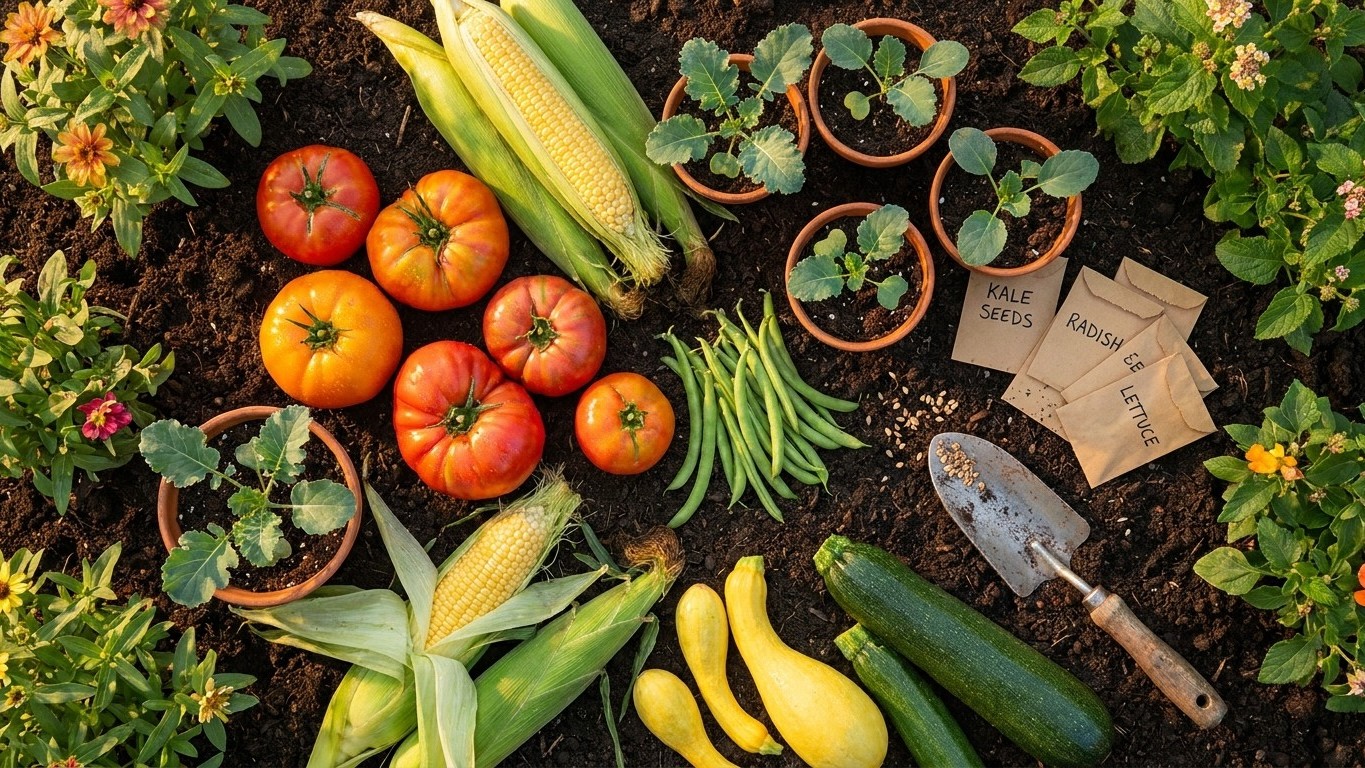

Kentucky gardens in July sit deep in summer, months past the spring frost window and still months from the first fall freeze (November 2 to November 12, per NOAA). That gap is exactly what makes this month useful: it’s prime time for succession beans and squash, for starting fall brassicas under cover, and for harvesting tomatoes, corn, and berries at their peak. Soil temperature, not the calendar, now decides what actually germinates.
What goes in the ground in July

By July, the last spring frost (March 24 to April 4 at the Louisville reference station) is long behind every part of Kentucky. What matters now is the other end of the calendar: the first fall frost, arriving somewhere between November 2 and November 12. Every direct-sown crop this month gets measured against that window, counted backward by its days to maturity.
Bush beans still go in as a fresh succession every two to three weeks; they mature fast enough to squeeze in another round or two before frost. Summer squash and zucchini sown in the first half of July often outrun squash vine borer damage from earlier plantings. Cucumbers sown now can produce a full second flush into September. Sweet corn only works as a direct sow in the first week or so of the month; anything later risks running out of season before the ears fill.
Late July is also when fall crops go into open ground: carrots, beets, turnips, kale, and collards sown directly can size up nicely before the first hard cold. Garlic and onions are not part of this window; those go in during fall, not summer.
One caution that has nothing to do with frost: lettuce and spinach seed germinate poorly once soil temperatures climb into the mid-80s and higher, which is routine in a Kentucky July. Direct-sown seed for these two crops often just sits there or rots. Shade cloth over the row, or starting seed indoors and transplanting once it’s established, gets around the problem far better than a second and third sowing of seed that won’t sprout.
Western Kentucky’s lower elevation typically runs a week or so warmer than the hills of the eastern part of the state, which shifts these windows slightly in either direction depending on where a garden sits.
What to start under cover
“Under cover” in July means something different than it does in spring: the goal isn’t warmth, it’s protection from heat, sun scald, and the insect pressure that peaks midsummer. This is the month to start fall broccoli, cabbage, and cauliflower as transplants, usually under a shade cloth, on a porch, or in an air-conditioned room rather than a warm windowsill.
The arithmetic runs backward from the fall frost window. Broccoli generally needs somewhere around 60 to 80 days from transplant to harvest. Counting back from the earlier end of the fall frost range, November 2, that puts the transplant date in mid-to-late August at the latest. Seedlings need four to five weeks indoors before they’re ready to go into the garden, which pushes the seed-starting date back into the first half of July for most Kentucky counties, a little earlier for gardens at higher elevation in the eastern part of the state where cold arrives sooner.
Two ways this goes wrong. Start too early, and cell-tray seedlings sit in July heat far longer than they should, turning leggy, rootbound, and stressed before they ever reach the garden bed. Start too late, especially in a garden that runs on the cooler, higher-elevation end of the state’s range, and the transplants go in only to run out of daylight and warmth before heads ever form. Splitting the difference, starting seed in the first two weeks of July for most of the state, gives the widest margin either way.
What is ready to pick
July is when the garden earns its keep. Tomatoes hit their color break and ripen steadily through the month; peppers follow close behind. Summer squash and zucchini need checking every day or two, since a fruit that looks fine in the morning can be an oversized club by evening. Cucumbers, green beans, and sweet corn all come in heavy, and blueberries, blackberries, and the first apples of the season round out the fruit side.
Garlic and onions planted the previous fall are usually pulled by early-to-mid July. Garlic is ready when about half the leaves have browned; pull too early and the cloves are underdeveloped, too late and the bulbs split open in the ground. Onions signal readiness when their tops fall over on their own, not when they’re pushed down.
New potatoes can be dug selectively from the edges of a hill without disturbing the whole plant, giving a few meals of small, thin-skinned potatoes while the main crop keeps growing underground.
Once garlic and onions are pulled, they need to cure in a dry, airy, shaded spot, not straight sun, for one to two weeks before they go into storage. Skipping the cure step is the most common reason a “good” harvest rots within a month.
The jobs that matter this month
Mulch does more work in July than in any other month. A two-to-three-inch layer around tomatoes, peppers, and squash holds soil moisture through the hottest stretch of the year and keeps root zones from swinging between soaked and bone-dry, which is the direct cause of blossom end rot on tomatoes and peppers.
Watering rhythm matters more than watering volume. One deep soak that reaches six inches down, given once or twice a week, builds deeper roots and more drought resilience than a light daily sprinkle that only wets the surface. Container plants are the exception; they dry out fast in July heat and often need checking daily.
Staking and caging should already be in place by now, but if tomato plants have sprawled past their supports, tying them up this week prevents fruit from sitting on wet soil, where rot and slug damage start.
Pest scouting pays for itself in July. Japanese beetles show up on beans, roses, and grape leaves in visible clusters and are easiest to control by hand-picking into soapy water early in the morning while they’re sluggish. Squash vine borer damage shows up as sawdust-like frass at the base of squash stems; catching it early sometimes allows for slitting the stem and removing the larva before the whole plant collapses. Tomato hornworms are large enough to spot by the stripped foliage they leave behind.
Succession sowing of beans and quick greens, done every two to three weeks through the month, keeps the harvest steady instead of arriving all at once and then stopping.
What not to do in July
The most common July mistake is sowing lettuce or spinach seed directly into hot soil and expecting it to come up. Both crops germinate poorly once soil temperature climbs into the mid-80s and above, which is standard across Kentucky in July. Starting the seed indoors in a cooler spot, or waiting until soil temperatures ease later in the season, works far better than repeated failed sowings.
Heavy nitrogen feeding on tomatoes and peppers this month tends to backfire. A nitrogen-rich fertilizer pushes lush green foliage at the expense of flowering and fruit set, which is the opposite of what a July garden needs when the plants are already loaded and ripening.
Mulch piled directly against plant stems, rather than pulled back a couple of inches, holds moisture against the stem itself and invites rot and slug damage, undoing most of the benefit mulch is supposed to provide.
Letting a plant go through a dry stretch and then flooding it with water once the wilting is obvious is another common misstep. That swing between drought and sudden soaking is what causes blossom end rot on tomatoes and peppers, not a lack of calcium as is often assumed. Steady moisture, not occasional rescue watering, is what prevents it.
Checking this against your own county
A state-wide calendar for July is a starting point, not a fixed instruction. Kentucky’s hardiness zones span 6a to 7a under the USDA system, and that range alone means a garden in the higher elevations of the eastern part of the state can run a couple of weeks behind one in the warmer lowlands of the west. Frost dates shift with elevation and local terrain the same way, and the Louisville-area figures cited here run later in spring and earlier in fall than much of the surrounding rural county, according to the National Weather Service office that covers it.
For a planting calendar built around a specific county, the University of Kentucky Cooperative Extension Service is the resource built for that level of detail.
Common questions
Is it too late to plant tomatoes in Kentucky in July?
Transplants set out this late usually don’t have enough time to ripen a full crop before the fall frost window arrives between November 2 and November 12, though a fast-maturing variety started earlier in the season can sometimes still finish. It’s a gamble rather than a reliable plan.
Can I still plant green beans in July in Kentucky?
Yes. Bush beans mature quickly enough that a fresh sowing in early-to-mid July still has time to produce before frost, and many gardeners treat July as the last realistic succession sowing of the season.
Why won’t my lettuce seed germinate in July?
Lettuce seed struggles to sprout once soil temperatures climb into the mid-80s and above, which is common across Kentucky in midsummer. Starting seed indoors in a cooler spot, or shading the row, solves the problem better than repeated direct sowing.
When should fall broccoli transplants go into the garden?
Most Kentucky gardens should aim for mid-to-late August, counting backward from the November 2 to November 12 fall frost window and the roughly 60 to 80 days broccoli needs from transplant to harvest. That means starting the seed indoors in the first half of July.