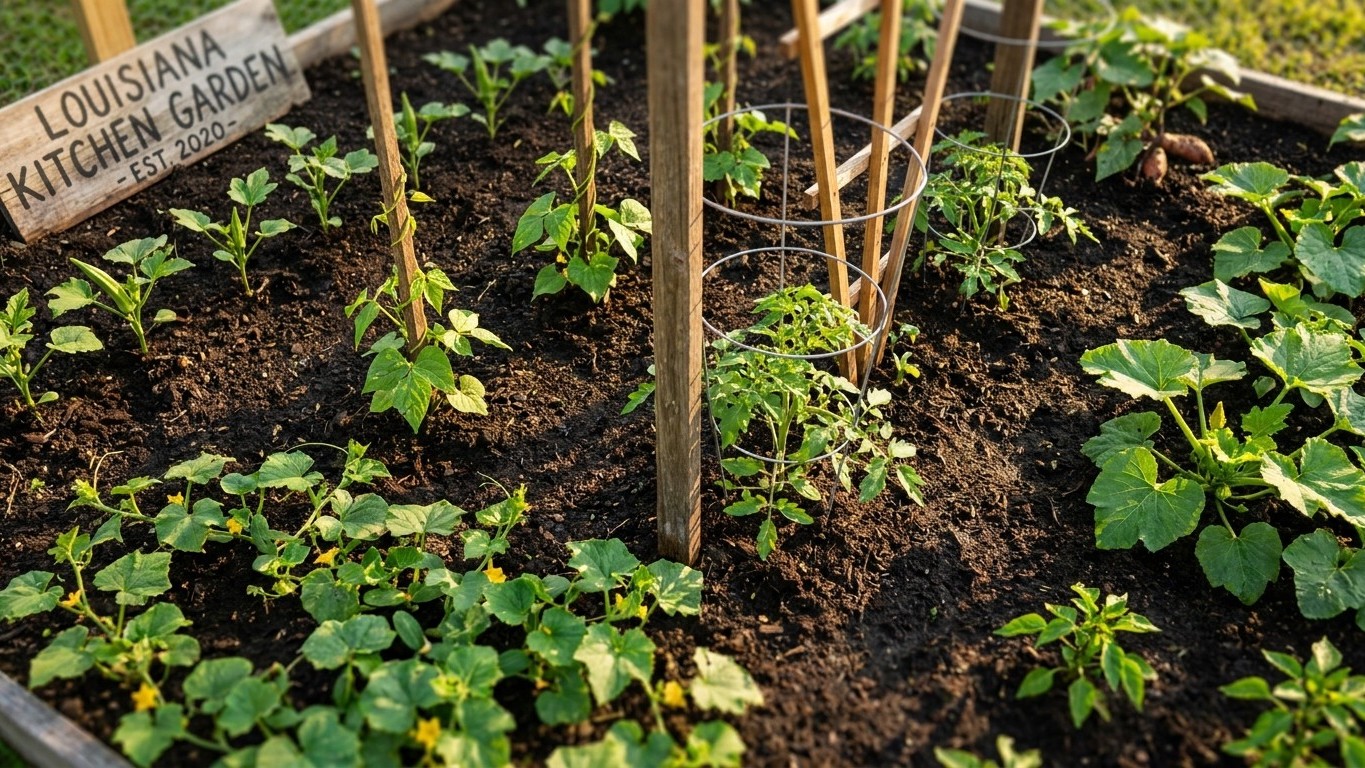

By April, Louisiana has already left frost behind by a wide margin. NOAA climate data puts the state’s last spring freeze window between January 18 and February 8, so April planting is a warm-season question, not a frost question: okra, snap beans, southern peas, cucumbers, squash and melons go straight into the ground, alongside tomato, pepper, eggplant and sweet potato transplants.
What goes in the ground in April

The calendar isn’t what decides this month, the freeze data does. NOAA’s 1991-2020 Climate Normals put Louisiana’s last spring freeze window at January 18 to February 8, measured at a station representative of the state’s freeze pattern. That means April sits two to three months clear of the last realistic frost threat almost everywhere in the state. The question for April isn’t “will it freeze,” it’s “is the soil warm enough and is there enough season left before summer heat shuts things down.”
That shifts the whole list toward heat-lovers. Direct-sow okra, snap beans, lima beans, southern peas, cucumbers, summer squash, cantaloupe and watermelon now. Sweet corn goes in as a direct-sown crop too, and it’s worth planting in blocks rather than single rows so the wind can pollinate it properly. Transplant tomatoes, peppers and eggplant that were started indoors earlier, and set out sweet potato slips once they’re pulled from the bed. None of this is a gamble in April; it’s the expected move.
The nuance is north versus south. NOAA’s freeze data comes from a single station, and it carries a real caution: a 32°F freeze happens in only about 86.8 percent of years at that site, meaning roughly one year in seven sees no hard freeze at all along the coast. South Louisiana’s limiting factor is summer heat arriving early, not spring cold. North Louisiana, sitting further from the Gulf’s moderating effect, freezes more reliably and can still get an occasional cool night in the first days of April. Gardeners up there should keep a light row cover on hand for freshly set transplants during that first week or two, just in case.
The USDA Plant Hardiness Zone Map places Louisiana across zones 8a to 10a, using the average annual extreme minimum temperature as its single measure. That range matters more for choosing perennials, fruit trees and cane berries than for April’s annual vegetable list, but it’s the reason a gardener in the Florida parishes and a gardener near Lake Charles can be planting the same crop on the same date with very different winter histories behind them.
What to start under cover
Frost isn’t the constraint here anymore, timing against summer heat is. Anything started under cover in April needs to reach transplant size fast, because Louisiana’s warm season arrives hard and early, and seedlings that linger too long indoors end up going into ground that’s already pushing toward the mid-80s and 90s, which stresses tender roots before they can establish. Peppers and eggplant, if not already up from an earlier start, can still go in under cover now for a slightly later transplant date, but six to eight weeks is about the ceiling before they should be in the ground.
The bigger April task under cover is sweet potatoes. Roots bedded in a hotbed or cold frame back in late winter are now throwing slips, the shoots that get pulled and set out as the actual transplants. Slips ready in April go into the garden through May, and a gardener who wants a full sweet potato crop should be checking that bed weekly and pulling slips as they reach six to eight inches, rather than letting them all mature at once.
The two failure modes here are the same ones that trip up gardeners every spring. Start too early and the seedlings get rootbound and leggy in their containers, sitting there stressed while waiting for a transplant date that keeps slipping. Start too late and there’s no runway left before the heat makes new transplants sulk instead of grow. A quick cover of row fabric or a cold frame lid cracked open on warm afternoons buys flexibility either way, keeping young plants protected from a sudden downpour or an unseasonable cool snap without cooking them on a sunny day.
What is ready to pick
April is a genuine harvest month in Louisiana, and the star of it is the strawberry. Fields around Ponchatoula and elsewhere hit peak production this month, and home patches follow the same rhythm: berries are ready when they’ve colored fully red, not just blushed, since strawberries don’t sweeten much further once picked.
The last of the cool-season crops are finishing up at the same time, and they’re on borrowed time. Lettuce, cabbage and broccoli planted back in late winter are still producing, but rising temperatures push them toward bolting fast, so the smart move is to harvest promptly rather than let a head sit and turn bitter or send up a seed stalk. English peas and snap peas are at their pod-filling peak; pick pods once they feel full and firm, since peas left too long on the vine turn starchy. Onions planted earlier are bulbing up, radishes and carrots seeded in cooler weeks are pulling-size, and an established asparagus bed should be sending up spears worth cutting every couple of days while the flush lasts.
It’s also worth checking anything still in winter storage, onions, garlic, winter squash from the prior season. Warm, humid April weather speeds up spoilage in a root cellar or pantry that was fine through the cooler months, so a quick check for soft spots or sprouting saves the rest of the batch from turning before anyone notices.
The jobs that matter this month
Mulch is the single biggest lever in April. Fresh transplants going into ground that’s about to heat up fast need two to three inches of straw or shredded leaf mulch around them immediately, not next month, to hold moisture and keep root zones from swinging temperature between a hot afternoon and a cool night.
Staking and caging come next, and they only work if they’re set before the plant needs them. A tomato that’s already sprawling by the time a cage goes on will have broken branches and buried fruit; the cage or stake needs to be in the ground at transplant time or within the first couple of weeks, before the plant fills it out.
Watering rhythm matters more in April than it did in the cooler months, since evaporation is climbing and young roots are shallow. A deep soak two or three times a week beats a light daily sprinkle, because it trains roots to grow down rather than staying near the surface where they dry out fast.
Succession sowing keeps beans, squash and corn coming instead of arriving all at once. Putting in a new short row every two to three weeks through spring spreads the harvest out and gives some insurance if an early planting gets hit by pests or a bad storm. Pest scouting starts in earnest now too: aphids cluster on new growth, squash bugs lay their bronze egg clusters on the undersides of leaves, and the first hornworms of the season show up on tomato foliage. Catching any of these in the first week saves a much bigger fight later. Side-dressing nitrogen on corn once it’s knee-high, and on tomatoes once the first fruit has set rather than before, keeps growth productive instead of just leafy.
What not to do in April
The most common mistake this month is letting cool-season crops linger. A head of broccoli or a bed of lettuce that looked fine two weeks ago can bolt fast once a run of warm days hits, and once it does, the flavor is gone for good. Harvest on the early side rather than waiting for one more picking.
Overhead watering late in the day is another classic misstep in Louisiana’s humidity. Wet foliage that stays damp overnight is an open invitation to the fungal diseases that thrive in warm, humid air, so watering at the soil line, earlier in the day, matters more here than in drier climates.
Heavy nitrogen too early on tomatoes and peppers produces exactly the wrong result, a plant that’s all lush leaf and no fruit. Hold the heavier feeding until after the first fruit sets, not at transplant time.
North Louisiana gardeners setting out tender transplants in the very first days of April shouldn’t assume the cold is fully behind them. Watching the short-term forecast for one more cool night before committing everything to the open ground costs nothing and avoids a replant.
Checking this against your own county
Everything above is a statewide starting point, not a fixed instruction. Louisiana runs from zone 8a in the north to zone 10a along the coast, and that spread, plus the difference between a river bottom and a slightly higher pine flat, can shift real-world timing by two or three weeks in either direction. A gardener in Shreveport and a gardener in Houma are working from different local histories even in the same month.
For a planting calendar built around specific Louisiana parishes, the LSU AgCenter publishes region-specific guidance and county-level extension contacts worth checking against anything read here.
Common questions
Is it too late to plant tomatoes in Louisiana in April?
No. April is squarely within the transplant window for tomatoes across the state, and gardeners who missed an earlier start can still set out transplants now and get a full harvest before summer heat slows fruit set.
Can I still direct-sow cool-season greens like lettuce in April?
It’s a gamble. Rising temperatures push lettuce, spinach and similar greens toward bolting quickly once seeded, so April is better spent harvesting the last of an earlier planting than starting a new one.
What about corn?
Does Louisiana ever get a frost in April?
The NOAA data used here places the last spring freeze window between January 18 and February 8, well before April, so a frost this late is not part of the normal pattern anywhere in the state.
Why does south Louisiana get treated differently from north Louisiana on this page?
Because the freeze data itself shows it: roughly one year in seven at the coastal reference station sees no hard freeze at all, while north Louisiana freezes far more consistently. That difference matters more for winter planting decisions than for April, but it shapes how each part of the state reads any statewide planting guide.