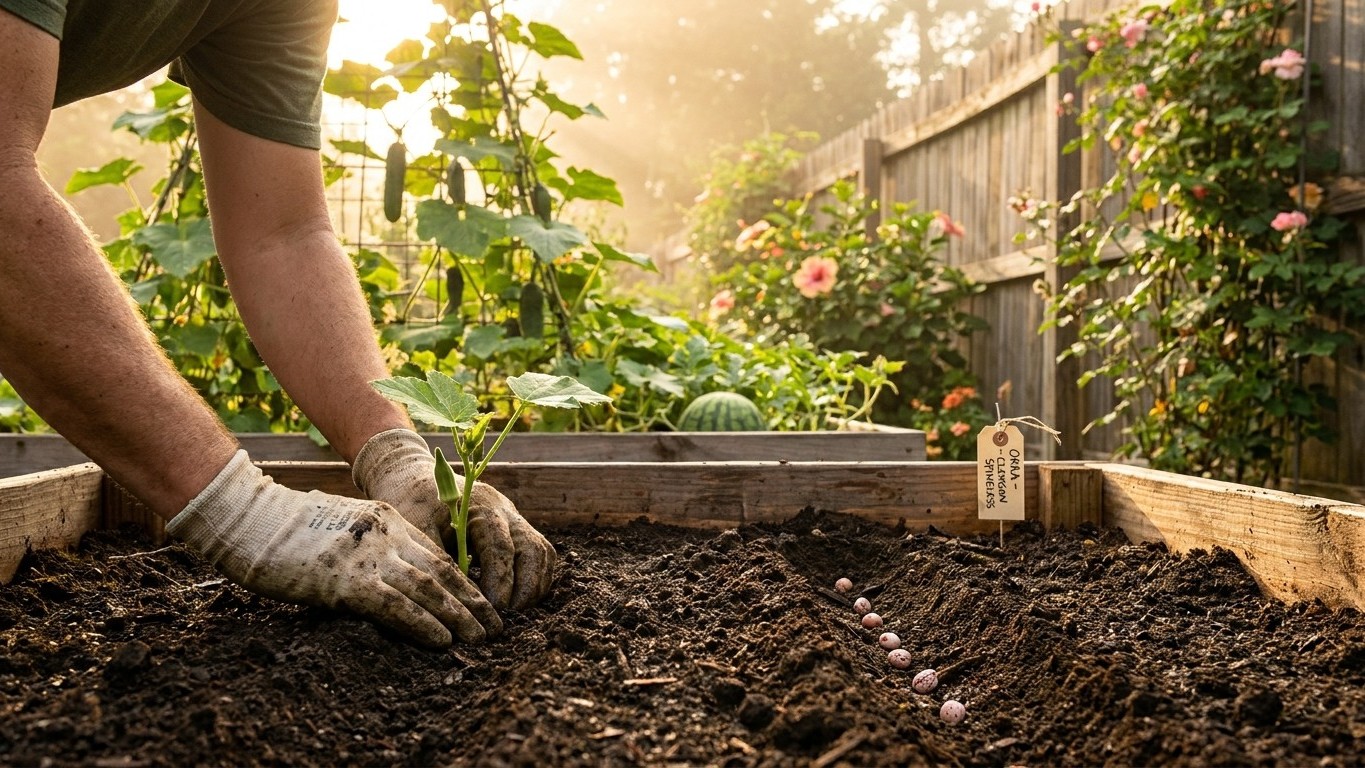

By May, Louisiana gardens have already left frost behind. The state’s frost window closes somewhere between January 18 and February 8 depending on location, so the real question this month is not “is it safe yet” but “is it too hot yet.” Zone 8a in the north and zone 10a along the coast are both deep into warm-season planting, with okra, southern peas, sweet potatoes, and heat-loving vine crops leading the way.
What goes in the ground in May

The frost math is already settled by the time May arrives. NOAA’s 1991-2020 climate normals put the last spring freeze anywhere from January 18 to February 8 across the state, and that 32-degree threshold only happens in 86.8 percent of years to begin with, meaning some winters skip a hard freeze entirely. Whatever the exact date was for a given county, it is three to four months behind by May. Soil temperature is no longer the limiting factor. Heat is.
That flips the usual spring-planting logic. Instead of asking whether the ground is warm enough, Louisiana gardeners in May are asking whether there is still enough cool morning air left for fruit to set before summer humidity and heat shut pollination down. Tomatoes and peppers transplanted now will produce, but the window for a full crop before blossom drop starts closing as daytime highs climb into the 90s. Direct-seeded crops fare better against the clock: okra, southern peas (crowder, purple hull, black-eyed), snap beans, lima beans, cucumbers, summer squash, cantaloupe, and watermelon all germinate fast in warm soil and are built for heat rather than fighting it. Sweet potato slips go in now too, since the vines need a long, hot stretch to size up storage roots.
Basil, one of the few herbs that actually prefers Louisiana’s May heat over its April mildness, can be seeded or transplanted freely. Pumpkins for fall harvest also make sense to start now, since they need the long runway before cooler weather.
| Region | USDA zone | May planting focus |
|---|---|---|
| North Louisiana | 8a | Tomatoes, peppers, and eggplant transplants still viable; direct-sow okra, peas, beans, squash |
| South Louisiana / coast | 10a | Spring tomato window nearly closed; shift emphasis to okra, southern peas, sweet potatoes, melons |
What to start under cover
Starting seeds indoors in May is a smaller job in Louisiana than in colder states, simply because so much of the warm-season lineup goes straight into the ground. But there is one calculation worth doing now, and it runs backward from the fall side of the calendar instead of the spring side. The first fall frost across the state falls somewhere between December 17 and January 8, which sounds distant in May but sets the outer edge for when a fall tomato or pepper crop needs to be producing.
Work backward from that window: a tomato transplant needs roughly six to eight weeks of growth before it goes in the ground, plus another eight to ten weeks to first fruit. Counted back from a December frost, that points toward starting fall tomato and pepper seed indoors in an air-conditioned space during the hottest stretch of summer, not in May. May’s real under-cover job is starting melons and squash in cell trays rather than direct-seeding them, which gives a head start before summer’s soil temperatures make germination in open beds spotty for finicky varieties.
The two failure modes still apply even on this compressed timeline. Start warm-season transplants too early and they sit rootbound on a windowsill, stressed and stunted before they ever see soil. Start them too late, aiming a fall crop at a frost date that arrives sooner than remembered, and there is not enough season left to mature fruit before cold shuts growth down. Louisiana’s long season gives more room for error than most states, but the fall frost window is real even if it rarely bites hard.
What is ready to pick
May is a genuine harvest month across Louisiana, and it is also a transition point where spring crops are finishing just as summer ones start filling in behind them. Strawberries are wrapping up their run. Spring-planted lettuce, spinach, and other greens are bolting fast as afternoon heat builds, so anything still standing should be picked before it turns bitter rather than left “for later.” Cabbage, broccoli, and cauliflower planted back in late winter are reaching maturity now, and English peas and snap peas are finishing their last flush before heat ends them for the season.
New potatoes are often ready for a first dig, especially where plants were set in as slips or seed pieces earlier in spring. The signal to check is foliage starting to yellow and flop, which usually means tubers underneath have sized up enough for a light harvest even if the full crop isn’t cured yet. Garlic and onions planted the previous fall are bulbing up and, depending on variety, may be within a few weeks of the tops falling over, which is the cue to stop watering and let bulbs finish drying down in the ground.
Squash and cucumbers from April plantings are starting to produce, and in the southern parishes early blueberries may already be coloring up. Check any of last season’s stored onions or seed potatoes still in the pantry for soft spots or sprouting, since warming indoor temperatures speed up spoilage this time of year.
The jobs that matter this month
Mulch is the single highest-return job in a Louisiana May. Bare soil under a Louisiana sun in late spring loses moisture fast and heats up enough to stress shallow roots, so two to three inches of straw, pine bark, or shredded leaves around tomatoes, peppers, and squash pays for itself within weeks in reduced watering and steadier fruit set. Staking and caging need to happen now too, before plants sprawl rather than after, since trying to lift a collapsed tomato vine off wet ground in June damages roots and stems that are already stressed by heat.
Watering rhythm matters more than volume. A deep soak two or three times a week, aimed at the root zone rather than the foliage, beats a daily light sprinkle that only wets the surface and encourages shallow rooting right when plants need to be reaching deep for moisture. Morning watering also gives leaves time to dry before evening humidity sets in, which cuts down on the fungal disease pressure that Louisiana’s combination of heat and moisture practically guarantees by early summer.
Succession sowing keeps beans, squash, and southern peas producing instead of dumping one big harvest and quitting. Sowing a new short row every two to three weeks through the warm season smooths that out. On the pest side, this is when squash vine borer moths start showing up around the base of squash and pumpkin vines, and aphids build quickly on new pepper and eggplant growth, so a weekly walk-through to check the undersides of leaves catches problems while they’re still small enough to handle by hand or with a targeted treatment rather than after they’ve spread through a bed.
What not to do in May
The most common mistake is treating cool-season crops like they still have time left. Lettuce, spinach, and other greens that were fine in March turn bitter and bolt fast once daytime highs settle into the 80s and 90s, and no amount of watering reverses that. If greens are still in the ground, the move is to harvest what’s there rather than hope for another few weeks.
The opposite mistake shows up with tomatoes and peppers: setting transplants out too late in the spring window and expecting a full harvest before summer heat causes blossom drop. Tomato pollen becomes less viable once nighttime lows stay above roughly 70 degrees, which in much of Louisiana starts happening well before summer officially arrives. A late May transplant may still grow into a healthy plant, but fruit set often stalls until temperatures ease off again in early fall.
Heavy nitrogen fertilizer applied at the wrong moment is another trap. Feeding tomatoes and peppers a nitrogen-heavy mix once they’re flowering pushes leafy growth at the expense of fruit, leaving gardeners with lush, dark green plants that set little. A balanced or lower-nitrogen feed once flowering starts serves the plant better. Overhead watering in the evening is worth avoiding too, since wet foliage sitting through a warm, humid Louisiana night is exactly the condition that fungal diseases like early blight need to take hold.
Checking this against your own county
A state-wide May guide is a starting point, not a fixed instruction. Louisiana spans hardiness zones 8a to 10a, and that range moves the practical planting calendar by weeks between the north and the Gulf coast, even though the state has none of the elevation or lake-effect swings that complicate mountain or Great Lakes states. The safest next step is checking conditions against a local source rather than a statewide average. The LSU AgCenter publishes parish-level guidance and a planting calendar built specifically for Louisiana’s regional differences, and it’s worth cross-checking any statewide recommendation against it before committing a bed to a crop.
Common questions
Is it too late to plant tomatoes in Louisiana in May?
Not too late to plant, but the timing shifts what to expect. Transplants set out in May will grow and can still fruit, but heat-driven blossom drop often stalls production until temperatures ease in early fall. Gardeners aiming for a heavy spring tomato harvest generally get transplants in earlier in spring rather than in May.
Does Louisiana really not have a hard frost risk by May?
Correct. NOAA’s climate normals put the last spring freeze between January 18 and February 8 depending on location, so by May the state is several months clear of frost risk. The growing constraint from this point forward is heat, not cold.
What vegetables handle Louisiana’s May heat best?
Okra, southern peas, sweet potatoes, cucumbers, summer squash, cantaloupe, and watermelon are all built for heat and generally outperform cool-season crops or late-planted tomatoes once daytime highs climb.
Should I still be planting greens like lettuce and spinach in May?
Generally no. Both bolt and turn bitter once sustained heat sets in, and by May much of Louisiana is already past the window where they’ll produce well. Any spring greens still in the ground should be harvested rather than left in place.