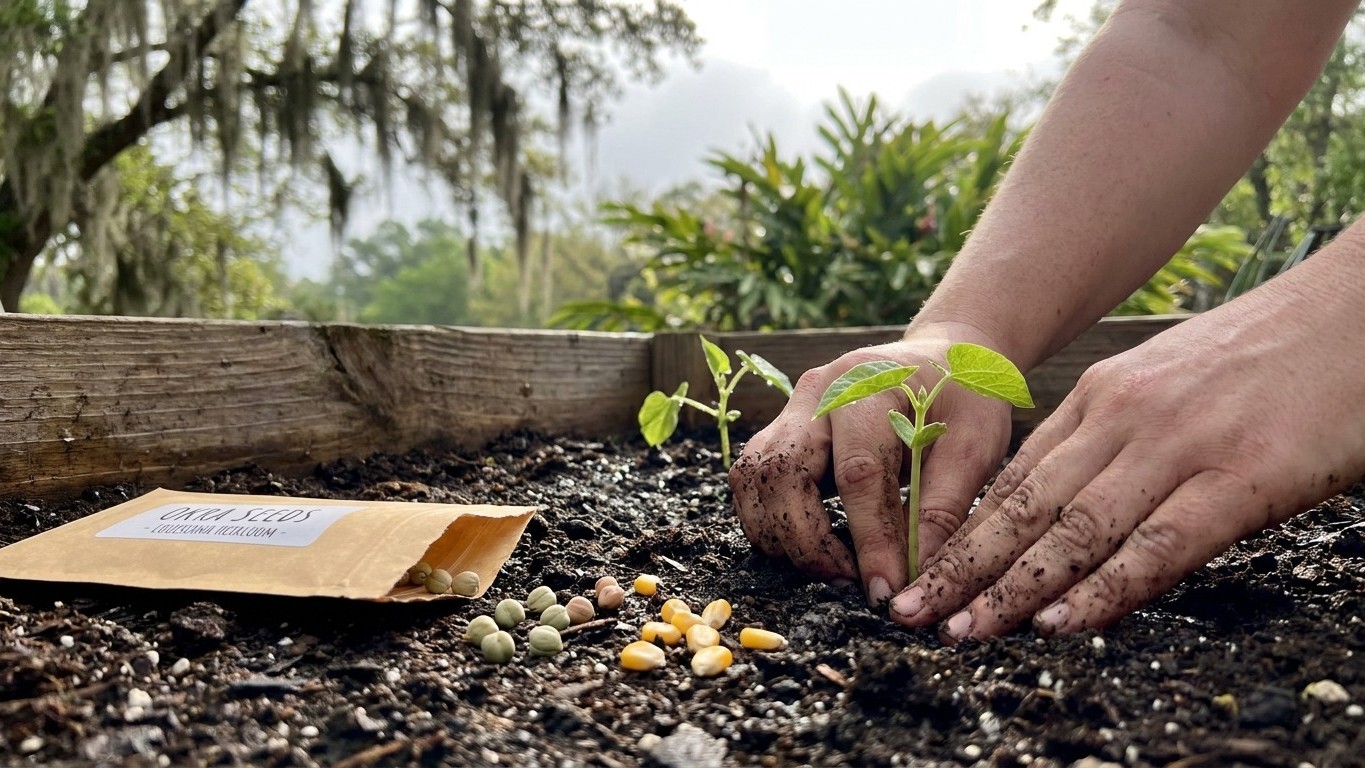

March in Louisiana lands well past the state’s average last frost window of January 18 to February 8, so this is a working month, not a waiting month. Zone 8a-10a gardeners can put in the first warm-season transplants alongside the tail end of cool-season crops, but soil temperature and a small residual freeze risk still decide the order.
What goes in the ground in March

The calendar says spring, and for most of Louisiana the frost math backs that up. NOAA’s 1991-2020 normals put the last spring freeze in the Jan 18 to Feb 8 window at the reference station, which means by March the coldest part of the year is behind most gardens. That’s the good news. The catch is that this window is a probability band, not a guarantee: freezes at that station occur in 86.8 percent of years, so roughly one year in seven skips a hard freeze entirely, and the flip side is that a late outlier freeze after the window isn’t impossible, just uncommon. Soil temperature, not the date on the wall, should still make the final call on tender crops.
For most of the state, March is when direct-sown warm-season crops can safely start: snap beans, sweet corn, and Southern peas go into warming soil once nighttime lows stop threatening the 30s. Sweet potato slips and okra seed can follow later in the month in south Louisiana, where soil warms faster, while north Louisiana gardeners often wait a few extra weeks for the same soil temperature.
Cool-season holdovers are still fair game everywhere in the state this month. Irish potatoes, English peas, carrots, beets, and the whole leafy-green family, collards, mustard, turnips, spinach, lettuce, do fine sown directly now and will finish before summer heat pushes them to bolt. Onion sets and transplants, along with garlic if it wasn’t planted in fall, can still go in where soil is workable. The gamble crops are the heat lovers set out too early: tomatoes, peppers, and eggplant transplants tolerate no frost at all, and a stalled cold front can still catch an early planting in north Louisiana even this late in the season.
What to start under cover
Counting backward from the last frost window matters here even though that window has technically closed. Tomato, pepper, and eggplant transplants are typically started six to eight weeks ahead of the last frost date to reach a sturdy, non-leggy transplant size by set-out time. Applied to the Jan 18 to Feb 8 window, that math points to seed-starting indoors back in December or early January. Anyone starting those seeds now is behind that curve, not ruined, just working with a shorter runway before summer heat arrives.
The two failure modes are worth naming plainly. Starting too early against this window means transplants sit indoors too long, get rootbound, and stall once they finally hit the garden, which costs more time than it saves. Starting too late means the plant reaches fruiting size right as Louisiana’s summer heat clamps down on tomato and pepper fruit set, which happens once nights stay reliably above the mid-70s. Given that risk, gardeners who haven’t started tomatoes or peppers indoors are often better off buying started transplants locally this month and setting them out as soon as soil has warmed, rather than starting from seed now.
Melons, cucumbers, and squash don’t need the indoor head start at all in this climate. They germinate fast in warm soil and are usually better direct-sown once the soil is reliably warm, since their roots resent transplanting. Starting them under cover this month only makes sense as a way to get a jump on the earliest possible harvest, not as a necessity.
What is ready to pick
Fall- and winter-planted greens are at or near peak this month across the state. Collards, mustard, turnip greens, spinach, and lettuce planted back in the cooler months are usually ready now, and the tell is simple: harvest outer leaves before the plant sends up a flower stalk, since warming days will trigger bolting fast once temperatures climb. Broccoli and cabbage heads started in fall often finish up in March as well, and a broccoli head that’s begun to loosen or show yellow buds needs to come off now rather than later.
Root crops planted earlier in winter, carrots, beets, and radishes, are usually ready by size rather than by date; a thumbnail-width shoulder poking above the soil line is the easiest field check. English peas planted in late winter typically start setting pods this month, and pods are ready once they fill out but before the peas inside turn starchy and dull.
In south Louisiana, strawberries planted the previous fall often begin ripening late in the month, though timing varies with the planting date and variety. It’s also worth checking any stored sweet potatoes, winter squash, or onions from the previous fall harvest for soft spots or sprouting; anything starting to turn should be used first rather than left to spoil the rest of the batch.
The jobs that matter this month
Soil preparation earns its keep more in March than almost any other month, because everything planted from here forward depends on it. Working compost or aged manure into beds now, before the first warm-season transplants go in, gives amendments time to integrate rather than sitting as raw material around new roots. A basic soil test, through the extension service or a home kit, is worth doing now too, since results that suggest a pH or nutrient correction still have time to take effect before summer crops are in the ground.
Mulching beds as soon as they’re planted matters more here than in cooler climates, because Louisiana’s heat and humidity arrive fast and mulch is what keeps soil moisture even once the weather turns. Staking or caging tomatoes at planting time, not weeks later, saves the trouble of forcing a sprawling plant into a cage after the fact.
Watering rhythm shifts this month as days lengthen and temperatures climb; beds that needed little attention in winter start drying out faster, and a consistent deep watering schedule now heads off the blossom-end rot that shows up later on tomatoes grown with inconsistent moisture. Succession sowing keeps salad greens and radishes coming instead of one big flush that bolts all at once; sowing a short row every two to three weeks through the month keeps the harvest steady.
Pest scouting starts to matter again too. Aphids and early caterpillars find tender new greens and transplants fast once temperatures warm, and catching an infestation on a handful of leaves is a far smaller job than dealing with a spread colony two weeks later. Dormant pruning of fruit trees and cane berries should be wrapping up now, ideally finished before buds break; pruning after growth starts costs the tree energy it can’t spare.
What not to do in March
The most common mistake this month is trusting the air temperature over the soil temperature. A warm, sunny stretch in early March can feel like summer, but if the soil hasn’t caught up, tomato and pepper transplants set out too early simply sit and sulk, or worse, take a hit if a late cold front slides through. With freezes occurring in the vast majority of years at the reference station, that risk is real even this late, just uncommon rather than impossible. Waiting an extra week or two for soil to warm costs far less than replacing frost-killed transplants.
Pulling row covers or cold frames off cool-season crops too early after a mild stretch is the same mistake in reverse. A run of 70-degree days doesn’t mean the cold snaps are over; leaving protection in place a little longer, or being ready to re-cover overnight, is cheap insurance against losing greens that are days from harvest.
Nitrogen timing trips people up too. Feeding leafy greens a heavy dose of nitrogen just as days lengthen and temperatures climb pushes them toward bolting faster, not toward more leaf growth, since the plant reads the combination of warmth and day length as a signal to flower regardless of the nutrient boost. Save the nitrogen push for actively growing warm-season crops once they’re established, and let cool-season greens finish out on their existing fertility rather than force-feeding them into an early bolt.
Checking this against your own county
A state-wide frost window is a starting point, not a fixed instruction. Louisiana spans hardiness zones 8a to 10a, and the difference between the northern parishes and the Gulf Coast can shift a safe planting date by several weeks in either direction; the coast rarely sees a hard freeze at all, while the north can still get a late cold snap that the state average smooths over. Elevation barely factors into Louisiana’s flat terrain, but proximity to the coast and to large water bodies does the same moderating work that lake effect does elsewhere.
The LSU AgCenter publishes parish-level guidance and a state planting calendar that accounts for these regional differences, and it’s the better reference for a specific county’s actual planting window than any statewide average.
Common questions
Is March too late to start tomatoes from seed in Louisiana?
Not too late to grow tomatoes at all, but late for the standard six-to-eight-week indoor head start counted from the Jan 18 to Feb 8 frost window. Seed started now will still produce a harvest before the worst summer heat, but buying started transplants locally often gets a bigger, more reliable head start.
Can a freeze still happen in Louisiana after March starts?
It’s uncommon but not impossible. The reference station’s last freeze normally falls in the Jan 18 to Feb 8 range, and freezes occur in 86.8 percent of years there overall, meaning most years are done with frost well before March, though an outlier late cold snap isn’t ruled out entirely.
What’s the difference between planting in north and south Louisiana this month?
South Louisiana’s mild climate means warm-season crops can generally go in a bit earlier and soil warms faster, while north Louisiana, sitting in the cooler end of the 8a-10a zone range, tends to lag a few weeks behind on both soil warmth and safe transplant timing.
Should mulch or row cover come off cool-season crops in March?
Not immediately just because a warm stretch shows up. It’s safer to leave protection in place, or nearby and ready to reapply, until the risk of a late cold snap has clearly passed for the specific area, which local extension guidance can help confirm.