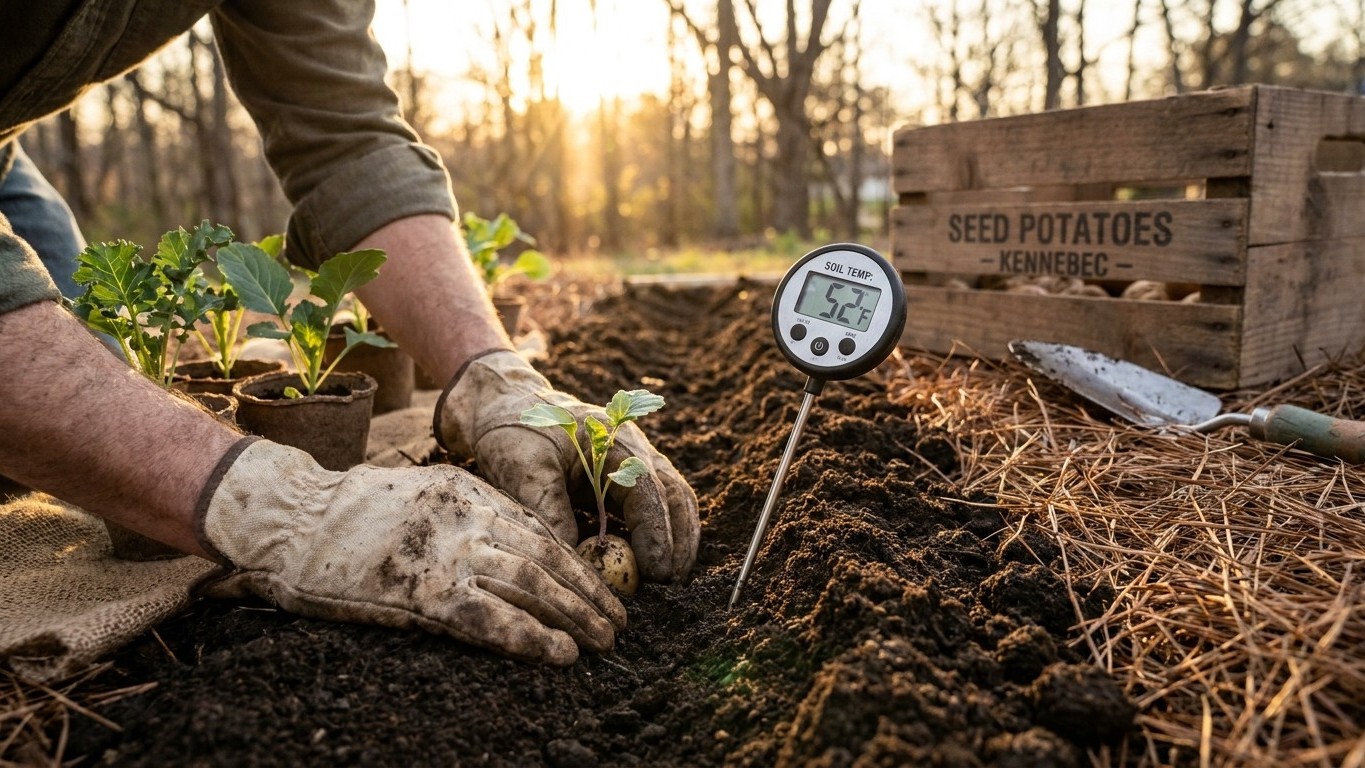

February in Louisiana splits into two different gardens depending on where you stand. In the south, cool nights are already thinning out and by month’s end many gardeners are transplanting warm-season starts. In the north, frost is still a real threat through the first week or so of the month. Peas, hardy greens, alliums and seed potatoes go in now almost statewide; tomatoes and peppers wait for the soil, not the calendar.
What goes in the ground in February

The frost math for this state is unusual. NOAA’s 30-year climate normals put the last spring frost, meaning the last time a 32-degree freeze has a meaningful chance of showing up, somewhere between January 18 and February 8 at the reference station used for these normals, near New Orleans. That means for a good chunk of Louisiana, the coldest part of the year is already behind you when February starts, and by the back half of the month frost risk is fading fast in the south. North Louisiana runs colder and later, so treat that window as the earlier edge of what’s possible rather than a fixed date.
What decides whether something can go in the ground isn’t the air temperature on a nice afternoon. It’s the soil temperature a few inches down, and whether the plant in question can shrug off a freeze that still might arrive. Peas don’t care about a light frost. A pepper transplant does.
Safe bets for February direct-sowing or transplanting across most of the state include English peas and snap peas, collards, kale, mustard and turnip greens, spinach, lettuce, radishes, carrots and beets. Seed potatoes go into the ground now in much of Louisiana, timed so the plants are up and growing before serious heat arrives later in spring, since summer heat, not winter cold, is the real limiting factor here. Onion sets and transplants, along with garlic and shallots where cloves are still available, round out the list. Cabbage and broccoli transplants that were started earlier and properly hardened off can go out in the south now and a bit later further north.
The gamble is anything warm-season: tomatoes, peppers, eggplant, squash, beans. Air temperature might feel encouraging on a mild February afternoon, but soil temperature and the lingering chance of a freeze make these a bet you’ll likely lose, especially north of Alexandria. Hold them for indoor starts instead, covered in the next section.
What to start under cover
Work backward from the frost window rather than a date on the wall. Tomatoes, peppers and eggplant typically need six to eight weeks indoors before they’re ready to go into the garden. If the last frost risk clears somewhere between mid-January and early February in the south, or runs a couple weeks later further north, seeds started indoors in February land the transplants in the ground right around when the soil has finally warmed enough to support them, sometime in March.
That’s the arithmetic every gardener can redo for their own address: find your rough last-frost window, count back six to eight weeks, and that’s your indoor start date. Anyone still holding seed packets for peppers or eggplant in February isn’t late, they’re right on schedule for a March or April transplant.
Two mistakes show up every year at this stage. Starting too early means six-inch-tall tomato seedlings sitting in cramped cells for weeks past their prime, rootbound and leggy, stretching toward whatever light they can find. They transplant poorly and sulk for weeks once they’re finally in the ground. Starting too late is the opposite problem, one that matters more in Louisiana than almost anywhere else: since the limiting factor here is summer heat arriving early and hard, a transplant that goes out too late in spring may barely get a foothold before high temperatures shut down fruit set. Neither mistake is fatal, but both cost weeks you don’t get back.
Herbs like basil and cilantro, along with early cucumber and summer squash starts for gardeners who like a head start, can also go under cover now, timed the same way against your local frost window.
What is ready to pick
February harvests lean heavily on what went into the ground back in fall. Collards, kale and mustard greens that have been sitting through the cooler months are often at their sweetest right now, since a few frosty nights convert starches to sugars and mellow out the bitterness. Carrots, beets and turnips planted in fall are ready to pull, and a light frost doesn’t hurt them sitting in the ground, it usually helps.
Cabbage heads started in fall may be firming up and ready to cut before they split. Lettuce and spinach sown under cover or in a protected bed can be harvested leaf by leaf, letting the plant keep producing rather than pulling the whole head at once.
South Louisiana gardeners with citrus trees are often mid-harvest right now. Satsumas and other cold-hardy citrus varieties common in home gardens across the southern parishes typically ripen through the winter months, and a mild February is prime picking time before the fruit starts to lose quality on the tree.
This is also the month to go through whatever’s in storage. Check sweet potatoes, winter squash and stored onions for soft spots, sprouting, or a musty smell, all signs that one bad piece is about to spread to its neighbors in the bin. Pull anything questionable now rather than finding a rotten mess later.
The jobs that matter this month
Dormant pruning tops the list, and the timing matters more in Louisiana than in colder states because bud break comes early here. Peaches, pears, plums and other deciduous fruit trees should get their structural pruning done while they’re still fully dormant and before sap starts moving. Wait too long and you’re cutting into active growth, which stresses the tree and wastes energy it should be putting into fruit.
Ordering and planning
Seed catalogs and local nurseries sell out of the popular varieties early, particularly seed potatoes and onion sets, which have a short ordering window tied directly to that same February planting slot. If a rotation plan or a soil test is overdue, this is the window to get it done before the spring rush of transplanting takes over every free hour. A soil test run now gives enough lead time for lime or amendments to actually work before warm-season crops go in.
Maintenance that pays off later
Turning compost piles keeps them breaking down through the cooler months instead of stalling out. Tools that have sat rusting since fall need sharpening and cleaning before the heavy use of spring planting starts. Raised bed frames, fencing and trellis structures are easier to repair now, while beds are still mostly empty, than in April when they’re full of seedlings you don’t want to step on.
Mulch beds that will hold overwintering greens or garlic help buffer any late cold snap and cut down on weed pressure that’s about to explode once temperatures climb. And keep scouting: aphids and early cutworm activity can start surprisingly early in a mild Louisiana winter, well before most gardeners think to look.
What not to do in February
The classic mistake is trusting a warm afternoon over a soil thermometer. A run of 70-degree days in early February feels like spring, and plenty of gardeners rush tomatoes and peppers into the ground on the strength of it. Soil several inches down is often still too cold for those roots to function properly, and a plant that stalls out early rarely fully recovers even after conditions improve. Wait for the soil, not the sky.
A close second: pulling row covers or opening up cold frames permanently after a few mild days, only to get caught out when a freeze slides back in before the window fully closes. Since that last frost risk runs anywhere from January 18 to February 8 depending on location, and later than that further north, keep covers within reach through the whole window rather than putting them away at the first sign of warmth.
Heavy nitrogen at the wrong moment is the third trap. Feeding dormant fruit trees or newly set transplants too early pushes soft, tender new growth right when a cold snap can still show up and burn it back. Hold off on nitrogen-heavy feeding until plants are actively growing and the frost risk has genuinely passed for your area, then feed. A little patience here saves a setback that can cost weeks of recovery time.
Checking this against your own county
A statewide month is a starting point, not an instruction. Louisiana spans USDA hardiness zones 8a through 10a, and that range alone tells you conditions in Shreveport and conditions in Houma aren’t the same garden. North-south position moves these windows by real weeks, not days, and local microclimates near the coast or along the Mississippi can shift things further still.
Before committing seed or transplants to the ground, check the LSU AgCenter for the state’s own planting calendar and current local guidance. It’s built specifically for Louisiana’s parishes and will narrow down what a statewide window can only estimate.
Common questions
Is it too early to plant tomatoes in Louisiana in February?
For direct planting outdoors, yes, in most of the state. Soil is typically still too cold and frost risk lingers into early February or later depending on location. Start seeds indoors now for a March or April transplant instead.
Can I still plant potatoes in February in Louisiana?
Yes, seed potatoes are a standard February planting across much of the state, timed so the crop matures before the heat of late spring sets in.
What vegetables are cold-hardy enough for February in north Louisiana?
English peas, collards, kale, mustard and turnip greens, spinach, carrots, beets and onions all tolerate the frost risk that persists longer in the northern parishes.
Why does south Louisiana get warm-season planting earlier than north Louisiana?
Because the last spring frost risk clears earlier near the coast, sometimes closer to mid-January, while inland and northern areas can see frost risk linger past the first week of February.