
Nothing goes into open Maine ground in February. Frost isn’t clearing until April 22 at the earliest, and often not until May 1, so the soil sits frozen or snow-covered from Kittery to Fort Kent. What the month actually offers is indoor starts on a strict clock, dormant-season work outdoors, and a handful of forcing tricks that put fresh greens on the table while the beds stay locked.
What goes in the ground in February

The honest answer is: nothing outdoors, and there’s no point pretending otherwise. With the last spring frost window running from April 22 to May 1 along the coast, and later inland, the ground across Maine is either frozen solid or buried under snow for the entire month. Bare soil isn’t workable, and pushing a trowel into it does more damage than good.
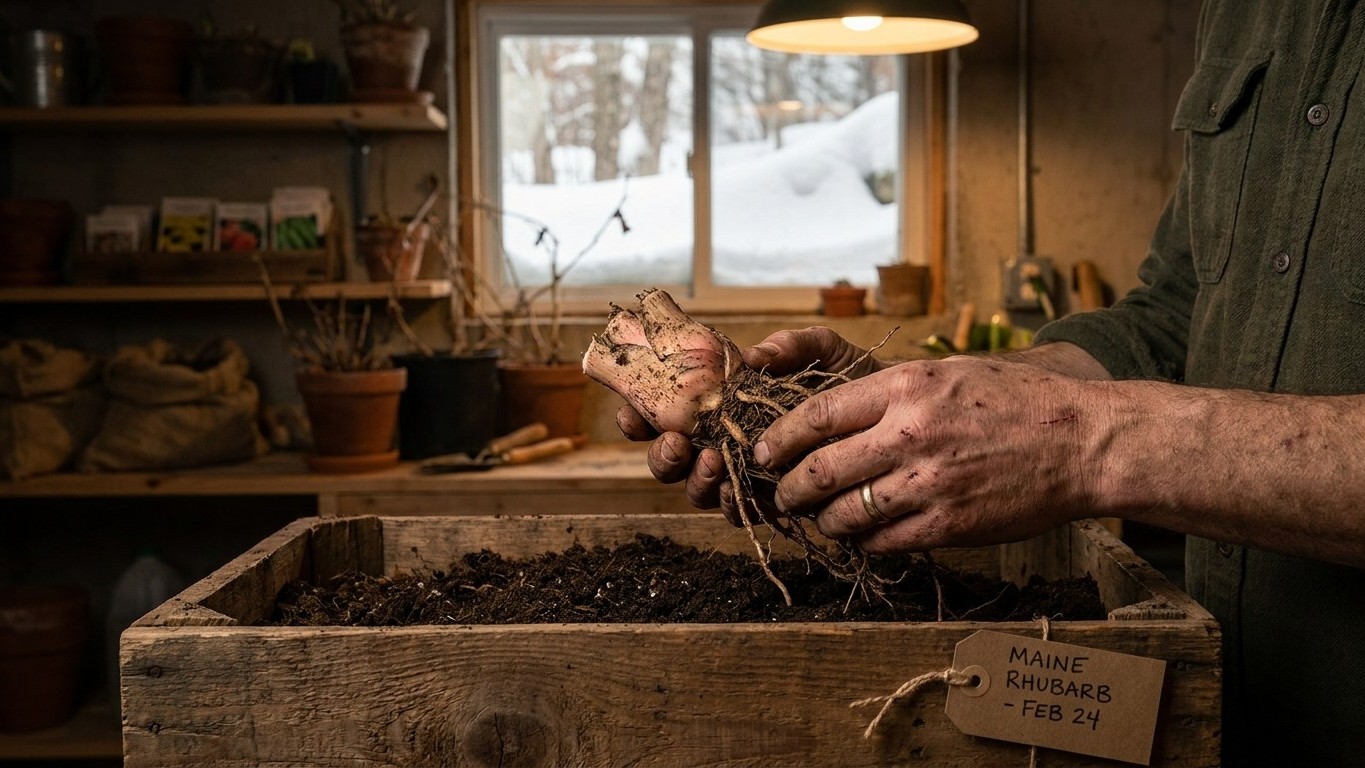
That doesn’t mean the month is idle. Rhubarb crowns dug in fall and kept in a cool, dark spot can be brought into gentle warmth now to force early stalks, a trick market growers have used for generations to get rhubarb weeks ahead of the outdoor crop. Witloof chicory roots respond the same way: buried in damp sand in a dark basement corner, they push pale, tight heads within a few weeks.
If you kept a cold frame running from fall, it’s worth checking, but that’s maintenance of an existing crop, not new planting. Spinach, mache, or claytonia tucked in before the ground froze may still be alive under the glazing, growing slowly on the little light February offers. Lift the lid on a sunny midday to vent excess moisture and knock snow off before it insulates too much and blocks light.
Seed potatoes can be set out to chit, meaning laid eye-side up in a bright, cool room so short sturdy sprouts form before planting weeks from now. That’s preparation, not planting. Bare-root fruit trees or berry canes ordered for spring delivery should stay in their shipping material in an unheated but frost-free space, like a garage, until the ground actually thaws enough to dig a hole. Trying to heel them into frozen soil now just kills the roots.
What to start under cover
Indoor seed starting in February is about counting backward from that April 22 to May 1 frost window, not forward from the calendar page. Onions and leeks are the classic February starts because they need 10 to 12 weeks of growth before they go outside, and they tolerate a longer stint indoors better than most vegetables. Counting back from even the earlier end of the frost window puts the start date for onions and leeks squarely in February for most of the state.
Celery and celeriac follow similar math: slow growers that need 10 to 12 weeks under lights before transplanting, so a February start keeps them on schedule for a May move outdoors. Peppers, particularly slower-maturing sweet and hot varieties, generally want 8 to 10 weeks indoors, which puts the sowing date for many gardeners in late February, especially those farther north or inland where the frost-free date slides later than the coastal range.
The two ways this goes wrong are both common. Start too early, and by the time the ground is finally safe in May, plants are rootbound, stretched thin reaching for light, and slow to recover once transplanted, sometimes never fully catching up. Start too late, and long-season crops like celery or onions never bulk up before the shorter Maine growing season runs out in fall. A simple fix for the too-early problem is potting up seedlings into larger containers as they grow, buying time without stunting them, rather than letting them sit cramped in a seed tray for two extra months.
What is ready to pick
Outdoors, February gives up little to nothing. Whatever hasn’t already been harvested is either buried under snow or has succumbed to repeated freeze-thaw cycles. That’s the reality across a state where the growing season doesn’t reopen for another two to three months.
What still feeds a household this month comes from work done earlier. Kale and Brussels sprouts left standing and mulched heavily in fall can be dug out from under snow on a mild day, and cold actually sweetens their flavor by converting starches to sugars. Leeks mulched deeply enough to keep the ground around them from freezing solid can sometimes be pulled the same way, though a hard freeze can make that impossible for weeks at a stretch.
A cold frame that’s still producing spinach, mache, or claytonia can be harvested a few leaves at a time, taking care not to strip plants bare since regrowth is slow in low light. Indoors, sprouts and microgreens are the fastest payoff in the whole garden calendar, ready in one to two weeks from a sunny windowsill or a shelf under grow lights, with nothing outdoor about the process at all.
This is also the month to go through the root cellar or basement storage shelf with a critical eye. Squash should feel firm with no soft spots near the stem end. Potatoes that have started sprouting eyes or gone soft and wrinkled should be pulled before they spread rot to the rest of the bin. Onions with green shoots or a strong smell are on their way out and should be used first, not left to spoil the whole batch.
The jobs that matter this month
Dormant pruning is the single biggest job on the February list, and timing matters. Apple and pear trees, along with raspberry and blackberry canes, should be pruned while they’re fully dormant and the structure is easy to see without leaves in the way. Cutting now, before sap starts rising, reduces stress on the plant and lowers the risk of disease entering through fresh cuts, since many fungal pathogens are far less active in cold weather.
Seed ordering has a real deadline even if it doesn’t feel like one. Popular varieties, especially disease-resistant tomatoes and regionally adapted corn, sell out from seed companies by late winter most years, so placing orders early in February beats waiting until the display racks at the local garden center are picked over in April.
Planning next season’s rotation is easier to do now, on paper, than in June when the beds are already full and mistakes are locked in for the year. Walk through what grew where last season and sketch where the tomatoes, brassicas, and legumes will go this time, since repeating the same family in the same spot builds up pests and disease pressure over time.
Soil testing is worth doing in late winter through the University of Maine Cooperative Extension, which offers testing services that tell you exactly what your particular plot needs rather than guessing at lime or fertilizer. Turning a compost pile, if it isn’t frozen into a solid block, keeps decomposition moving. Cleaning and sharpening pruners, shovels, and hoes now means they’re ready to work the moment the ground thaws, instead of losing a week to rust and dull edges in the busiest part of spring.
What not to do in February
The most common mistake is starting warm-season seeds, like tomatoes or squash, too early because a stretch of sunny days made it feel like spring is close. It isn’t. With frost not clearing until late April at the earliest, and often into May, tomatoes started in early February will be leggy, stressed, and rootbound long before it’s safe to move them outside.
A second mistake follows any midwinter thaw: pulling mulch off perennial beds or strawberry crowns because the snow melted and the ground looked bare. Maine regularly swings back into hard freezes after a warm stretch, and exposed crowns that had settled into winter dormancy can suffer real damage from that sudden refreeze. Leave protective mulch in place until the thaw is clearly sustained, not just a few warm days in a row.
Fertilizing dormant plants with nitrogen this month is largely wasted effort. Plants that aren’t actively growing can’t take up and use the nutrients, so the nitrogen either sits unused or leaches away with snowmelt and rain before roots wake up enough to need it. Save the feeding for when new growth actually appears.
Walking on garden beds while they’re waterlogged from snowmelt or still frozen on top with mud underneath compacts soil structure in a way that’s hard to reverse without a full season of amendment. Stick to paths and stepping stones until beds have dried out enough to crumble rather than smear.
Checking this against your own county
A statewide February calendar is a starting point, not an instruction sheet for your particular yard. The USDA Plant Hardiness Zone Map places Maine anywhere from zone 3b to zone 6a, and that spread reflects real differences: coastal Portland sits at the milder end, while inland valleys and the far north run colder, with frost lingering weeks longer in spring and arriving weeks earlier in fall. Elevation and distance from the coast both push these windows around more than the calendar date ever will.
For numbers specific to your county, along with a full planting calendar built for Maine’s varied microclimates, the University of Maine Cooperative Extension is the resource to check before finalizing indoor start dates or spring planting plans.
Common questions
Can I plant garlic in Maine in February?
No. Garlic goes into Maine ground in fall, typically October, so it can establish roots before winter. By February the ground is frozen and garlic planted this late would have almost no root development before the plant needs to grow leaves in spring.
Is it too early to start tomato seeds in February?
For most of Maine, yes. Tomatoes generally need 6 to 8 weeks indoors before transplanting after the frost window closes between April 22 and May 1. Starting in February usually means overgrown, stressed seedlings by the time it’s safe to plant them outside.
What vegetables can survive winter in a Maine garden?
Heavily mulched kale, leeks, and parsnips can survive under snow cover and be dug out on milder days, though access depends on how deeply the ground has frozen. A maintained cold frame can also keep hardy greens like spinach and mache alive through the coldest months.
When should I start onions and leeks indoors for a Maine garden?
Since onions and leeks need 10 to 12 weeks of indoor growth before transplanting, and the frost window runs from April 22 to May 1, February is the right month to start them for most of the state, with growers farther north or inland leaning toward the later half of the month.