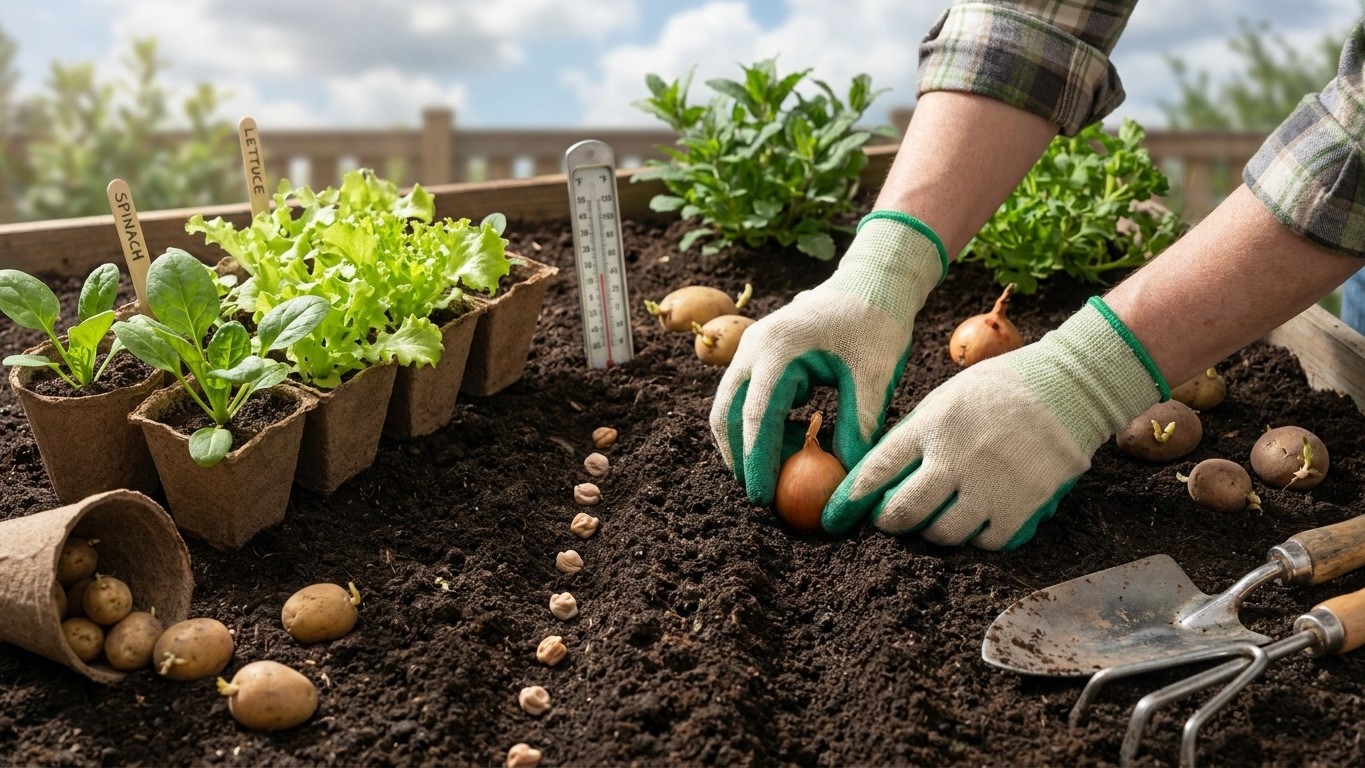

April is the pivot point in Maryland’s garden calendar. The state’s last spring frost falls somewhere between April 3 and April 16, so the first half of the month still runs on frost protection while the back half opens the ground to warmth-loving transplants. Cold-hardy crops go in immediately. Tomatoes, peppers, and anything tender wait until soil temperature, not the wall calendar, gives the green light.
What goes in the ground in April

The mechanism that matters here is soil temperature, not the date. Peas germinate in soil as cool as 40°F. Spinach, lettuce, and kale tolerate light frost and even a hard freeze once established. Onion sets and shallots go in as soon as the ground can be worked, regardless of where you land in the April 3 to April 16 frost window. None of these need to wait for the frost date to pass because they were bred, or evolved, to shrug off a freeze.
Root crops split the difference. Carrots and beets can be direct-sown early in the month; they germinate slowly in cold soil but the seedlings handle a light frost fine. Potatoes are the classic bet-hedge: many Maryland gardeners plant seed potatoes in early April knowing a late frost may nip emerging foliage, which simply regrows from the tuber. Brassica transplants (broccoli, cabbage, Brussels sprouts) started indoors in late winter can go out once hardened off, even ahead of the last frost date, because they tolerate temperatures well below freezing for short stretches.
What does not belong in open ground yet is anything in the tomato, pepper, eggplant, cucumber, squash, or bean family. These crops stall or die below roughly 50°F soil temperature, and a single freeze event inside that April 3-16 window will kill them outright. That’s the gamble: air temperature can feel like May while the soil, especially clay soil that’s been wet all winter, is still holding winter’s chill.
| Crop | Method | Timing relative to the frost window |
|---|---|---|
| Peas | Direct sow | Anytime in April, before or after frost |
| Onion sets, shallots | Direct plant | As soon as ground is workable |
| Lettuce, spinach, kale | Direct sow or transplant | Anytime in April |
| Carrots, beets | Direct sow | Anytime in April |
| Potatoes | Plant seed pieces | Early April, tolerates frost to foliage |
| Tomatoes, peppers, squash | Wait | After April 16, once soil has warmed |
What to start under cover
Work backward from the frost window instead of forward from a fixed date. Tomatoes and peppers typically need six to eight weeks indoors before they’re ready to transplant, and they shouldn’t go outside until several days after the last frost date has safely passed. Counting back from an April 16 frost date puts the ideal indoor sowing window in late February, which means April is late to be starting these from seed if you want full-size transplants by mid-May. If you’re only now getting seeds started, expect smaller transplants at planting time, which isn’t a disaster, just a shifted timeline.
Fast-maturing crops are more forgiving. Lettuce, and quick brassicas started indoors or under a cold frame in early April can be ready to transplant within three to four weeks, comfortably inside the season. Cucumbers and summer squash, which resent root disturbance, are often better direct-sown after the frost window closes rather than started indoors at all.
The two ways this goes wrong are predictable. Start too early and you get leggy, rootbound seedlings stretching for light, stressed before they ever reach the garden. Start too late, particularly in the higher elevations of Garrett or Allegany County where the frost season runs longer, and warm-season crops won’t mature before fall frost arrives. A cold frame or low tunnel splits the difference: it lets you get seedlings outside a few weeks earlier than open ground would allow, buying growing time without gambling the whole crop on a mild spell holding.
What is ready to pick
Asparagus crowns that have been in the ground two years or more send up their first spears in April, and they’re ready the moment they reach six to eight inches, cut or snapped at soil level before the tip loosens and starts to fern out. Rhubarb stalks thicken enough to harvest by mid-to-late April in most of the state; pull rather than cut, and leave at least a third of the stalks on the plant.
Overwintered greens are often the best-kept secret of the April garden. Kale, collards, and spinach that survived under row cover or simply toughed out the winter in a sheltered bed put on fresh growth as soon as temperatures climb, and the cold exposure sweetens their flavor rather than ruining it. Cold-frame lettuce and spinach sown back in late winter can be cutting-ready by early April.
Green onions and chives, both perennial in Maryland’s climate, are up and usable from the first mild week. Indoors, sprouts and microgreens fill the gap for anyone who wants fresh greens on a two-week cycle with no outdoor risk at all. It’s also worth a walk through the root cellar or pantry: stored potatoes, onions, and winter squash from last fall’s harvest should get a check now. Sprouting potatoes, softening onions, and squash with soft spots near the stem end need to be used first, before the whole batch turns.
The jobs that matter this month
Soil preparation earns its keep now more than almost any other month. Working compost or aged manure into beds before the heavy spring planting push gives it weeks to integrate rather than sitting raw around new roots. But timing matters as much as the task itself: working wet clay soil in early April, right after a rain, compacts it into clods that take the rest of the season to break down. Wait until a handful of soil crumbles rather than smears.
Mulching should wait until soil has actually warmed, typically once the frost window has closed. Mulch applied too early insulates cold soil and slows the very warming you’re trying to encourage; applied after the ground has warmed, it holds that heat and moisture in.
Peas and any climbing crop need staking or trellising in place before they sprawl, not after. It’s a five-minute job in early April and a frustrating untangling project by early May. Succession sowing of lettuce and radish, a small new row every ten days to two weeks, keeps a steady harvest coming rather than one glut followed by a gap.
Pest scouting starts in earnest this month too. Asparagus beetles show up on the first spears; slugs emerge with the first mild, damp nights. Catching either early, by hand-picking or targeted treatment, beats trying to control an established population in June. Dormant pruning of fruit trees and bramble canes should be finished before buds swell; once leaves emerge, the window for structural pruning without stressing the plant has closed for the season. If seed orders haven’t gone in yet for the popular tomato and pepper varieties, do it now, before the good stock sells out.
What not to do in April
The classic mistake is planting tomatoes, peppers, or squash outdoors because a warm afternoon made it feel like summer. Air temperature is a poor stand-in for soil temperature, and a warm-season transplant set into 50°F soil will simply sit there, stunted, waiting for warmth that may still be two or three weeks off inside Maryland’s April 3-16 frost window. Push a soil thermometer a few inches down before trusting your forearm’s read on the weather.
A related error: uncovering hardened-off transplants or removing row cover too early after a mild stretch, only to have a frost land squarely inside that same window and wipe out a week’s head start. Since the window runs across two full weeks depending on location, one warm weekend in early April doesn’t mean the risk has passed, especially at higher elevation.
Nitrogen timing trips people up too. Heavy nitrogen feeding on leafy greens or brassicas right as they’re setting roots pushes soft, lush top growth that’s more attractive to aphids and more vulnerable to a late cold snap. Save the heavier feeding for once plants are established and actively growing, and lean on phosphorus-supportive amendments at transplant time instead. Last mistake worth naming: treating the calendar date as gospel. The frost window is a range, not a single day, and planting decisions should follow soil conditions and local forecasts over the specific date on a seed packet.
Checking this against your own county
A statewide window is a starting point, not an instruction for your specific yard. Elevation shifts these dates by weeks: Garrett and Allegany counties, sitting in Maryland’s mountainous west, run their frost season noticeably later than the April 3-16 range cited here, while the Eastern Shore’s milder maritime influence often clears frost risk earlier. USDA hardiness zones across the state span from 5b to 8a, built on a single measure, average extreme minimum winter temperature, and that range alone signals how different a western mountain garden and a Chesapeake Bay-adjacent garden can be in the same month. Before committing tender transplants to open ground, check current conditions and county-level guidance through the University of Maryland Extension, which maintains local planting calendars and frost-date resources tailored below the state level.
Common questions
Can I plant tomatoes outdoors in Maryland in April?
Generally not safely for the whole month. The last frost falls between April 3 and April 16 depending on location, and soil usually needs another week or two past that to warm enough for tomatoes to grow rather than stall.
What vegetables are safe to direct-sow the whole month?
Peas, spinach, lettuce, carrots, beets, and onion sets tolerate the frost risk present through mid-April and can go in as soon as soil is workable.
Is it too late to start tomato seeds indoors in April?
It’s late for full-size transplants by the usual mid-May planting time, since tomatoes typically need six to eight weeks indoors, but seeds started now still produce usable, if smaller, transplants.
Why does the same April advice not work for all of Maryland?
Elevation and regional climate shift frost timing by weeks. Western counties like Garrett and Allegany run colder and later than the statewide range, while the Eastern Shore tends to clear frost risk sooner.