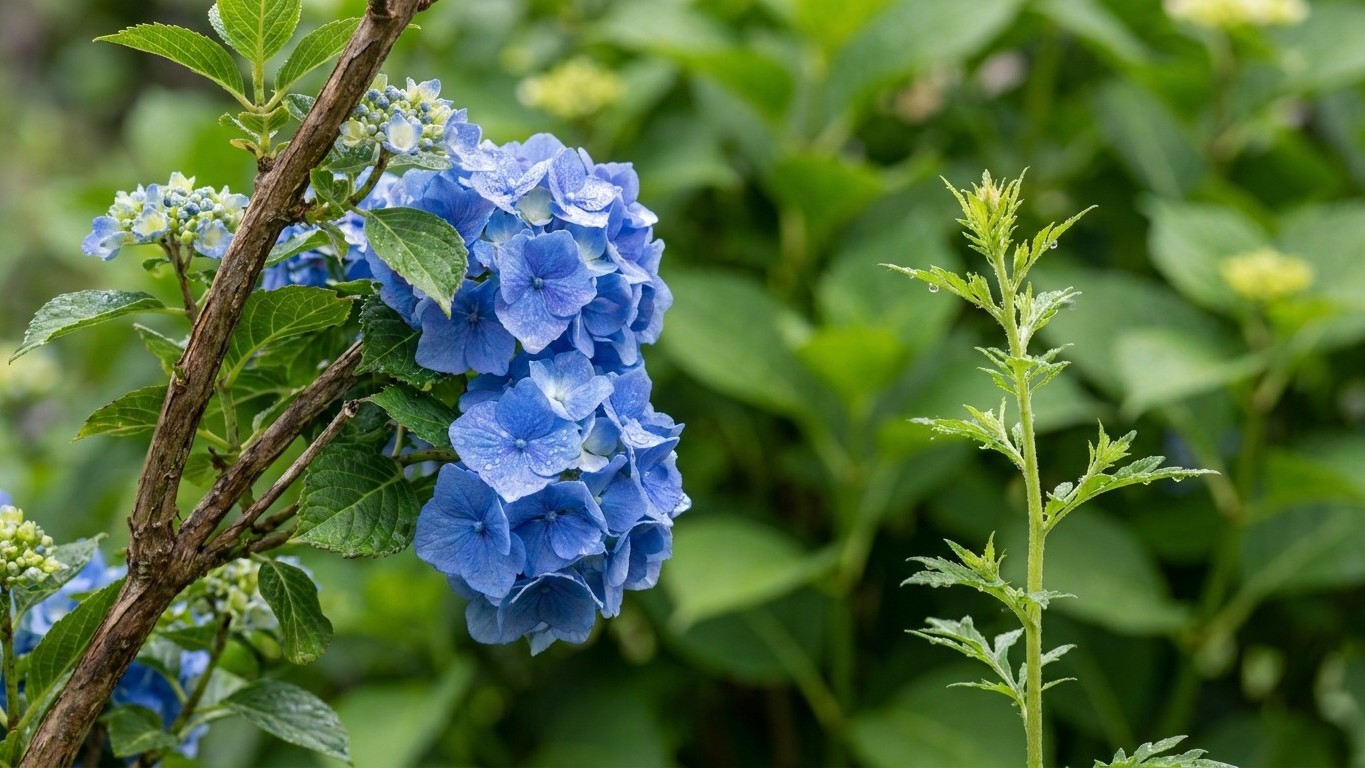

Hydrangeas that bloom on old wood need winter protection in Maryland, and the ones that bloom on new wood mostly do not. The job is short. Add a cover of leaves or mulch once the plants go dormant, leave the stems unpruned, and take the cover off in stages after spring frost danger passes. Bigleaf and oakleaf types are the ones at stake, because their flower buds are already formed on the stems by fall.
What this comes down to in Maryland

At Baltimore, going by NOAA NCEI Climate Normals, the first fall 32F freeze typically arrives between October 26 and November 5, and the last spring one falls between April 3 and April 16. Protection goes on after the first window and comes off after the second. Everything in between is about keeping flower buds alive on stems that cannot be replaced.
Why do hydrangeas lose flowers in a Maryland winter?
Three things do the damage. The first is cold that kills the buds or the stem tips outright. The USDA Plant Hardiness Zone Map runs from 5b to 8a across the state, and it is built on a single number, the average annual extreme minimum temperature. That tells you how bad the worst night in a typical winter gets, and the colder end of the range is where dieback is most likely.
The second is a warm spell in late winter. Buds start to swell, then a hard freeze arrives and kills the tissue that was just waking up. Maryland swings between mild and freezing weather often enough that this is a common cause of bud loss.
The third is drying. Bare stems lose moisture to wind and sun while the soil is frozen, and roots cannot replace it. A shrub that went into winter dry is more likely to lose stems.
Which hydrangeas need protection and which can skip it?
The deciding factor is where the plant sets its flower buds. A shrub that blooms on stems grown the previous summer carries its whole flower display through the winter. A shrub that blooms on stems grown this spring can lose every stem to cold and still flower. For a species-by-species look at hardiness, see Which Hydrangeas Survive a Maryland Winter.
| Bloom habit | Where flower buds sit in winter | Protection needed |
|---|---|---|
| Old wood (bigleaf, mountain, oakleaf) | On last summer’s stems, from late summer on | Mulch the base, cage and fill with leaves in colder spots, no fall pruning |
| Old and new wood (reblooming bigleafs) | Some on old stems, with a second flush on new growth | Light protection; a dieback year still gives summer flowers |
| New wood (panicle, smooth) | None; buds form in spring | A mulch layer for roots, otherwise none |
Working it out for your own garden
A calendar date written on a garden blog will not fit your yard. A method will, and it also works in a cold year or after a move.
How do you time the cover in fall?
Start from the first fall frost window, October 26 to November 5 at Baltimore. Do not cover during that window. The plant needs to go fully dormant first, which means the leaves have yellowed and dropped, or hang limp after a couple of freezes. Covering a shrub that is still active holds in moisture and invites rot and rodents. So the range for covering starts after the window, a few weeks later: late November in a typical year, a little later in a warm fall. A simple check is to wait until the leaves are down and the ground is cold to the touch, then work on a dry day.
Water comes before cover. If fall has been dry, give the shrub a deep soaking in the weeks before the ground freezes. Then pile 3 to 4 inches of shredded leaves, pine straw, or bark mulch around the base, and keep it a couple of inches from the stems. In colder spots, set a wire cylinder around the shrub, about as tall as the plant, and fill it loosely with dry leaves. Burlap wrapped around the outside of the cage cuts wind. Plastic does not belong anywhere in this setup, since it traps heat on sunny days and the buds break too early.
How do you time the uncovering in spring?
Count from the last spring frost window, April 3 to April 16. Take the cage and the top layer of leaves off in two steps after that window. Open the cage first, then pull the leaves back from the stems a week or two later. Keep a bedsheet or old blanket handy for a late cold night after the buds have started to open.
How do you tell what survived?
Look at the stems, not the calendar. When the shrub next to yours has leafed out and a stem has stayed bare, scratch the bark lightly with a fingernail. Green underneath means it is alive. Brown and dry means it is dead. Cut dead wood back to the first live buds, and then wait. Bigleafs leaf out late, and many gardeners prune dead-looking stems too early.
If you do not know whether a shrub blooms on old or new wood, watch what it did last year. A plant that flowered in early summer from stems that were already there is an old-wood bloomer. One that flowered in mid to late summer after a spring of fresh growth is a new-wood bloomer. Plump, rounded buds at the stem tips in winter are usually flower buds on old wood.
What changes across the state
Baltimore is one reference point, and Maryland covers several climates. The two frost windows above describe the central part of the state, and the numbers shift as you leave it.
How does location change the protection schedule?
Western Maryland, which includes Garrett and Allegany counties, is mountainous. Frost arrives earlier in fall and lingers later in spring, by weeks rather than days. The cold end of the 5b to 8a range sits there too. Gardeners in the mountains should assume that old-wood bloomers need the full cage treatment, should put protection on sooner, and should leave it on longer than the Baltimore windows suggest. Panicle hydrangeas are a safer choice there because they do not depend on last year’s wood.
The Eastern Shore and the lower Chesapeake shore run milder, since the water holds heat and eases the coldest nights. Fall frost comes later and spring frost earlier, and the warmer end of the zone range applies. A mulch ring is often enough for bigleafs. The risk there moves from deep cold to a false spring: a run of warm days in late winter that wakes buds before a freeze. Do not rush the uncovering.
Closer to home, small differences count too. A shrub on the south side of a house, up against brick, sits warmer than one in an open yard. Low spots at the bottom of a slope collect cold air on still nights, so a late frost hits there hardest. A hillside site drains cold air away. Wind exposure matters in the same way, and a fence or evergreen windbreak on the north and west side reduces drying.
The mistakes this state punishes

Which errors cost the most flowers?
Pruning old-wood hydrangeas in fall is a leading cause of lost flowers. Cutting stems in September or October removes next summer’s flowers. Prune bigleafs only to remove dead wood, after leaf-out. A related mistake is tidying a plant for winter. The standing stems give the buds some shelter, so leave them.
Covering too early is another. A mild stretch in November tempts people to cage and mulch immediately, but the plant is not dormant yet, and mulch piled against green stems stays damp. Voles and mice nest in it. Wait for the leaves to drop.
Uncovering during a warm spell in March is another. Maryland often has a week of spring-like weather well before April 3, the early end of the last-frost window. Buds that open under those conditions are killed by the next freeze. Keep the cage on until the window has passed and open it in two steps.
Late feeding and soil changes are another. Nitrogen after midsummer pushes soft growth that does not harden before winter. Color adjustments belong in the growing season, as covered in Why Hydrangeas Are Pink in Maryland, and How to Turn Them Blue. Finally, do not skip watering before freeze-up. A dry shrub in dry soil is the one that loses stems to winter wind.
Checking this against your county
The Baltimore windows are a starting point for your yard. Your county’s elevation, distance from the bay, and the specific spot where the shrub grows will move the dates. Call or visit your county office of University of Maryland Extension for local timing and for help diagnosing winter damage. For the rest of the growing picture, see growing hydrangeas in Maryland.
Common questions
Do I need to protect panicle and smooth hydrangeas in winter?
Rarely. These types bloom on growth that appears in spring, so winter dieback does not cost them flowers. A mulch layer over the roots is still useful, especially in the first winter after planting.
When should I put mulch or a cage around my hydrangea?
After the leaves have dropped and the shrub is dormant, which in the Baltimore area follows the October 26 to November 5 first-freeze window by a few weeks. Water deeply first if the fall has been dry.
When do I take the winter protection off?
After the April 3 to April 16 last-frost window at Baltimore, in two steps. Open the cage first, then pull the leaves back from the stems. Mountain gardeners in Garrett and Allegany counties should wait longer.
Can I protect a hydrangea in a pot?
Yes, and it needs more help than one in the ground, because roots in a container freeze faster. Move the pot to an unheated garage or shed once the plant is dormant, water it lightly now and then so the soil does not dry out, and bring it back out after the last-frost window.